What a Roofing Contractor Looks for During a Fall Roof Inspection in Middle Tennessee
Part of: What Happens During a Free Roof Inspection in Nashville & Middle Tennessee?
A fall roof inspection is the single most valuable maintenance step a Middle Tennessee homeowner can take. Learn exactly what a contractor checks — shingles, flashing, ventilation, decking — and why October is the ideal time.
- 1.Why October Is the Ideal Month for a Roof Inspection
- 2.What a Contractor Checks: The Shingles
- 3.What a Contractor Checks: Flashing and Penetrations
- 4.What a Contractor Checks: Ventilation
- 5.What a Contractor Checks: Decking and Structure
- 6.What a Contractor Checks: Gutters and Drainage
- 7.What the Inspection Report Tells You
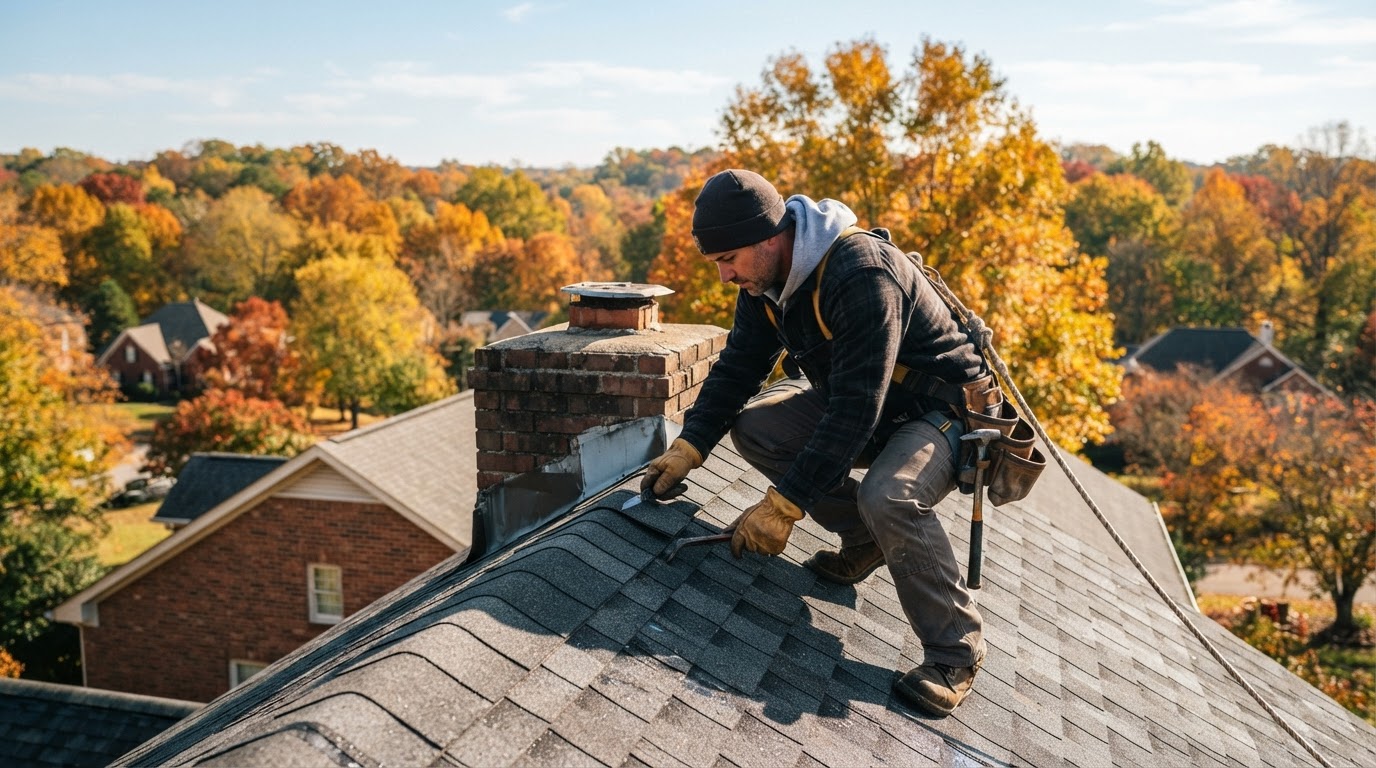
During a fall roof inspection, a contractor checks the shingles for cracking, curling, blistering, and granule loss; the flashing around chimneys, skylights, valleys, and roof-to-wall intersections; the pipe boots for cracked or dried rubber; the ridge and soffit ventilation for balance; the roof deck for soft or spongy areas; and the gutters for granule buildup. The goal is to determine whether the roof can safely survive the coming winter or whether a repair should be scheduled before the worst weather arrives. October is the ideal month because the roof is dry, the weather is stable, and there is time to schedule work before winter. Terry Woodall Roofing provides free fall inspections across Middle Tennessee — call (615) 300-6005.
Key Takeaways for Middle Tennessee Homeowners
- A fall roof inspection is the single most valuable maintenance step a Middle Tennessee homeowner can take — it catches problems before winter storms, ice, and freezing rain turn them into emergencies.
- A contractor checks the shingles for cracking, curling, and granule loss; the flashing around chimneys, valleys, and penetrations; the pipe boots for cracked rubber; and the ventilation system for balance.
- October is the ideal month for a fall inspection because the roof is dry, the weather is stable, and any repair or replacement can be scheduled before winter.
- An honest inspection tells you whether the roof can wait until spring or whether a repair should happen before the worst weather arrives — not a one-size-fits-all recommendation.
- Terry Woodall Roofing provides free, photo-documented fall inspections across Middle Tennessee. Call (615) 300-6005.
A fall roof inspection is the single most valuable maintenance step a Middle Tennessee homeowner can take. It catches the small problems — a cracked pipe boot, a lifted flashing tab, a few creased shingles — before winter storms, ice, and freezing rain turn them into interior leaks and emergency repairs.
This guide walks through exactly what a roofing contractor checks during a fall inspection, what each item means for your roof, and why October is the ideal month to schedule one. For a broader look at what a free inspection covers year-round, see our free roof inspection guide.
Why October Is the Ideal Month for a Roof Inspection
October in Middle Tennessee offers the best inspection conditions of the year. The roof is typically dry after the summer heat, the severe-storm season is winding down, and the weather is stable enough for a thorough roof-level evaluation. The inspector can take their time on each slope without racing incoming weather, which means a more complete assessment.
More importantly, October leaves enough time to act on what the inspection finds. If a repair is needed, it can be scheduled and completed before the first hard freezes and winter storms arrive. If a replacement is recommended, there is still a window of mild temperatures for proper shingle installation. By December, that window narrows considerably. For why fall is the peak roofing season, see our fall roof replacement timing guide.
What a Contractor Checks: The Shingles
The shingles are the first and most visible part of the inspection. A contractor looks for cracking, curling, clawing, and blistering across every slope. Cracking means the asphalt is drying out and losing flexibility. Curling and clawing — where the edges turn up or down — signal that the shingle is aging or that ventilation underneath is inadequate. Blistering shows up as small raised bubbles where moisture has expanded in the heat.
Granule loss is checked at the gutters and downspouts. Granules are the ceramic-coated mineral surface that protects the asphalt from UV. Heavy granule buildup in the gutters means the shingles are shedding their protective layer and will fail faster. On the roof, dark patches where granules have worn away are a sign of advanced wear. For how long each shingle type tends to last in Middle Tennessee, see our asphalt shingle lifespan guide.
What a Contractor Checks: Flashing and Penetrations
Flashing is where most leaks start, so it gets close attention. A contractor checks the step flashing where the roof meets a wall, the flashing around the chimney, the valley flashing where two roof planes meet, and the flashing around skylights. They look for lifted edges, gaps, rust, cracked sealant, and flashing that has pulled away from the chimney or wall.
Pipe boots — the rubber seals around plumbing vent pipes — are one of the most common leak sources on Middle Tennessee homes. The rubber dries out and cracks in the sun after a number of years, and a cracked pipe boot lets water run straight down the pipe into the attic. A contractor checks every pipe boot for cracking and flexibility. For where leaks most commonly start, see our common roof leak locations guide.
What a Contractor Checks: Ventilation
Attic ventilation is not visible from the outside, but it has a major effect on shingle life and energy costs. A contractor checks whether the ridge ventilation and soffit intake are present, unobstructed, and balanced. Balanced ventilation means the intake area at the soffits roughly matches the exhaust area at the ridge, which creates the airflow that pulls heat and moisture out of the attic.
Poor ventilation shortens shingle life by baking the underside of the shingles, contributes to ice dam risk in winter, and can cause moisture buildup that rots the decking. If the inspection finds ventilation issues, the contractor explains what is wrong and whether it should be addressed as part of a repair or replacement. For a deeper look, see our roof ventilation and attic guide.
What a Contractor Checks: Decking and Structure
When the contractor walks the roof, they feel for soft or spongy areas in the deck. A solid deck feels firm underfoot; a rotted or water-damaged section has give to it. Soft spots point to moisture that has gotten past the shingles and underlayment, which means a leak has been active long enough to damage the wood.
The contractor also checks for sagging along the ridge or between rafters, which can indicate a structural issue beyond the roofing itself. From inside the attic, they look for water stains, dark patches, and daylight through the deck. Not every area can be fully evaluated without removing materials, but a thorough walk and attic check covers the major structural concerns.
What a Contractor Checks: Gutters and Drainage
Gutters are part of the roof system, and a fall inspection checks whether they are clear, properly attached, and directing water away from the foundation. Clogged or overflowing gutters back water up under the shingles at the eave, which is a common cause of fascia and decking rot even on a roof with good shingles.
The contractor notes granule buildup in the gutters, which doubles as a shingle-wear indicator and a drainage problem — heavy granules can clog gutters and downspouts. If gutter work is needed, the inspection identifies it so it can be addressed before winter. For a full gutter resource, see our complete gutter guide.
What the Inspection Report Tells You
After the inspection, you should receive a clear, plain-language assessment: what was found, what it means, and what — if anything — should be done. An honest inspection does not default to replacement. If the roof has useful life left and the problems are isolated, a targeted repair is the recommendation. If the roof is near the end of its life or the damage is widespread, replacement is the recommendation — with the reasoning explained so you can make an informed decision.
The key question a fall inspection answers is whether the roof can safely survive the coming winter. If it can, you have peace of mind. If it cannot, you have time to act before the weather compounds the problem. For help weighing repair versus replacement, see our roof repair vs. replacement guide.
What a Fall Roof Inspection Covers
- Shingles checked for cracking, curling, blistering, and granule loss on every slope
- Flashing checked at chimneys, valleys, skylights, and roof-to-wall intersections
- Pipe boots checked for cracked or dried rubber
- Ridge and soffit ventilation checked for balance and obstructions
- Roof deck checked for soft, spongy, or sagging areas
- Attic checked for water stains, dark patches, and daylight through the deck
- Gutters checked for clogs, granule buildup, and proper drainage
- Clear, plain-language report on whether the roof can wait or needs work before winter
Have a question about your roof?
Terry personally answers the phone — no sales reps, no pressure.
Frequently Asked Questions
Straight answers to common questions from Middle Tennessee homeowners.
Why is fall the best time for a roof inspection in Middle Tennessee?
October offers the best inspection conditions of the year — the roof is dry, the severe-storm season is winding down, and the weather is stable enough for a thorough roof-level evaluation. More importantly, a fall inspection leaves enough time to act on what it finds. If a repair or replacement is needed, it can be scheduled and completed before winter storms, ice, and freezing rain arrive. By December, the scheduling and weather windows narrow considerably.
What does a roofing contractor actually check during a roof inspection?
A contractor checks the shingles for cracking, curling, blistering, and granule loss; the flashing around chimneys, valleys, skylights, and roof-to-wall intersections; the pipe boots for cracked rubber; the ridge and soffit ventilation for balance; the roof deck for soft or spongy areas; the attic for water stains and daylight; and the gutters for clogs and granule buildup. The goal is a complete picture of the roof's condition, not just a quick glance at the shingles.
How long does a fall roof inspection take?
A thorough roof-level inspection typically takes 30 to 60 minutes depending on the size and complexity of the roof. It includes walking the roof, checking the flashing and penetrations, inspecting the attic if accessible, and reviewing the gutters. The contractor then explains what was found in plain language. Terry Woodall Roofing provides free inspections across Middle Tennessee — call (615) 300-6005.
Will a free inspection pressure me into replacing my roof?
Not with Terry Woodall Roofing. The approach is inspection-first: recommend the work the roof actually needs, including a repair when a repair reasonably solves the problem. If the roof has useful life left and the problems are isolated, the recommendation is a targeted repair. If the roof is near the end of its life, replacement is recommended — with the reasoning explained so you can decide. There is no obligation and no pressure. Call (615) 300-6005.
Can a fall inspection tell me if my roof will survive the winter?
Yes — that is the primary purpose of a fall inspection. The contractor evaluates the shingle condition, flashing, decking, ventilation, and any storm damage, then tells you whether the roof can safely wait until spring or whether a repair should be scheduled before the worst weather arrives. Waiting is only the cheaper choice if the roof can actually make it through winter without failing. An inspection removes the guesswork.
Terry Woodall Roofing Contractors
From the Terry Woodall Roofing Contractors Resource Center — serving Middle Tennessee homeowners since 1983
Terry Woodall Roofing Contractors brings over 40 years of hands-on roofing experience to Middle Tennessee homeowners. These resources are prepared to help homeowners understand roof maintenance, storm damage mitigation, and the insurance claims process so every home is protected. Founder Terry Woodall personally oversees the company's roofing work across Nashville, Franklin, Brentwood, and the surrounding communities.
This guide relies on authoritative industry standards, building code regulations, and verifiable research from recognized organizations:
Found this guide useful? Copy a ready-to-paste citation and attribute Terry Woodall Roofing as your source.
Terry Woodall. (2026-09-29). What a Roofing Contractor Looks for During a Fall Roof Inspection in Middle Tennessee. Terry Woodall Roofing. https://terrywoodallroofing.com/resources/what-roofing-contractor-looks-for-fall-inspection-middle-tn
Related Roofing Services
If you suspect your roof needs attention, Terry Woodall offers straightforward evaluations across Middle Tennessee:
Where We Work in Middle Tennessee
Keep Reading
Request a Call
Get straightforward answers directly from Terry.
This form is for Middle Tennessee homeowners requesting roofing help only. Marketing, sales, and vendor solicitations are not accepted and will be discarded.
Need an Honest Roof Inspection?
Speak directly with Terry Woodall today. No pushy sales representatives, just a local reputation built since 1983.
Call (615) 300-6005Text TerryA fall roof inspection is the single most valuable maintenance step you can take before a Middle Tennessee winter. It catches the small problems before winter storms turn them into emergencies, and it tells you honestly whether your roof can wait or needs work now. Terry Woodall Roofing provides free, photo-documented fall inspections across Middle Tennessee and recommends only the work the roof actually needs. Call Terry directly at (615) 300-6005 or request a free roof inspection.