
Year-Round Roof Maintenance & Seasonal Care Guide for Middle Tennessee Homes (2026)
A season-by-season roof maintenance calendar for Middle Tennessee homeowners — spring storm checks, summer heat and ventilation, fall gutter cleaning, and winter ice and moisture prevention. Learn what to do each season, what to inspect from the ground, and when to call a roofer. A researched guide from Terry Woodall Roofing.
- 1.Why Seasonal Maintenance Matters in Middle Tennessee
- 2.Spring Maintenance (March–May): Storm Season
- 3.Summer Maintenance (June–August): Heat and Ventilation
- 4.Fall Maintenance (September–November): Gutters and Debris
- 5.Winter Maintenance (December–February): Moisture and Ice
- 6.What You Can Safely Check from the Ground
- 7.Annual Professional Inspection
- 8.Maintenance Tasks That Prevent Expensive Repairs
Maintain a Middle Tennessee roof with a seasonal calendar: in spring, check for storm and hail damage after severe weather and clear winter debris; in summer, ensure attic ventilation is working to prevent overheating that shortens shingle life; in fall, clean gutters and downspouts after leaf drop to prevent winter water backup; and in winter, watch for ice buildup, moisture in the attic, and downspout blockages. The highest-impact task year-round is keeping gutters clear, because clogs cause water to back up under shingles and rot the fascia. Do a ground-level visual check after every storm, and schedule a professional inspection annually or after any hail event. Terry Woodall Roofing offers free inspections across Middle Tennessee — call (615) 300-6005.
Key Takeaways for Middle Tennessee Homeowners
- Middle Tennessee roofs face four distinct seasonal threats — spring hail and wind, summer heat and UV, fall leaf and debris buildup, and winter moisture and occasional ice — so maintenance should follow a seasonal calendar, not a one-time check.
- The single highest-impact maintenance task is keeping gutters and downspouts clear, because clogged gutters cause water to back up under shingles and rot the fascia — the most common preventable roof problem in Middle Tennessee.
- After any severe thunderstorm or hail event, a ground-level visual check for missing, lifted, or dented shingles is worth doing, but a full storm inspection should be left to a professional who can safely access the roof.
- Summer attic heat is a shingle killer — proper ventilation keeps the deck cooler and extends shingle life, which is why ventilation should be checked as part of seasonal maintenance, not just during a replacement.
- Fall is the critical maintenance window in Middle Tennessee: oak and maple leaf drop clogs gutters right before winter, when clogs cause the most damage, so cleaning after leaf drop is essential.
- Terry Woodall Roofing offers free seasonal inspections and has maintained roofs across Middle Tennessee since 1983. Call (615) 300-6005 to speak directly with Terry.
A roof is not a set-it-and-forget-it asset. In Middle Tennessee, where spring brings hail and wind, summer bakes shingles with heat and UV, fall dumps leaves and oak tassels into gutters, and winter brings moisture and the occasional ice event, a roof faces a different threat every few months. The homeowners who get 25+ years out of a roof are the ones who match their maintenance to the season.
This guide is a season-by-season roof maintenance calendar built specifically for Middle Tennessee — what to do in spring, summer, fall, and winter, what you can safely check from the ground, and when to call a professional. It pairs with our Complete Gutter Guide and Roof Ventilation Guide, which cover those two systems in depth.
Seasonal Roof Maintenance at a Glance
Use this as a general guide, not a hard rule. Every situation still needs an in-person inspection to weigh the factors together.
| Situation | Repair may make sense | Replacement may make sense |
|---|---|---|
| Spring (March–May) | Check for winter damage, clear debris, and inspect after hail/wind storms. | Schedule a professional storm inspection if any shingles are missing or dented. |
| Summer (June–August) | Confirm attic ventilation is working; watch for curling shingles from heat. | Address overheated attics with balanced intake/exhaust venting before heat shortens shingle life. |
| Fall (September–November) | Clean gutters and downspouts after leaf drop; trim back branches over the roof. | Replace failing gutters or guards before winter, when clogs cause the most damage. |
| Winter (December–February) | Watch for ice buildup, attic moisture, and downspout blockages; remove snow carefully. | Repair damaged flashing or vents before leaks worsen in freezing conditions. |
Why Seasonal Maintenance Matters in Middle Tennessee
Middle Tennessee has one of the more demanding seasonal ranges for a roof. Spring severe weather — especially hail and straight-line winds from March through May — is the region's most destructive roof threat. Summer brings sustained heat and UV that, combined with a poorly vented attic, can bake shingles from below. Fall leaf drop from the region's abundant oaks and maples clogs gutters right before winter. And winter, while milder than northern states, brings freeze-thaw cycles and moisture that exploit any weakness in the roof system.
The Insurance Institute for Business & Home Safety (IBHS) emphasizes that regular inspection and maintenance — clearing debris, checking flashing, and keeping gutters functional — significantly reduces avoidable roof and water damage. The key is timing: the same task (gutter cleaning) is routine in early fall but becomes an emergency in January when backed-up water freezes. A seasonal calendar keeps maintenance ahead of the threat.
Spring Maintenance (March–May): Storm Season
Spring is the most important inspection season in Middle Tennessee because it is peak severe weather. After any thunderstorm with hail or high winds, do a ground-level walkaround of your home and look up at the roof for missing, lifted, or displaced shingles, dented metal flashing or vents, and debris on the roof surface. Hail damage is often not visible from the ground — small dents in shingle granules or bruising require a close-up inspection — so after a confirmed hail event, schedule a professional inspection even if nothing looks wrong from below.
Also clear any branches or debris that accumulated over winter, and check that gutters survived the season intact. Spring is a good time to trim back tree branches that overhang the roof, both to reduce debris and to deny squirrels and roof rats a bridge onto your home. If you had a winter leak, spring is when to get it documented and repaired before the heavy spring rains make it worse. For the full storm damage process, see our Storm & Hail Damage Guide.
Summer Maintenance (June–August): Heat and Ventilation
Summer is when ventilation earns its keep. On a 95°F Middle Tennessee day, a poorly vented attic can exceed 140°F, and that trapped heat radiates down into the living space and bakes the shingles from below. Walk through your attic on a hot afternoon — if it is dangerously hot and stuffy, ventilation is likely underperforming. Check that soffit vents are not blocked by insulation and that exhaust vents (ridge or box) are present and unobstructed.
From the ground, scan the roof for shingles that are curling, cupping, or losing granules — signs of heat stress that may indicate an overheated deck. Summer is also when you'll notice if your cooling bills are unusually high, which can point to attic heat transfer. The fix is usually ventilation and insulation balance, not a bigger AC unit. For the full system, see our Roof Ventilation & Attic Guide.
Fall Maintenance (September–November): Gutters and Debris
Fall is the highest-leverage maintenance window in Middle Tennessee. The region's mature oaks, maples, and hickories drop enormous volumes of leaves and oak tassels that pack gutters solidly — and if those clogs are still there when winter rains and freeze-thaw cycles arrive, water backs up under the shingles, over the fascia, and into the home. Clean gutters and downspouts after the bulk of leaf drop, typically in November, and if your property has heavy tree cover, a second cleaning in early winter is wise.
Fall is also the time to trim back any branches that grew toward the roof over the summer, inspect and reseal flashing around chimneys and skylights before winter, and check that downspouts extend well away from the foundation. If your gutters are old, sagging, or pulling away, fall is the right season to replace them before winter makes the problem an emergency. For sizing and material guidance, see our Complete Gutter Guide.
Winter Maintenance (December–February): Moisture and Ice
Middle Tennessee winters are relatively mild, but freeze-thaw cycles are hard on roofs. Water that seeps into a small crack during the day can freeze and expand at night, widening the crack — a process that turns a minor flashing gap into a leak over a season. Check the attic on cold mornings for frost or moisture on the roof nails and the underside of the deck; condensation there means trapped moisture that can rot the wood over time, and the fix is ventilation, not just heat.
A key winter question for many homeowners is whether a failing roof can actually be repaired or replaced in the cold, or whether it must wait until spring. For the 40°F manufacturer guideline for asphalt shingles and what cold-weather roofing requires, see our guide on whether a roof can be replaced in the winter in Tennessee. The short version: most repairs can be done in cold weather, while a full replacement during a deep freeze carries more risk.
Ice dams are rare in Middle Tennessee but can occur during the occasional deep freeze, especially on poorly vented attics where warm air melts snow on the upper roof and it refreezes at the cold eaves. If ice builds up at the gutters, do not chip it with a tool (you will damage the shingles) — use a roof melt product or call a professional. Keep downspouts clear so melting snow and winter rain can drain. For what to do if a leak appears, see our Roof Leak Emergency Guide.
What You Can Safely Check from the Ground
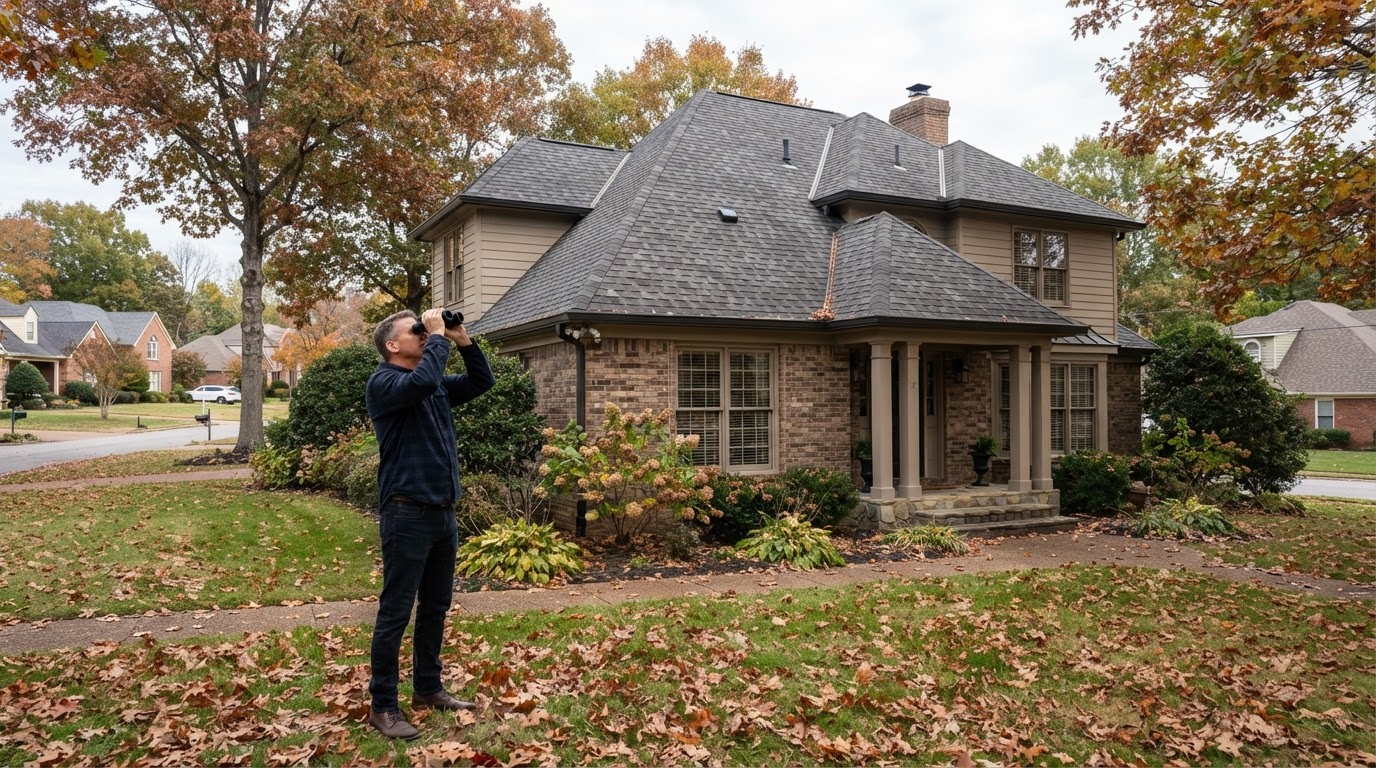
Most seasonal checks do not require a ladder. From the ground, with binoculars if helpful, you can spot: missing, lifted, or curling shingles; dark streaks (algae, common in humid Middle Tennessee); sagging gutters or gutters pulling away from the fascia; debris piles in roof valleys; dented or displaced metal flashing and vent pipes; and granule buildup in gutters (a sign shingles are shedding their protective coating). Walk around all four sides of the house, because damage is often only visible from one angle.
What you should not do is climb onto the roof yourself. Roof falls are among the most serious home-maintenance injuries, and walking on shingles — especially in summer heat when they are soft, or in winter when they are icy — can damage the roof and void warranties. Leave roof access to a professional with the right safety equipment. For a step-by-step ground inspection, see our guide on how to inspect your own roof from the ground.
Annual Professional Inspection
Even with diligent seasonal checks, an annual professional inspection is worth scheduling — ideally in spring or fall. A roofer can safely access the roof, check flashing and sealants up close, evaluate attic ventilation and deck condition from inside, document the roof's remaining life with photos, and catch problems (like hail bruising or early deck rot) that are invisible from the ground. An inspection also creates a documented baseline that helps with insurance claims and warranty service later.
After any confirmed hail event, schedule a separate storm inspection regardless of when your annual inspection falls, because hail damage has a short documentation window for insurance purposes. Terry Woodall Roofing offers free inspections across Middle Tennessee and documents findings with photos. For the inspection service itself, see our free roof inspection page.
Maintenance Tasks That Prevent Expensive Repairs
Several low-cost maintenance tasks prevent high-cost repairs. Keeping gutters clear prevents fascia rot and foundation damage — the single best return on effort in Middle Tennessee. Trimming overhanging branches reduces debris, storm limb damage, and pest access. Checking attic ventilation prevents premature shingle failure and deck rot. Resealing flashing around chimneys and skylights every few years prevents the most common type of roof leak. And documenting the roof's condition annually creates the evidence you need for a smooth insurance claim after a storm.
The pattern is clear: the homeowners who spend a little on maintenance each season avoid the large, sudden repair bills that come from neglect. A roof that is inspected, vented, and drained properly year-round lasts longer and performs better through every Middle Tennessee storm season. For help building a maintenance routine, request a free roof inspection and ask Terry for a seasonal plan specific to your home.
Year-Round Roof Maintenance Checklist for Middle Tennessee
- Spring: walk around the home after every hail/wind storm and check for missing or lifted shingles
- Spring: trim back tree branches that overhang the roof
- Spring: clear winter debris from gutters, valleys, and the roof surface
- Summer: check the attic on a hot day — it should not be dangerously hotter than outside
- Summer: scan the roof from the ground for curling, cupping, or granule loss
- Summer: confirm soffit vents are not blocked by insulation
- Fall: clean gutters and downspouts thoroughly after leaf drop (November)
- Fall: inspect and reseal flashing around chimneys and skylights
- Fall: confirm downspouts extend well away from the foundation
- Winter: check the attic on cold mornings for frost or moisture on nails
- Winter: keep downspouts clear so meltwater and rain can drain
- Year-round: schedule a free professional inspection annually or after any hail event
Have a question about your roof?
Terry personally answers the phone — no sales reps, no pressure.
Frequently Asked Questions
Straight answers to common questions from Middle Tennessee homeowners.
How often should I maintain my roof in Middle Tennessee?
Follow a seasonal calendar: inspect after spring storms, check attic ventilation in summer, clean gutters after fall leaf drop, and watch for moisture and ice in winter. In addition, schedule a professional inspection once a year (spring or fall is ideal) and after any confirmed hail event. Middle Tennessee's four distinct seasonal threats mean year-round attention prevents the large repairs that come from neglect.
When should I clean my gutters in Middle Tennessee?
Clean gutters after the bulk of leaf drop, typically in November, when the region's oaks and maples have shed. Homes with heavy tree cover may need a second cleaning in early winter. Cleaning in fall is critical because clogs left over winter cause water to back up under shingles, rot the fascia, and freeze into ice dams during cold snaps — all far more expensive than the cleaning itself.
Can I inspect my own roof without climbing on it?
Yes, and you should. From the ground — with binoculars if helpful — you can spot missing, lifted, or curling shingles, sagging gutters, debris in valleys, dented flashing, and granule buildup. Walk around all four sides of the house. Do not climb onto the roof yourself; roof falls are serious and walking on shingles can damage them and void warranties. Leave roof access to a professional. See our guide on inspecting your roof from the ground for a step-by-step method.
What should I check after a hailstorm in Middle Tennessee?
After a hailstorm, do a ground-level check for missing, lifted, or dented shingles and dented metal vents or flashing. But hail damage — especially bruising and granule loss — is often invisible from the ground, so after a confirmed hail event schedule a professional inspection even if nothing looks wrong. Hail damage has a short documentation window for insurance, so do not wait. Terry Woodall Roofing offers free storm inspections — call (615) 300-6005.
Does summer heat damage my roof?
Sustained summer heat and UV damage shingles over time, but the bigger threat is an overheated attic. A poorly vented attic can exceed 140°F on a hot Middle Tennessee day, baking the shingles from below and accelerating asphalt breakdown. The fix is balanced attic ventilation (intake at the soffits, exhaust at the ridge), not a bigger AC unit. Check your attic on a hot afternoon — if it is dangerously stuffy, ventilation is likely underperforming.
Are ice dams a problem in Middle Tennessee?
Ice dams are less common than in northern states but can occur during occasional deep freezes, especially on poorly vented attics where warm air melts snow on the upper roof and it refreezes at the cold eaves. If ice builds up at the gutters, do not chip it with a tool (you will damage the shingles) — use a roof melt product or call a professional. Proper attic ventilation is the long-term prevention.
What is the most important roof maintenance task?
Keeping gutters and downspouts clear is the single highest-impact maintenance task in Middle Tennessee. Clogged gutters cause water to back up under shingles, rot the fascia, and damage the foundation — all preventable with regular cleaning. Fall gutter cleaning after leaf drop is the one task you should never skip.
Does Terry Woodall Roofing offer seasonal maintenance inspections?
Yes. Terry Woodall Roofing offers free inspections across Middle Tennessee and can build a seasonal maintenance plan specific to your home and tree coverage. Serving Nashville, Franklin, Brentwood, and surrounding communities since 1983. Call (615) 300-6005 to speak directly with Terry.
Terry Woodall Roofing Contractors
From the Terry Woodall Roofing Contractors Resource Center — serving Middle Tennessee homeowners since 1983
Terry Woodall Roofing Contractors brings over 40 years of hands-on roofing experience to Middle Tennessee homeowners. These resources are prepared to help homeowners understand roof maintenance, storm damage mitigation, and the insurance claims process so every home is protected. Founder Terry Woodall personally oversees the company's roofing work across Nashville, Franklin, Brentwood, and the surrounding communities.
This guide relies on authoritative industry standards, building code regulations, and verifiable research from recognized organizations:
- Insurance Institute for Business & Home Safety (IBHS) — Roof Maintenanceibhs.org
- Asphalt Roofing Manufacturers Association (ARMA)asphaltroofing.org
- National Weather Service — Nashville Climateweather.gov
- NRCA — National Roofing Contractors Associationnrca.net
Found this guide useful? Copy a ready-to-paste citation and attribute Terry Woodall Roofing as your source.
Terry Woodall. (2026-09-05). Year-Round Roof Maintenance & Seasonal Care Guide for Middle Tennessee Homes (2026). Terry Woodall Roofing. https://terrywoodallroofing.com/resources/year-round-roof-maintenance-guide-middle-tn
Related Roofing Services
If you suspect your roof needs attention, Terry Woodall offers straightforward evaluations across Middle Tennessee:
Where We Work in Middle Tennessee
Keep Reading
Request a Call
Get straightforward answers directly from Terry.
This form is for Middle Tennessee homeowners requesting roofing help only. Marketing, sales, and vendor solicitations are not accepted and will be discarded.
Need an Honest Roof Inspection?
Speak directly with Terry Woodall today. No pushy sales representatives, just a local reputation built since 1983.
Call (615) 300-6005Text TerryWant a roof that lasts 25+ years through every Middle Tennessee storm season? Terry Woodall Roofing offers free seasonal inspections and maintenance guidance across Nashville, Franklin, Brentwood, and surrounding communities — and has since 1983. Call (615) 300-6005 to speak directly with Terry and build a year-round maintenance plan for your home.