
How to Prevent Ice Dams on a Middle Tennessee Roof This Winter (2026 Guide)
Ice dams can form on Middle Tennessee roofs even after a brief Nashville freeze. Learn what causes an ice dam, how attic insulation and ventilation prevent it, the warning signs to watch for in the attic, and what to do when water backs up under your shingles. (615) 300-6005.
- 1.What Is an Ice Dam, and Why Does It Form on a Roof?
- 2.Do Ice Dams Happen in Middle Tennessee?
- 3.The Real Cause: Heat Loss, Not the Roof
- 4.How to Prevent Ice Dams: Insulation First
- 5.How to Prevent Ice Dams: Balanced Ventilation Second
- 6.Air Sealing: The Step Most Homeowners Skip
- 7.Warning Signs an Ice Dam Is Forming
- 8.What to Do When an Ice Dam Is Already Forming
- 9.Do Heat Cables or Ice-and-Water Membrane Prevent Ice Dams?
- 10.When Ice Dam Damage Means a Repair vs. a Replacement
- 11.Why Fall Is the Time to Prevent Winter Ice Dams
- 12.A Simple Ice Dam Prevention Checklist for Middle Tennessee Homes
- 13.Don't Wait Until the First Freeze to Find Out What Your Roof Needs
Ice dams are prevented by keeping the roof deck cold and even in temperature, which is achieved through a combination of adequate attic insulation and balanced attic ventilation — intake vents at the soffits and exhaust vents at or near the ridge. When warm air cannot reach the roof deck, snow on the roof does not melt and refreeze at the eaves, so water cannot back up under the shingles. In Middle Tennessee, where ice dams can form after a brief overnight freeze, sealing attic air leaks and ensuring the ventilation system is balanced is more important than installing heat cables. A roof with a history of ice dams should also be inspected for water damage, rotted decking, and compromised flashing before the next winter. Terry Woodall Roofing evaluates attic ventilation on every inspection across Middle Tennessee — call (615) 300-6005.
Key Takeaways for Middle Tennessee Homeowners
- An ice dam forms when heat escaping through the roof melts snow that refreezes at the colder eaves, backing water up under the shingles and into the home.
- Middle Tennessee does not need a long, deep freeze for an ice dam to form — a single overnight freeze following a snowy Nashville day is often enough.
- The permanent fix is a combination of attic insulation and balanced intake-and-exhaust ventilation, not just heat cables or a new roof.
- A roof with a history of ice dams should be inspected for water damage, rotted decking, and compromised flashing before the next freeze.
- Never climb onto a frozen, icy roof to chip ice yourself — falls are the leading cause of serious DIY roof injuries, and a claw hammer can damage the shingles.
- Terry Woodall Roofing provides free roof inspections across Middle Tennessee and evaluates attic ventilation on every inspection. Call (615) 300-6005.
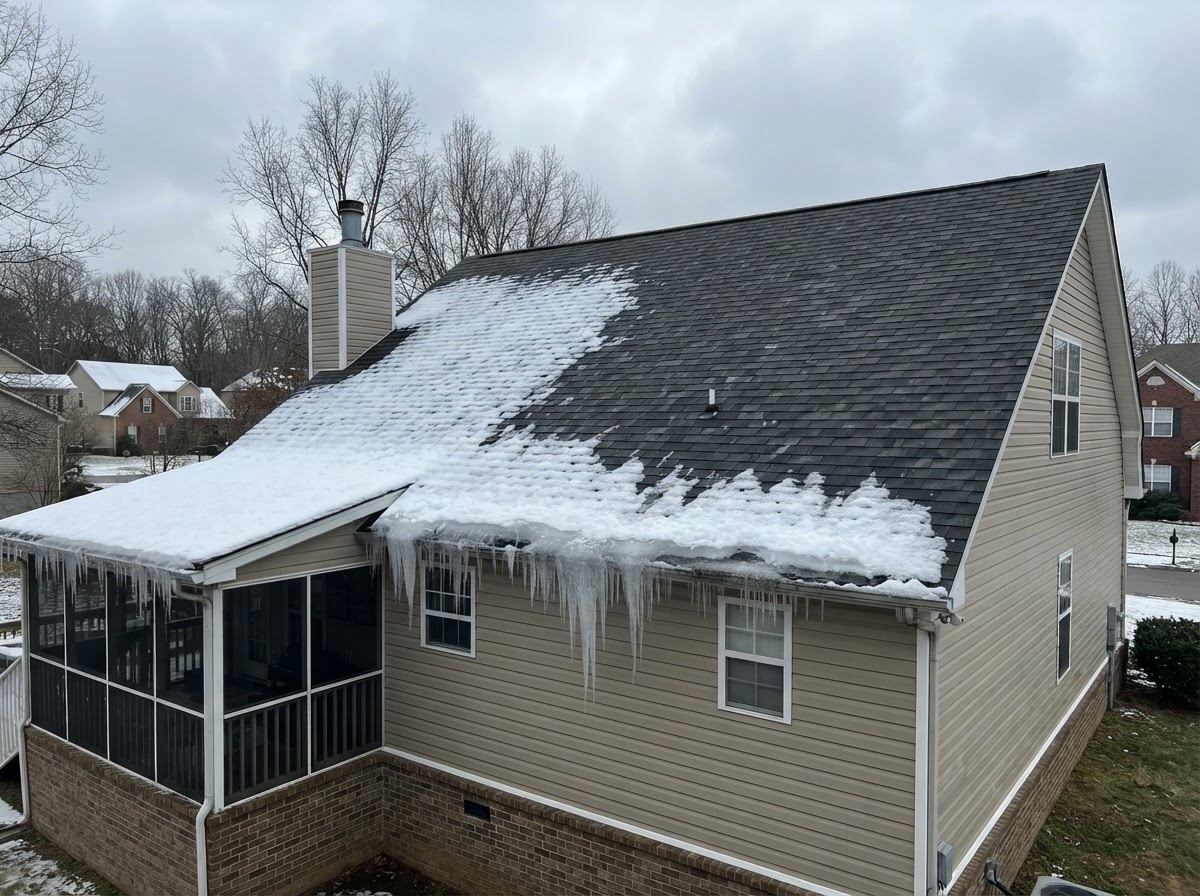
An ice dam is a ridge of ice that forms along the lower edge of a roof and traps melting snow behind it. As water backs up behind the dam, it works its way under the shingles, along the decking, and eventually into the home. The resulting leaks can stain ceilings, soak insulation, and rot the wood roof deck — all from a problem that started with warm air escaping from the living space below.
Middle Tennessee homeowners often assume ice dams are a northern problem. They are not. A single overnight freeze following a snowy Nashville day can be enough to form an ice dam on a roof with poor attic insulation or unbalanced ventilation, and the damage it causes is the same whether the freeze lasts two days or two months.
This guide explains exactly what causes an ice dam on a Middle Tennessee roof, how to prevent one with insulation and ventilation rather than heat cables, the warning signs to watch for in the attic and at the eaves, and what to do when water is already backing up under the shingles. If you are deciding whether a winter roof issue is a repair or a full replacement, see our roof repair vs. replacement guide first.
What Is an Ice Dam, and Why Does It Form on a Roof?
An ice dam forms when the roof deck above the living space is warmer than the outside air. Heat escapes from the house into the attic and warms the underside of the roof, which melts the bottom layer of snow on the shingles. The meltwater runs down the roof under the snow until it reaches the eaves — the part of the roof that extends past the exterior wall. The eaves are cold because there is no warm living space below them, so the water refreezes into a ridge of ice.
As more snow melts and runs down, it hits that ridge of ice at the eave and has nowhere to go. The water pools behind the dam, and because water only needs a tiny gap to travel, it works its way back up under the shingles, along the roof deck, and under the flashing. Once it is under the shingles, it is only a matter of time before it finds a nail hole, a seam, or a penetration and drips into the attic or onto the ceiling.
The key point is that the ice itself is not the source of the leak — the leak is the symptom. The source is the warm roof deck that melted the snow in the first place. Any prevention strategy that only removes the ice without addressing the heat loss is treating the symptom, not the cause.
Do Ice Dams Happen in Middle Tennessee?
Yes. Middle Tennessee does not need a sustained, deep freeze for an ice dam to form. The region regularly sees short cold snaps where daytime temperatures climb above freezing and overnight temperatures drop well below it. When those conditions follow a snow event — which Nashville and the surrounding area see most winters — the roof gets warm enough during the day to melt snow, and the eaves get cold enough overnight to refreeze it into an ice dam.
Homes most at risk in Middle Tennessee are the ones with poor attic insulation, unbalanced or missing ventilation, or a history of icicles hanging heavy along the eaves after a snow. A roof with a complicated design — multiple valleys, dormers, or a hip roof — is also more prone because those features concentrate snowmelt at specific points. For a full seasonal checklist, see our year-round roof maintenance guide, which includes the winter ice-and-moisture steps Middle Tennessee homeowners should take.

The Real Cause: Heat Loss, Not the Roof
The most common misconception about ice dams is that they are a roofing problem. They are usually an attic problem that shows up on the roof. The shingles are not producing the heat that melts the snow — the living space below is. The roof is simply the surface where the consequence becomes visible.
Heat reaches the roof deck through two paths. The first is conductive heat loss — heat moving through insulation that is too thin, missing, or compressed. The second is air leakage — warm indoor air escaping through gaps around recessed lights, plumbing penetrations, the attic hatch, chimney chases, and other unsealed openings. Air leakage is often the larger contributor because it carries both heat and moisture directly to the cold underside of the roof deck.
This is why a brand-new roof can still form ice dams if the attic below it is poorly insulated and vented. The new shingles do not stop the heat loss. The permanent fix always involves the attic — insulation, air sealing, and ventilation — not just the roof surface. For how ventilation specifically protects a Middle Tennessee roof, see our roof ventilation and attic guide.
How to Prevent Ice Dams: Insulation First
The first layer of prevention is attic insulation. The goal is to keep heat in the living space and out of the attic, so the roof deck stays close to the outside air temperature and snow does not melt unevenly. In Middle Tennessee, the Department of Energy recommends an attic insulation level around R-49 to R-60 for most homes, though the right level depends on the home's age, construction, and existing insulation type.
Insulation alone is not enough if it is installed wrong. Compressed insulation loses most of its insulating value, and insulation pushed tight against the roof deck at the eaves — where the roof slope meets the exterior wall — blocks the intake airflow that ventilation depends on. Baffles, also called vent chutes, are installed at the eaves to keep a clear air channel between the soffit intake vents and the attic so that insulation does not choke off the airflow the roof needs.
If your attic insulation is thin, missing in spots, or has been disturbed by past wiring or HVAC work, a free roof inspection can identify the gaps before the next freeze. Terry Woodall Roofing inspects the attic and ventilation system on every inspection across Middle Tennessee.
How to Prevent Ice Dams: Balanced Ventilation Second
The second layer of prevention is balanced attic ventilation. Ventilation works by drawing cool, dry outside air in through intake vents at the soffits and letting warm, moist attic air escape through exhaust vents at or near the ridge. This continuous airflow keeps the underside of the roof deck close to outside temperature, which is exactly what prevents snow from melting unevenly and refreezing at the eaves.
The balance matters as much as the total vent area. A common rule is roughly one square foot of net free vent area for every 300 square feet of attic floor when a vapor barrier is present, split roughly evenly between intake and exhaust. If intake is undersized — which it often is, because soffit vents clog with debris or get covered over by blown-in insulation — the exhaust vents cannot pull enough air, and the ventilation system stops working even though the vents are technically present.
Signs of unbalanced or inadequate ventilation include a very hot attic in summer, moisture or frost on the roofing nails in winter, curling shingles, and dark patches on the underside of the deck. Any of those in a Middle Tennessee attic is a reason to have the ventilation evaluated before winter. For the full framework, see our roof ventilation and attic guide.

Air Sealing: The Step Most Homeowners Skip
Between insulation and ventilation sits a third step that is often overlooked: air sealing. Warm indoor air escapes the living space through the attic floor at penetrations — recessed light fixtures, bathroom fan housings, plumbing stacks, the chimney chase, wiring holes, and the attic access hatch. Each one is a direct path for heat and moisture to reach the cold roof deck.
Air sealing means closing those gaps with appropriate materials — caulk, foam, or rigid baffles around heat-producing fixtures — so that the insulation above can do its job. Without air sealing, insulation mostly filters the warm air instead of blocking it, and the attic stays warmer than it should.
This is also a moisture issue. The same warm air that carries heat carries humidity, and when that humid air hits a cold roof deck it can condense into water or frost. That moisture rots the decking, corrodes nails, and feeds mold — separate from the ice dam itself but caused by the same heat loss. An inspection that finds frost on the underside of the deck in winter is finding the same root problem that produces ice dams.
Warning Signs an Ice Dam Is Forming
The earliest signs of an ice dam are visible from the ground. A thick ridge of ice along the eaves, large icicles hanging from the gutters in a continuous line, and patches of bare shingles higher up the roof while snow remains lower down are all indicators that snow is melting unevenly and refreezing at the edge.
Inside the attic, look for frost or moisture on the roofing nails and the underside of the deck in cold weather, water stains on the rafters or decking, and damp or compressed insulation near the eaves. Inside the living space, the first sign is often a brown or yellow stain on a ceiling near an exterior wall, a damp smell, or paint bubbling near the top of an exterior wall — all signs that water has already backed up under the shingles and traveled down the wall.
If you see any of these signs during or after a Middle Tennessee freeze, do not wait for the leak to worsen. A free inspection can confirm whether the roof is actively leaking and whether the cause is an ice dam or a separate flashing or penetration problem. For what to do in the moment while you wait for a roofer, see our roof leak emergency guide.
What to Do When an Ice Dam Is Already Forming
If an ice dam has formed and water is entering the home, the first priority is containing the water — move belongings, place a bucket, and protect the area — not climbing onto a frozen roof to remove the ice. Never chip at an ice dam with a shovel, axe, or hammer. The damage to the shingles will be worse than the leak, and a fall from an icy roof is the single most serious DIY roofing injury.
A roofing professional can safely remove the ice and, if needed, install a temporary membrane or heat cable along the eave to keep a channel open until the attic heat-loss problem can be permanently addressed. Heat cables are a short-term mitigation, not a fix — they melt a channel through the ice so water can drain, but they do not stop the dam from forming in the first place and they do not address the rotted decking or wet insulation that may already be underneath.
The permanent fix is always the same: reduce heat loss with insulation and air sealing, and balance the ventilation so the roof deck stays cold. If the decking under the dam is already rotted or the shingles at the eave are damaged, those components need to be repaired or replaced. For what it costs to replace rotted decking when bad wood is found, see our roof decking replacement cost guide.
Do Heat Cables or Ice-and-Water Membrane Prevent Ice Dams?
Heat cables and ice-and-water membrane are both useful, but they solve different problems and neither is a true prevention for the underlying cause. Heat cables keep a channel open through an existing ice dam so water can drain, which limits the leak but does not stop the dam from forming. They are best used as temporary mitigation on a roof that is already prone to dams while the attic heat loss is being fixed.
Ice-and-water membrane, a self-adhering underlayment installed along the eaves and in valleys, gives the roof deck extra protection if water does back up under the shingles. It does not stop the ice dam — it reduces the damage when one forms. It is standard on quality roof replacements in Middle Tennessee because it is cheap insurance for the eaves, but it is not a substitute for fixing the insulation and ventilation that cause the dam.
The honest answer is that the only real prevention is a cold roof deck, which comes from insulation, air sealing, and ventilation. Everything else is damage control. If your roofer is only offering heat cables and not evaluating the attic, the ice dams will return.
When Ice Dam Damage Means a Repair vs. a Replacement
Not every ice dam leads to a full roof replacement. If the damage is limited to the eaves — a section of rotted decking, damaged shingles, or compromised drip edge — a targeted repair that also fixes the underlying heat loss can be the right answer. The repair replaces the damaged components, the attic insulation and ventilation are corrected so the dam does not reform, and the rest of the roof is left alone.
A replacement becomes the better call when the decking damage is widespread, the shingles are already near the end of their useful life, or the ice dam is one symptom of a roof that has been leaking in multiple areas. In that case, a full replacement with ice-and-water membrane at the eaves, new drip edge, and a properly ventilated attic is the permanent fix. For how to weigh that decision honestly, see our roof repair vs. replacement guide.
The one thing not to do is ignore a roof that has formed ice dams. Each freeze-thaw cycle widens the gap under the shingles, the decking absorbs more water, and the repair gets more expensive. A free inspection before the next freeze tells you whether the roof can make it through winter or needs attention now. For why fall is the best time to act, see our fall roof replacement timing guide.
Why Fall Is the Time to Prevent Winter Ice Dams
Ice dam prevention is a fall project, not a winter one. Once the snow is on the roof and the freeze is underway, the options narrow to emergency mitigation — tarps, heat cables, and containing the water inside — all of which are more expensive and less effective than the insulation, air sealing, and ventilation work that can be done while the attic is dry and accessible.
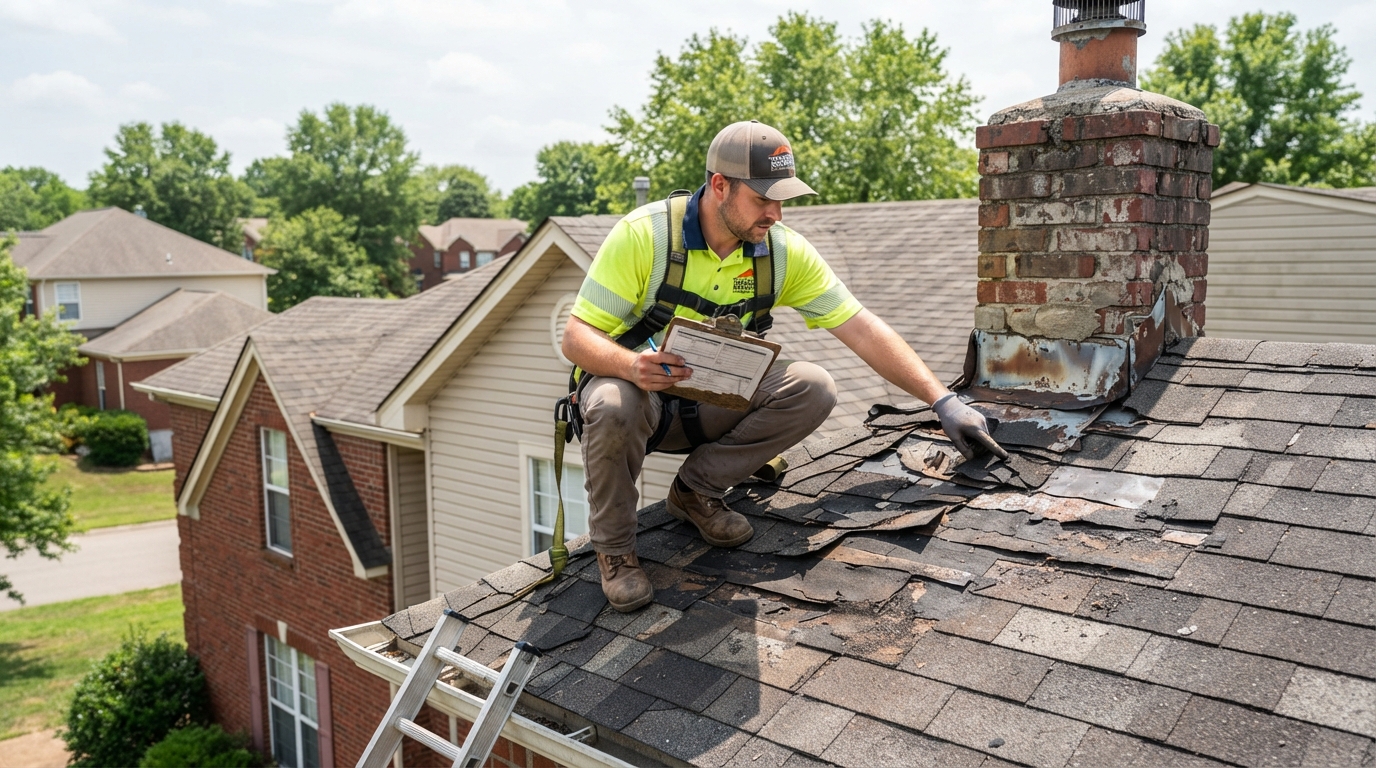
October in Middle Tennessee offers the best window for that work. The attic is cool enough to enter safely, the roof is dry, and any repair or replacement can be scheduled and completed before the first hard freeze. A fall inspection also catches the smaller problems — a cracked pipe boot, a lifted flashing tab, a few creased shingles — that a winter storm will turn into an emergency. For exactly what a contractor checks in October, see our fall roof inspection guide.
If the roof is already sound and only the attic needs work, the fix can be completed in a day or two. If the roof itself needs a repair or replacement, October is the last reliable window before winter weather makes roofing more difficult. For whether roofing can be done in cold weather at all, see our winter roofing guide.
A Simple Ice Dam Prevention Checklist for Middle Tennessee Homes
Use this checklist before the first hard freeze. Most items can be evaluated from the attic or the ground; anything that requires getting on the roof should be left to a professional.
1. Check attic insulation depth and coverage — look for thin, missing, or compressed areas, especially at the eaves. 2. Confirm soffit intake vents are clear and not blocked by insulation or debris. 3. Check that exhaust vents — ridge, box, or powered — are present and unobstructed. 4. Look for air leaks around recessed lights, the attic hatch, plumbing stacks, and the chimney chase. 5. Inspect the underside of the roof deck for frost, moisture, or dark water stains. 6. From the ground after a snow, look for uneven melting and ice ridges at the eaves. 7. If the roof has formed ice dams before, schedule a free inspection to evaluate the decking and ventilation before the next winter.
Don't Wait Until the First Freeze to Find Out What Your Roof Needs
Ice dam damage is preventable, but only if the attic and roof are evaluated before the snow arrives. A roof that has formed ice dams once will form them again until the heat loss is fixed, and each cycle makes the repair more expensive.
Terry Woodall Roofing Contractors has served Middle Tennessee since 1983 and offers free roof inspections within its service area. Terry personally answers the business phone, and the company's approach is inspection-first: identify the actual cause — whether it is insulation, ventilation, flashing, or decking — and recommend the work the roof actually needs, including a repair when a repair solves the problem. Call Terry directly at (615) 300-6005 or request a free roof inspection before the next freeze.
Have a question about your roof?
Terry personally answers the phone — no sales reps, no pressure.
Frequently Asked Questions
Straight answers to common questions from Middle Tennessee homeowners.
Can ice dams form on a roof in Middle Tennessee?
Yes. Middle Tennessee does not need a long, deep freeze for an ice dam to form. A single overnight freeze following a snowy day can melt snow on a warm roof deck and refreeze it at the cold eaves. Homes with poor attic insulation, unbalanced ventilation, or a history of heavy icicles after a snow are the most at risk.
What causes an ice dam on a roof?
An ice dam is caused by heat escaping from the living space into the attic and warming the roof deck, which melts the bottom layer of snow. The meltwater runs down to the colder eaves and refreezes into a ridge of ice. Water then pools behind that ridge and backs up under the shingles. The cause is heat loss, not the roof itself — which is why a new roof can still form ice dams if the attic is poorly insulated or vented.
How do I stop ice dams permanently?
The permanent fix is a cold roof deck, achieved through three steps: add attic insulation to the recommended level for Middle Tennessee, seal air leaks around penetrations and the attic hatch, and balance the ventilation so intake at the soffits roughly matches exhaust at the ridge. Heat cables and ice-and-water membrane reduce damage but do not address the heat loss that causes the dam.
Do heat cables prevent ice dams?
No. Heat cables melt a channel through an existing ice dam so water can drain, which limits the leak, but they do not stop the dam from forming and they do not fix the rotted decking or wet insulation underneath. They are temporary mitigation for a roof that is already prone to dams while the attic heat-loss problem is being corrected.
Should I chip ice off my roof myself?
Never. A fall from an icy, steep roof is the single most serious DIY roofing injury, and a shovel, axe, or hammer will damage the shingles worse than the ice dam itself. A roofing professional can remove the ice safely and, if needed, install temporary protection until the attic insulation and ventilation can be permanently fixed.
What are the signs an ice dam is forming?
From the ground, look for a thick ridge of ice along the eaves, a continuous line of large icicles, and patches of bare shingles higher up while snow remains lower down. In the attic, look for frost or moisture on the roofing nails and the underside of the deck, water stains on the rafters, and damp insulation near the eaves. Inside, a ceiling stain near an exterior wall or bubbling paint near the top of a wall often means water has already backed up under the shingles.
Does homeowners insurance cover ice dam damage in Tennessee?
Whether ice dam damage is covered depends on your individual policy, your deductible, and the cause of the loss. Most standard Tennessee homeowners policies cover sudden water damage from an ice dam, but coverage for the underlying cause — the heat loss — is usually a maintenance and home-improvement issue rather than a covered peril. A roofing contractor can document the physical damage, but only your insurer can determine how your policy applies. For the full claims process, see our Tennessee roofing insurance claims guide.
Can a roof with ice dam damage be repaired, or does it need replacement?
It depends on the extent. If the damage is limited to the eaves — a section of rotted decking, damaged shingles, or compromised drip edge — a targeted repair that also fixes the attic heat loss can be the right answer. If the decking damage is widespread, the shingles are near the end of their life, or the roof has been leaking in multiple areas, a full replacement with ice-and-water membrane and proper ventilation is the permanent fix. A free inspection tells you which one your roof actually needs.
When is the best time to prevent ice dams in Middle Tennessee?
Fall — ideally October. Once snow and ice are on the roof, the options narrow to emergency mitigation, which is more expensive and less effective than the insulation, air sealing, and ventilation work that can be done while the attic is dry and accessible. October in Middle Tennessee offers the best window because the attic is cool enough to enter, the roof is dry, and any repair can be scheduled before the first hard freeze.
Will better ventilation stop ice dams without adding insulation?
Probably not by itself. Ventilation and insulation work together. Ventilation keeps the roof deck cold by moving air, but if the attic is losing large amounts of heat through thin insulation and air leaks, the ventilation cannot keep up. The most effective prevention combines all three: insulation to slow heat loss, air sealing to stop warm air leaks, and balanced ventilation to keep the deck at outside temperature.
Terry Woodall Roofing Contractors
From the Terry Woodall Roofing Contractors Resource Center — serving Middle Tennessee homeowners since 1983
Terry Woodall Roofing Contractors brings over 40 years of hands-on roofing experience to Middle Tennessee homeowners. These resources are prepared to help homeowners understand roof maintenance, storm damage mitigation, and the insurance claims process so every home is protected. Founder Terry Woodall personally oversees the company's roofing work across Nashville, Franklin, Brentwood, and the surrounding communities.
This guide relies on authoritative industry standards, building code regulations, and verifiable research from recognized organizations:
- U.S. Department of Energy — Insulation and Air Sealing Guidanceenergy.gov
- Oak Ridge National Laboratory — Attic Ventilation and Moisture Control Researchornl.gov
- International Association of Certified Home Inspectors — How Ice Dams Formnachi.org
- Tennessee Department of Commerce & Insurance — Consumer Resourcestn.gov
Found this guide useful? Copy a ready-to-paste citation and attribute Terry Woodall Roofing as your source.
Terry Woodall Roofing Contractors. (2026-10-18). How to Prevent Ice Dams on a Middle Tennessee Roof This Winter (2026 Guide). Terry Woodall Roofing. https://terrywoodallroofing.com/resources/how-to-prevent-ice-dams-middle-tn
Related Roofing Services
If you suspect your roof needs attention, Terry Woodall offers straightforward evaluations across Middle Tennessee:
Where We Work in Middle Tennessee
Keep Reading
Request a Call
Get straightforward answers directly from Terry.
This form is for Middle Tennessee homeowners requesting roofing help only. Marketing, sales, and vendor solicitations are not accepted and will be discarded.
Need an Honest Roof Inspection?
Speak directly with Terry Woodall today. No pushy sales representatives, just a local reputation built since 1983.
Call (615) 300-6005Text TerryDon't wait until the first freeze to find out what your roof needs. Terry Woodall Roofing Contractors has served Middle Tennessee since 1983, provides free roof inspections within its service area, and evaluates attic insulation and ventilation on every inspection. Terry personally answers the business phone at (615) 300-6005. Call Terry directly or request a free roof inspection before the next winter storm.