
Can a Roof Be Replaced in the Winter in Tennessee? Cold-Weather Roofing Guide
Wondering if it's too cold to replace or repair a roof in Tennessee? Learn the 40°F manufacturer guideline for asphalt shingles, what winter roofing requires, and when you should not wait until spring.
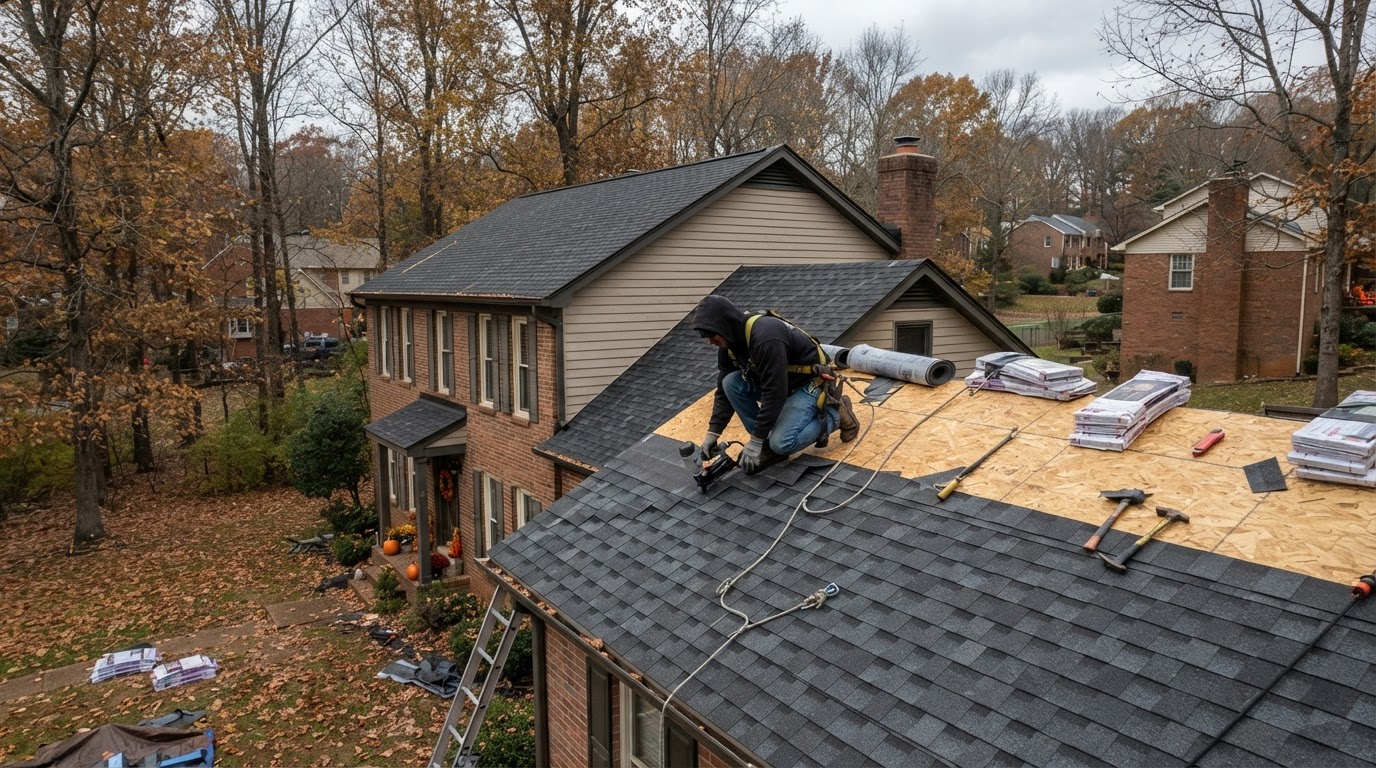
- 1.The 40°F Guideline: Why Temperature Matters for Asphalt Shingles
- 2.Can a Full Roof Replacement Be Done in the Winter?
- 3.Can a Roof Repair Be Done in the Winter?
- 4.What Happens to Shingles in the Cold?
- 5.Winter Roof Replacement vs. Winter Roof Repair
- 6.When You Should NOT Wait Until Spring
- 7.Tennessee's Winter Climate and Your Roof
- 8.Questions to Ask a Roofer About Winter Work
- 9.Don't Let a Repairable Roof Become a Winter Emergency
Yes, roofing work can be done in Tennessee winters, but with important limits. Asphalt shingle manufacturers generally recommend installation at or above 40°F so the self-seal strip can bond the shingles. Below 40°F, shingles become brittle and the sealant may not activate, so cold-weather installation requires extra precautions such as hand-sealing. Most repairs can be performed in cold weather, while a full replacement during a deep freeze carries more risk. An inspection is the only reliable way to know whether a roof can wait until spring or needs attention now. Terry Woodall Roofing offers free inspections across Middle Tennessee — call (615) 300-6005.
Key Takeaways for Middle Tennessee Homeowners
- Asphalt shingle manufacturers generally recommend installing shingles at temperatures at or above 40°F so the self-seal strip can activate and bond the shingles together.
- Below 40°F, shingles become more brittle, the sealant strip may not bond properly, and special cold-weather installation precautions are required.
- Most roof repairs can be performed in cold weather, but a full replacement in a deep freeze carries more risk and should be weighed carefully.
- Waiting until spring is not always the safe choice — a small, repairable problem in October can become an emergency interior leak by January.
- Terry Woodall Roofing Contractors provides free roof inspections across Middle Tennessee so homeowners can make an informed decision before winter — call (615) 300-6005.
If your roof is failing in October or November, one of the first questions you may ask is whether you can have it repaired or replaced in the winter — or whether you have to wait until spring. It is a fair question, and the answer depends on the temperature, the type of work, and the actual condition of your roof.
Asphalt shingles, the most common residential roofing material in Middle Tennessee, are temperature-sensitive. Manufacturers generally recommend installing them at or above 40°F so the self-sealing adhesive strip can activate and bond the shingles together. Below that threshold, the shingles become more brittle and the sealant may not bond properly, which is why cold-weather roofing requires extra precautions.
But here is the part many homeowners miss: deciding whether to wait until spring is itself a roofing decision. A small, repairable leak in the fall can turn into an interior water emergency by January if it is ignored. The purpose of this guide is to help you understand when winter roofing is safe, when it is risky, and when waiting is actually the more dangerous choice. If you want the roof evaluated before you decide, Terry Woodall Roofing offers a free roof inspection across its Middle Tennessee service area.
Is Your Roof Winter-Ready?
5 quick questions — see your winter-readiness score and what to do next.
Before winter weather sets in across Middle Tennessee, take this quick 5-question quiz to find out whether your roof is ready — or whether a small problem could turn into a January emergency.
Based on our guide Can a Roof Be Replaced in the Winter in Tennessee?.
Winter Roof Replacement vs. Winter Roof Repair
Use this as a general guide, not a hard rule. Every situation still needs an in-person inspection to weigh the factors together.
| Situation | Repair may make sense | Replacement may make sense |
|---|---|---|
| Isolated damage (few shingles, one flashing leak) | Usually safe and fast in winter; small exposure window | Not justified by a single small problem |
| Active leak through the roof | Often the right first step; stop the water now | Consider only if inspection shows widespread failure |
| Widespread shingle failure, no active leak yet | May buy time to spring, if inspection confirms it | Schedule for a warmer window if roof is still dry |
| Widespread failure with repeated leaks | Will not solve the underlying problem | Lower total risk than waiting through winter |
| Storm damage found in fall | Repair before winter compounds the damage | Only if the storm damage is extensive |
The 40°F Guideline: Why Temperature Matters for Asphalt Shingles
Most asphalt shingle manufacturers, including GAF, recommend installing their shingles at temperatures at or above 40°F (4°C). The reason is the self-seal strip — a band of factory-applied adhesive on each shingle that activates with warmth and bonds overlapping shingles together. That bond is what gives a shingle roof its resistance to wind uplift.
When the temperature drops well below 40°F, two things happen. First, the asphalt shingles themselves become more brittle and can crack when nailed or bent. Second, the self-seal strip may not get warm enough to activate, so the shingles never fully bond to one another. A roof installed in those conditions without corrective steps can leave shingles vulnerable to blowing off in the first high wind.
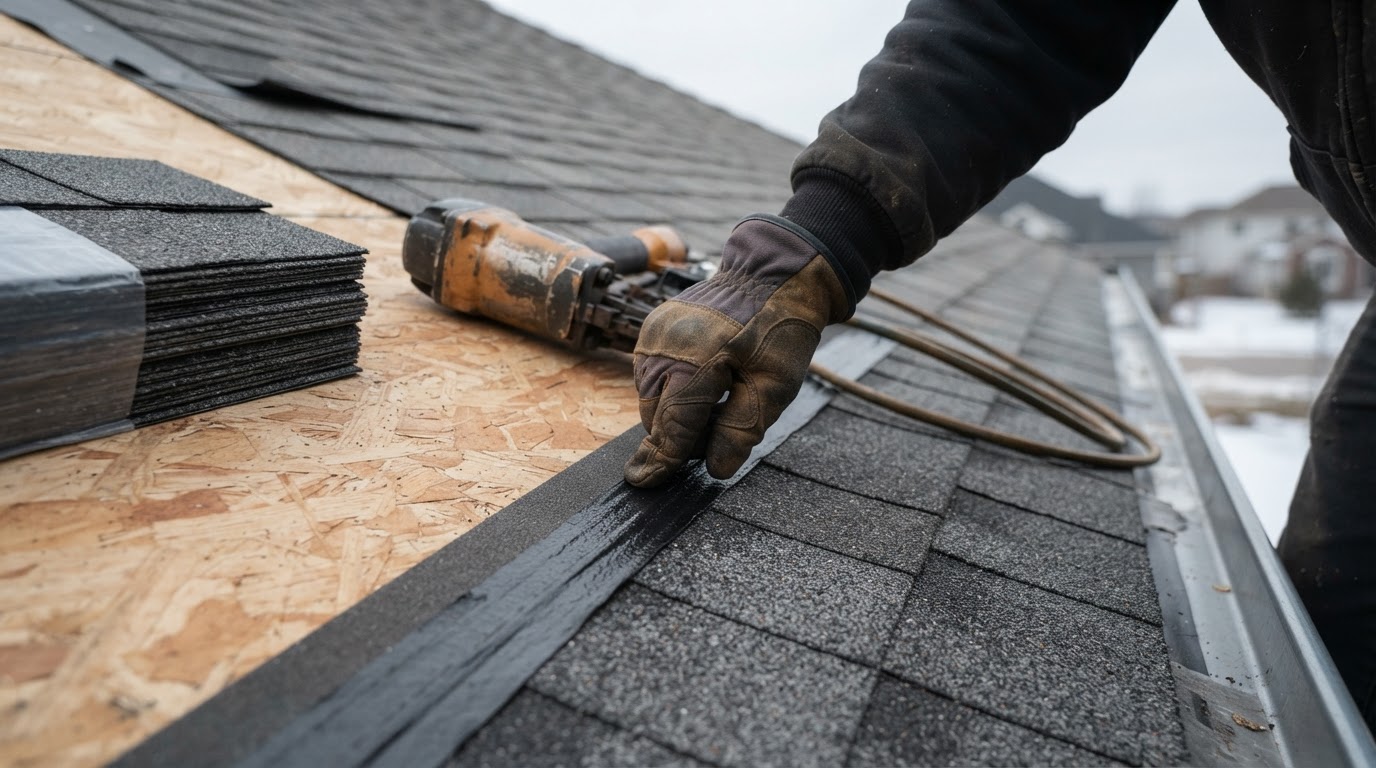
This does not mean roofing automatically stops at 39°F. It means that below the manufacturer's recommended temperature, a contractor must follow specific cold-weather installation procedures — typically hand-sealing individual shingles with an approved asphalt cement and taking extra care with nailing to avoid cracking the shingle. A reputable roofer will tell you whether those precautions apply to your project.
Can a Full Roof Replacement Be Done in the Winter?
Yes, a full roof replacement can be performed in the winter in Tennessee, but it carries more risk than a spring or fall replacement and the decision should be made thoughtfully. Middle Tennessee winters are relatively mild compared with northern states, and many winter days do climb above 40°F, which makes installation feasible. The risk comes from the cold snaps and the days that stay below freezing.
A full tear-off exposes the entire roof deck to the weather for the duration of the project. In cold, damp, or windy winter conditions, that open exposure window is more hazardous than in summer. If freezing rain or an unexpected storm arrives while the roof is open, the home is more vulnerable. This is why winter replacements are usually scheduled around a clear weather window and completed as quickly as possible.
If your roof is actively leaking or has widespread failure, the risk of waiting through winter may be greater than the risk of a cold-weather replacement. But if the roof is simply aging and not leaking, there is usually no reason to rush a replacement into a January freeze — a repair or temporary protection may carry you to a safer installation window. If you are unsure which situation you are in, read our roof repair vs. replacement guide or have the roof inspected.
Can a Roof Repair Be Done in the Winter?
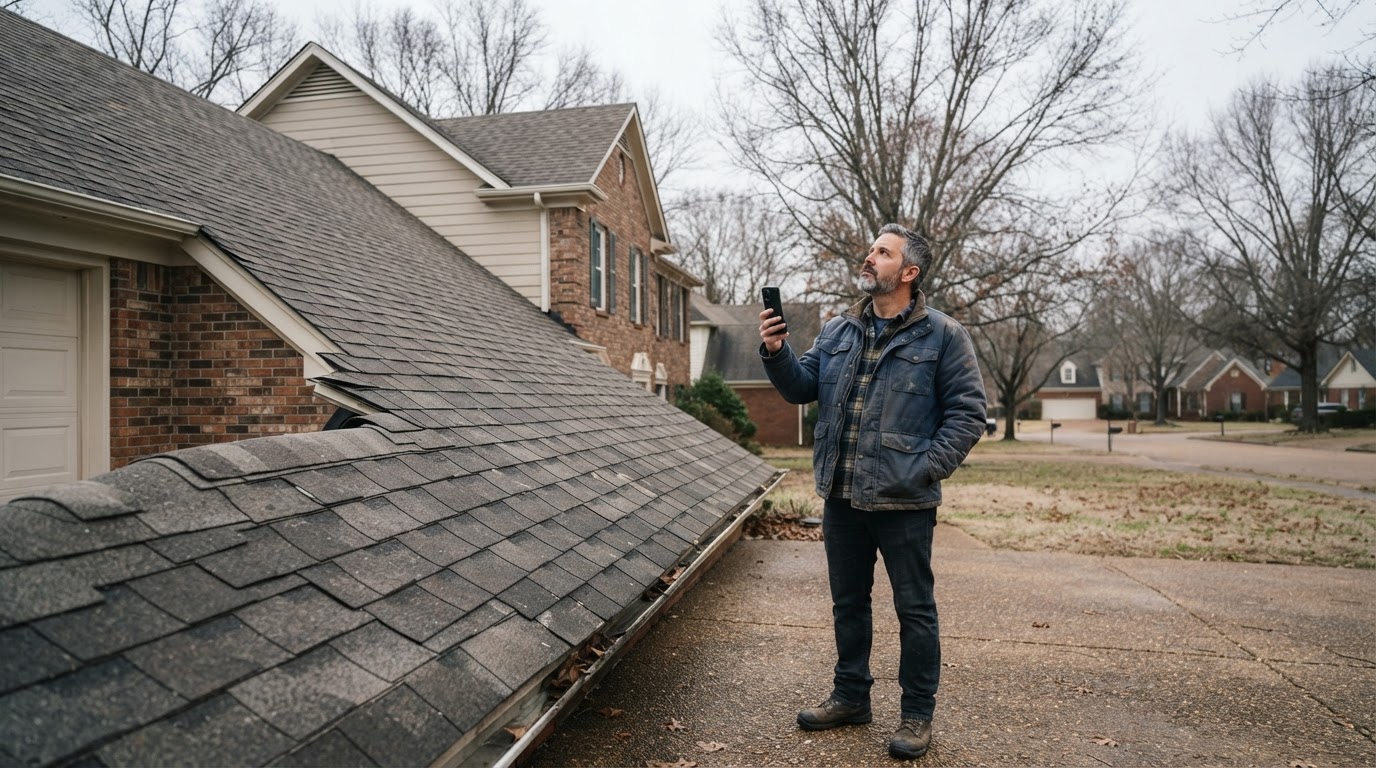
In most cases, yes — and this is an important distinction. Roof repairs are far more forgiving in cold weather than full replacements because they expose a much smaller area and take less time. A targeted repair to a pipe boot, a section of flashing, or a few damaged shingles can usually be completed safely even when the temperature is below the ideal installation range.
A small repair does not leave the whole roof deck open, so the weather-exposure risk is minimal. The contractor may still need to hand-seal the replacement shingles if the temperature is too low for the self-seal strip to activate, but that is a manageable precaution rather than a reason to refuse the repair.
This matters because the most common winter roofing mistake is not installing a roof in the cold — it is ignoring a repairable problem until it becomes an emergency. A single damaged shingle or a cracked pipe boot in November can let water into the attic by January, turning a small repair into interior drywall, insulation, and decking damage. For the typical cost of a repair versus a full replacement, see our roof repair cost guide.
What Happens to Shingles in the Cold?
Understanding why cold weather complicates roofing helps you evaluate a contractor's winter recommendation. Asphalt shingles are manufactured to be flexible enough to bend over roof contours and to absorb the impact of nailing. As the temperature drops, that flexibility decreases.
In cold conditions, shingles can become stiff and brittle. Nailing a brittle shingle can cause the nail head to punch through or the shingle to crack around the nail line. Bending a cold shingle over a ridge or a valley can create fractures that may not be visible immediately but can fail later. Manufacturers account for this by recommending warmer installation temperatures and, when cold installation is unavoidable, by specifying hand-sealing and careful nailing procedures.
Proper material storage also matters. Shingles stored in a cold trailer or on a frozen roof surface will be stiffer than shingles stored in a temperature-controlled environment before installation. A careful winter roofing crew will stage materials so they are as workable as possible. If a contractor shows up to install a roof in a hard freeze with no mention of these precautions, that is worth asking about.
Winter Roof Replacement vs. Winter Roof Repair
Because repairs and full replacements carry very different levels of winter risk, it helps to compare them directly. The right choice depends on the condition of the roof, not the calendar.
A repair is usually a safe winter option when the damage is isolated — a few missing shingles, one leaking flashing detail, or a single failed pipe boot — and the rest of the roof still has useful life. The exposure window is small, the work is fast, and the risk to the home is low.
A full replacement in winter is more justifiable when the roof is already failing broadly or leaking in multiple areas, because waiting risks repeated interior damage through the wettest months. For a roof that is aging but not leaking, scheduling the replacement for a warmer window is usually the lower-risk path. The decision should follow the roof's condition, not a season.
When You Should NOT Wait Until Spring
The safest-sounding advice — 'wait until spring' — is not always safe. Waiting is only safe if the roof can actually make it through the winter without failing. If it cannot, waiting converts a planned repair into an emergency.
You should not wait until spring when there is an active leak, when shingles are missing in a large area, when the roof deck is soft or sagging, or when an inspection has already identified widespread failure. In those cases, the cost of an emergency winter call — possibly including interior damage and emergency tarping — will almost always exceed the cost of addressing the problem on your terms now.
If water is already entering the home, that is an emergency regardless of the season. Our emergency roof tarping guide explains what temporary protection can do and when to call. For a roof that is not yet leaking but that you suspect may not survive the winter, a free inspection is the lowest-risk way to find out before the weather turns.
Tennessee's Winter Climate and Your Roof
Middle Tennessee winters are relatively mild, which is relevant to the roofing decision. Nashville and the surrounding area typically see winter high temperatures in the 40s and 50s, with cold snaps that can drop below freezing overnight. That means many winter days are technically within the manufacturer-recommended installation range, especially by late morning and afternoon.
However, Tennessee winters also bring ice, occasional freezing rain, and heavy winter storms that can stress an already-compromised roof. Middle Tennessee is also hail country, and storm damage discovered in the fall should be addressed before winter weather compounds it. The local risk profile is not extreme cold — it is repeated wet, freezing, and storm events hitting a roof that may already be weakened.
This is why a seasonal inspection in October or November is valuable. It tells you whether your roof is winter-ready or whether a repair should be scheduled before the worst weather arrives. For the warning signs that replacement may be closer than you think, see our guide on the signs you need a roof replacement.
Questions to Ask a Roofer About Winter Work
If you are considering roofing work in cold weather, a few direct questions will tell you whether the contractor is thinking about the conditions or simply scheduling the job. Ask whether the expected installation temperature is above or below the manufacturer's 40°F recommendation, and what cold-weather precautions the crew will use if it is below that threshold.
Ask how the shingles will be sealed if the self-seal strip cannot activate, how the materials will be stored and staged before installation, and how the crew will protect the open roof deck if the weather changes mid-project. A contractor who can answer these questions specifically is thinking about your roof, not just the calendar.
Finally, ask whether a repair is a reasonable option instead of a full replacement. An honest roofer will not push a winter replacement when a smaller repair can carry the roof safely to spring. Terry Woodall Roofing's approach is exactly that: inspect first and recommend the work the roof actually needs, including a repair when a repair reasonably solves the problem.
Don't Let a Repairable Roof Become a Winter Emergency
The single most expensive winter roofing scenario is not a cold-weather installation — it is the emergency interior repair that follows a problem that was ignored. A ceiling stain noticed in October, a missing shingle spotted after a storm, or a slow leak around a chimney are all small problems with small repair costs. Left through a Tennessee winter of repeated rain, ice, and wind, the same problems can require decking replacement, insulation replacement, drywall repair, and interior repainting.
If you noticed a problem this fall, the highest-value action is a professional inspection before winter weather sets in. You will either learn the roof is fine and can wait, or you will get a clear recommendation you can act on while the cost is still small. Terry Woodall Roofing Contractors has served Middle Tennessee since 1983 and provides free roof inspections within its service area. Terry personally answers the business phone at (615) 300-6005.
Call Terry directly at (615) 300-6005 or request a free roof inspection before winter weather compounds a problem that may still be repairable today.
Winter Roofing Decision Checklist
- Is there an active leak? If yes, do not wait — address it now.
- Is the damage isolated or widespread? Isolated damage usually means a repair.
- Has the roof been inspected this fall? An inspection removes the guesswork.
- Is the expected installation day above 40°F? If not, ask about cold-weather precautions.
- If the self-seal strip cannot activate, will the shingles be hand-sealed?
- How will the open roof deck be protected if the weather changes mid-project?
- Is a repair a reasonable option, or is the roof genuinely at the end of its life?
- If you wait until spring, can the roof realistically survive the winter without failing?
Have a question about your roof?
Terry personally answers the phone — no sales reps, no pressure.
Frequently Asked Questions
Straight answers to common questions from Middle Tennessee homeowners.
Can a roof be replaced in the winter in Tennessee?
Yes, but it carries more risk than a spring or fall replacement. Asphalt shingle manufacturers generally recommend installation at or above 40°F so the self-seal strip can bond the shingles. Middle Tennessee has many winter days above that threshold, but cold snaps and storms add risk because a tear-off leaves the roof deck exposed. A winter replacement is most justifiable when the roof is already failing broadly; an aging but dry roof can usually wait for a warmer window.
What temperature is too cold to install asphalt shingles?
Most manufacturers, including GAF, recommend installing asphalt shingles at 40°F or above. Below 40°F, the self-seal strip may not activate and the shingles become more brittle. Installation below 40°F is possible but requires specific cold-weather precautions such as hand-sealing each shingle with an approved asphalt cement and careful nailing to avoid cracking.
Can a roof repair be done in cold weather?
In most cases, yes. Repairs are far more forgiving than full replacements because they expose a small area and take less time. A targeted repair to a pipe boot, flashing, or a few shingles can usually be completed safely in cold weather, though the contractor may need to hand-seal the replacement shingles if it is too cold for the self-seal strip to activate.
Is it better to wait until spring to replace my roof?
Only if the roof can safely survive the winter. Waiting is safe for an aging, dry roof that is not leaking. Waiting is risky and often more expensive when there is an active leak, missing shingles over a large area, or widespread failure, because the same problem can become an emergency interior leak during winter storms. An inspection is the reliable way to decide.
What happens if shingles are installed when it is too cold?
If shingles are installed well below 40°F without cold-weather precautions, the self-seal strip may not bond, leaving shingles vulnerable to wind uplift, and the cold shingles can crack when nailed. A responsible contractor uses hand-sealing and careful nailing procedures to compensate, and stages materials so they are as workable as possible.
Will shingles seal in the winter after a cold installation?
Shingles installed in cold weather may not seal until a warm day arrives and activates the self-seal strip. Until then, the roof relies on the hand-sealing the crew applied and the nails. This is why cold-weather installation requires those extra steps — the shingles need to stay in place until warm weather completes the bond.
Should I get my roof inspected before winter?
Yes. A fall inspection is the single most valuable winter-roofing decision you can make. It tells you whether your roof is winter-ready or whether a small repair should be scheduled before the worst weather arrives. An inspection is far less expensive than an emergency winter leak and the interior damage that can follow.
Does Terry Woodall Roofing do winter roof repairs in Middle Tennessee?
Yes. Terry Woodall Roofing Contractors performs roof repairs across Middle Tennessee through the winter months and provides free roof inspections to help homeowners decide whether a repair is needed before winter weather compounds a problem. Terry personally answers the business phone at (615) 300-6005.
Terry Woodall Roofing Contractors
From the Terry Woodall Roofing Contractors Resource Center — serving Middle Tennessee homeowners since 1983
Terry Woodall Roofing Contractors brings over 40 years of hands-on roofing experience to Middle Tennessee homeowners. These resources are prepared to help homeowners understand roof maintenance, storm damage mitigation, and the insurance claims process so every home is protected. Founder Terry Woodall personally oversees the company's roofing work across Nashville, Franklin, Brentwood, and the surrounding communities.
This guide relies on authoritative industry standards, building code regulations, and verifiable research from recognized organizations:
Found this guide useful? Copy a ready-to-paste citation and attribute Terry Woodall Roofing as your source.
Terry Woodall Roofing Contractors. (2026-10-01). Can a Roof Be Replaced in the Winter in Tennessee? Cold-Weather Roofing Guide. Terry Woodall Roofing. https://terrywoodallroofing.com/resources/can-roof-be-replaced-in-winter-tennessee
Related Roofing Services
If you suspect your roof needs attention, Terry Woodall offers straightforward evaluations across Middle Tennessee:
Where We Work in Middle Tennessee
Keep Reading
Request a Call
Get straightforward answers directly from Terry.
This form is for Middle Tennessee homeowners requesting roofing help only. Marketing, sales, and vendor solicitations are not accepted and will be discarded.
Need an Honest Roof Inspection?
Speak directly with Terry Woodall today. No pushy sales representatives, just a local reputation built since 1983.
Call (615) 300-6005Text TerryDon't let a repairable roof become a winter emergency. If you noticed a problem this fall, the highest-value step is a professional inspection before winter weather sets in. Terry Woodall Roofing Contractors has served Middle Tennessee since 1983, provides free roof inspections, and Terry personally answers the business phone. Call Terry directly at (615) 300-6005 or request a free roof inspection.