
Roof Leaking in Nashville? What to Do Immediately & When to Call a Roofer
Discovering a leaking roof in Nashville or Middle Tennessee? Learn what to do immediately, when it's an emergency, common leak causes, and when to call a roofer — honest, inspection-first guidance from Terry Woodall Roofing.
- 1.What to Do Immediately When You Discover a Roof Leak
- 2.When Is a Roof Leak an Emergency?
- 3.Common Causes of Roof Leaks in Nashville & Middle Tennessee
- 4.Why the Location of the Interior Drip May Not Be the Location of the Roof Damage
- 5.How Professional Roofers Find the Source of a Leak
- 6.Can a Leaking Roof Usually Be Repaired?
- 7.When a Roof Leak May Point to a Larger Replacement Problem
- 8.Roof Leaks After Heavy Rain, Wind, Hail or Storm Damage
- 9.How to Document Visible Damage Safely
- 10.What NOT to Do When Your Roof Is Leaking
- 11.When to Request a Professional Roof Inspection
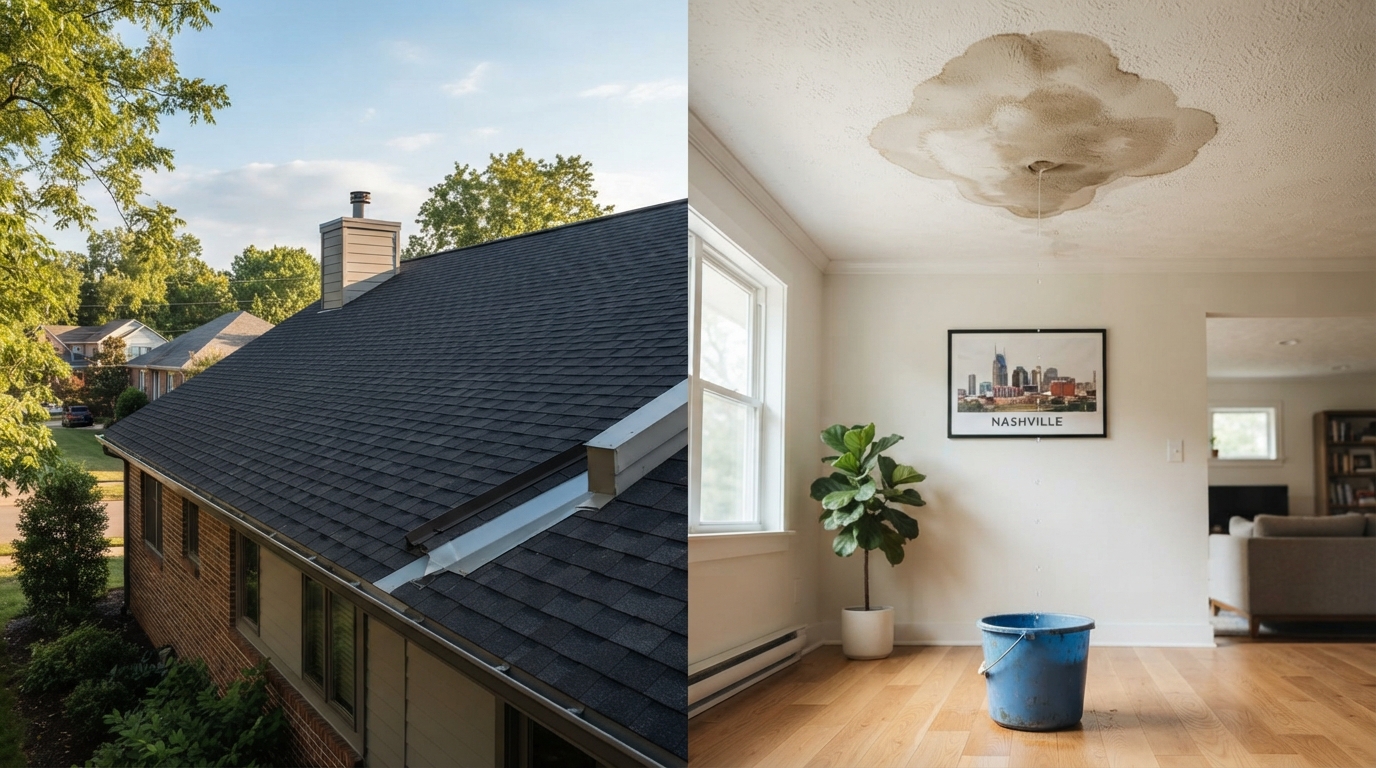
First, keep your family safe. Stay away from any sagging or bulging ceiling — it could collapse under pooled water — and avoid contact with any water near electrical fixtures, outlets, wiring, or the electrical panel. Do not climb onto a wet, steep, or storm-damaged roof. From inside, move valuables away from the wet area and place a bucket under active drips; if a ceiling is bulging, a small puncture can relieve water weight, but only if you can do it safely. Then call a professional roofer. Terry Woodall personally answers the business phone at (615) 300-6005 and prioritizes rapid response for urgent roofing problems across Middle Tennessee.
Key Takeaways for Middle Tennessee Homeowners
- Safety comes first — stay away from sagging or bulging ceilings and any water near electrical fixtures, outlets, wiring, or the electrical panel.
- Do not climb onto a wet, steep, or storm-damaged roof. Most immediate steps happen safely from inside the home and from the ground.
- The interior drip is rarely the exact spot of the roof damage. Water often travels along the decking before it shows up on your ceiling.
- Most isolated leaks can be repaired — but repeated leaks, widespread shingle failure, or sagging may point toward a larger replacement problem.
- After a storm with hail or high wind, a leak deserves a professional inspection even when the damage is not visible from the ground.
- Terry Woodall personally answers (615) 300-6005 and prioritizes rapid response for urgent roofing problems across Middle Tennessee.
A leaking roof is one of the most stressful problems a Nashville-area homeowner can face, and the first few minutes matter. Water inside your home can damage drywall, insulation, flooring, and even the structural framing underneath — and the longer it runs, the more expensive the repair becomes. The good news is that a calm, informed response limits the damage and helps you make a clear decision about what to do next.
This guide walks through exactly what to do immediately when you discover a leak, how to tell whether the situation is an emergency, what commonly causes roof leaks in Middle Tennessee, how a professional finds the true source of a leak, and when a repair will solve the problem versus when a larger replacement issue may be developing. It is written to help you act safely and confidently — not to push you toward any particular decision before the roof has actually been inspected.
Terry Woodall Roofing has been serving Middle Tennessee since 1983, and Terry personally answers the phone at (615) 300-6005. If you are dealing with an active leak, you can call and speak directly with Terry rather than being routed through a large call center or a commission-driven sales operation. For the full picture on whether a repair or replacement makes sense for your roof, see our roof repair vs. replacement guide.
What to Do Immediately When You Discover a Roof Leak
Your first priority is safety, not the roof. If water is dripping near light fixtures, outlets, switches, wiring, or the electrical panel, treat the area as a hazard. Do not touch wet electrical components, and avoid standing in pooled water near any electrical source. If there is any chance water has reached wiring or the panel, stay clear of the area and seek appropriate professional assistance before doing anything else.
Once you are clear of electrical hazards, move furniture, electronics, and valuables away from the wet area. Place a bucket or trash can under active drips — a towel in the bottom quiets the splashing and protects the floor. If you can safely reach the attic, look for the point where water is entering, but do not walk on wet insulation or step between rafters. If a ceiling is sagging or bulging from pooled water, stay clear of the area because of the risk of collapse; a controlled puncture can relieve the water weight, but only if you can do it safely from a stable position.
Do not climb onto the roof. Wet, steep, or storm-damaged roofs are dangerous, and a fall causes far more harm than the leak itself. From the ground, take photos of any visible exterior damage — missing shingles, debris, dented gutters — and photos of the interior damage. Those photos are useful later, whether for a repair estimate or an insurance conversation. Then call a professional roofer to locate and stop the leak.
When Is a Roof Leak an Emergency?
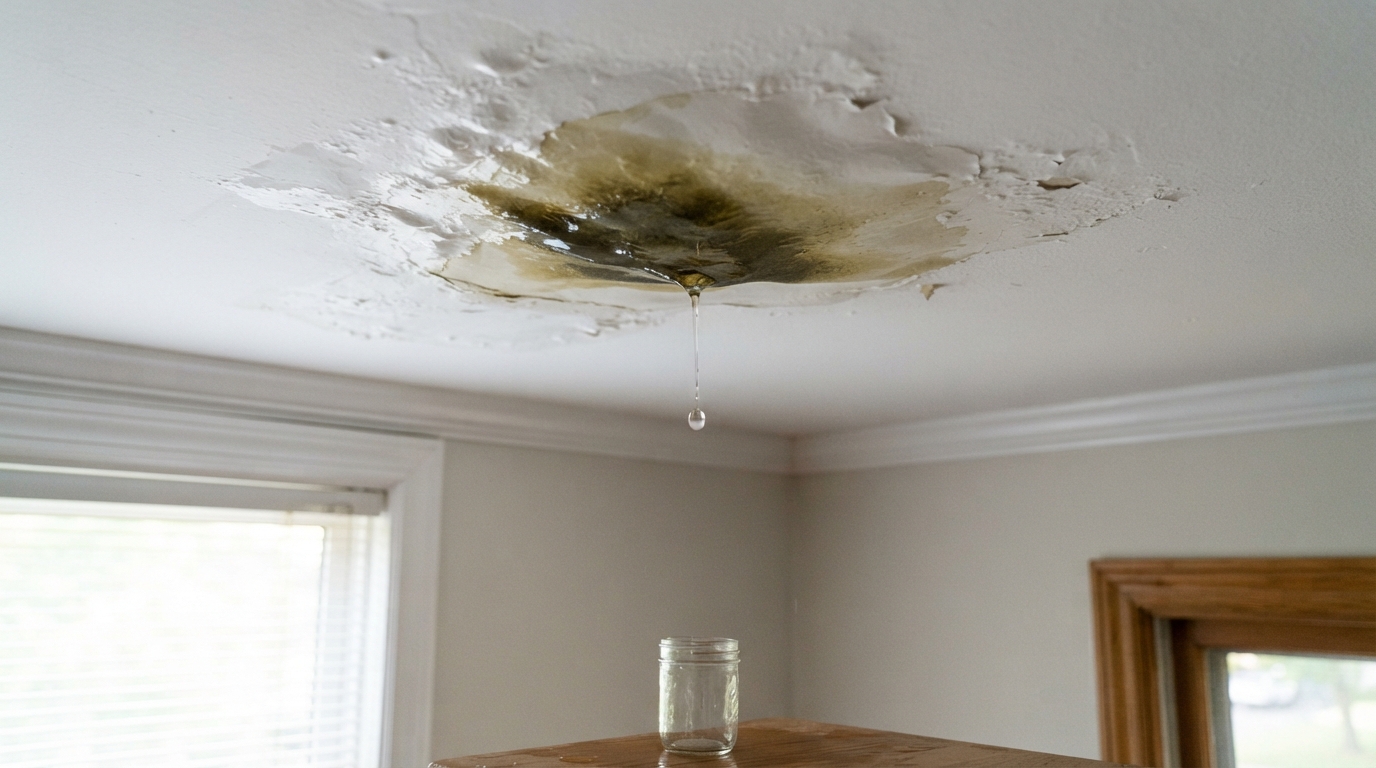
Not every leak is an emergency, but several situations call for immediate professional help. Active water pouring into living spaces, a ceiling that is sagging or bulging, water near electrical fixtures or the panel, a fallen tree limb or debris that has punctured the roof, and large sections of missing shingles exposing the decking to rain are all emergencies. In these cases, the goal is to stop further water intrusion as fast as possible.
A slow, occasional drip or a small water stain that has not changed in days is less urgent, but it still should not be ignored. Even a slow leak can mean water is traveling beneath the shingles and soaking into the decking or attic insulation, where it causes hidden rot. The honest approach is to have it inspected rather than guess at how serious it is. Terry Woodall prioritizes rapid response for urgent roofing problems — if you are unsure whether your situation is an emergency, call (615) 300-6005 and describe what you are seeing.
Common Causes of Roof Leaks in Nashville & Middle Tennessee
Most roof leaks trace back to a handful of common causes, and Middle Tennessee's weather accelerates several of them. Failed pipe boots — the rubber seals around plumbing vent pipes — are one of the most frequent culprits; the rubber dries out and cracks under years of summer heat and humidity, letting water run straight down the pipe into the attic. Damaged or lifted flashing around chimneys, skylights, walls, and valleys is another common entry point, especially after high winds.
Wind-torn or missing shingles after spring thunderstorms expose the underlayment and decking to the next rain. Hail can bruise the shingle mat and knock granules loose without breaking the surface, weakening waterproofing in a way that shows up as a leak weeks or months later. Aging shingles that are curling, cracking, or losing granules broadly simply stop shedding water the way they should. And clogged or overflowing gutters can force water back up under the roof edge and into the fascia. For a deeper look at storm-related damage, see our storm and hail roof damage guide.
Why the Location of the Interior Drip May Not Be the Location of the Roof Damage
One of the most common mistakes homeowners make is assuming the roof leak is directly above the ceiling stain. It usually is not. Water enters through a gap in the shingles, flashing, or a pipe boot, then runs down the sloped decking or along a rafter until it finds a low point or a seam — sometimes many feet away from the actual entry point — before it finally drips onto the ceiling below.
This is why patching the spot directly above a ceiling stain so often fails. The visible drip is where the water is landing, not where the water is getting in. A professional roofer traces the water back to its true source by inspecting the attic, the decking, and the roof surface together. Understanding this one fact saves homeowners from paying for a repair that does not actually fix the leak.
How Professional Roofers Find the Source of a Leak
Finding the real source of a leak is a process of elimination, not a guess. A roofer starts inside, in the attic if it is accessible, looking for water trails, dark stains on the decking, mold, or wet insulation that reveal the path the water has taken. Tracing that path upward points toward the general area of the roof where water is entering.
From the roof surface, the roofer inspects the shingles, flashing, pipe boots, valleys, and penetrations in that area for the actual opening — a cracked boot, a lifted shingle, a gap in the step flashing. In some cases a hose test, running water over a small section of roof while someone watches inside, confirms the exact entry point before any repair is made. Not every area can be fully evaluated without removing materials, but a methodical inspection finds the source far more reliably than patching the visible stain. A free roof inspection is the right starting point.
Can a Leaking Roof Usually Be Repaired?
In most cases, yes. A single leak from an isolated cause — a cracked pipe boot, a small section of lifted flashing, or a few wind-torn shingles on an otherwise sound roof — is a repair, not a reason to replace the whole roof. Targeted repairs are affordable and, when they address the true source of the leak, they hold up well.
The key is that the rest of the roof has to be in serviceable condition. If the shingles are otherwise sound, the decking is dry and solid, and the leak is confined to one area, a repair solves the problem. Even a small leak should be inspected, though, because water can travel and cause hidden damage that a surface patch will not address. For a full framework on weighing repair against replacement, see our roof repair vs. replacement guide.
When a Roof Leak May Point to a Larger Replacement Problem
Sometimes a leak is a symptom of a roof that is failing broadly rather than a single isolated failure. Replacement becomes the better long-term choice when leaks keep recurring in different areas, when shingles are curling, cracking, or blistering across much of the roof, when granules are filling the gutters, when the roof line is sagging, or when the decking is rotted or water-damaged. Repeated repair bills that add up year after year are another sign that patching has stopped being cost-effective.
A sagging roof line in particular is a structural warning that should be evaluated promptly, not ignored. These signs do not replace an in-person inspection — but when several appear together, a full roof replacement is often the wiser investment than years of patching. Terry gives you the honest facts about both options so you can decide based on your roof, not on pressure.
Roof Leaks After Heavy Rain, Wind, Hail or Storm Damage
A leak that appears right after a storm usually has a storm-related cause. High winds lift and crease shingles where the factory seal strip fails, exposing nail heads and the decking to the next rain. Hail bruises the shingle mat and knocks granules loose, weakening waterproofing in a way that may not leak immediately but shows up later. Heavy, wind-driven rain finds weak flashing and seal points that ordinary rain never reaches.
After any storm that produced hail or winds over about 50 mph, a leak — or even just the suspicion of damage — deserves a professional inspection, because hail damage is often invisible from the ground. If the damage is limited to one section, a targeted repair often restores the roof; if it is widespread, replacement may be the safer choice. For storm-specific guidance, see our storm and hail roof damage guide, and for active leaks or a tree on the roof, Terry provides emergency storm service to stop water intrusion quickly.
How to Document Visible Damage Safely
Good documentation helps whether you are getting a repair estimate or talking to an insurance company, and most of it can be done safely from inside and from the ground. Photograph the interior damage — ceiling stains, wet walls, buckled flooring, and any items that were damaged. Note the date and time you first noticed the leak and whether it followed a specific storm.
From the ground, photograph any visible exterior damage: missing or lifted shingles, dented gutters or downspouts, shingle debris in the yard, and any fallen limbs. Do not climb a ladder in wet or windy conditions to get a closer look. A professional roofer handles the roof-level inspection and can document what they find. Keep these records together; they make the conversation about repair, replacement, or any claim far more straightforward.
What NOT to Do When Your Roof Is Leaking
A few common responses to a leak can make the situation worse. Do not climb onto a wet, steep, or storm-damaged roof — the fall risk is serious and the roof itself may be unstable. Do not ignore a small or slow leak; water traveling beneath the shingles causes hidden damage that grows more expensive over time. Do not assume the leak is directly above the ceiling stain, and do not let someone patch that spot without tracing the true source.
Do not use buckets or towels as a long-term fix and assume the problem has resolved itself. And do not wait through multiple storms hoping it will not leak again — recurring leaks are a sign of a broader issue that an inspection can catch early. When in doubt, call a professional and get an honest assessment before deciding anything.
When to Request a Professional Roof Inspection
A professional inspection is the right next step any time a leak is active, recurring, or you suspect storm damage you cannot see from the ground. It is also the right call before you spend money on a repair, because confirming the true source of the leak prevents you from paying for a patch that does not hold. An inspection evaluates the shingles, flashing, pipe boots, valleys, roof edges, ventilation, and — when accessible — the decking and attic for signs of moisture.
Terry Woodall Roofing offers free inspections across Middle Tennessee with no obligation to buy anything. The goal is to give you the honest facts about what is happening with your roof and what options make sense, so you can make an informed decision. Start with a free roof inspection, and if you already know you need a repair, go straight to our roof repair page.
Have a question about your roof?
Terry personally answers the phone — no sales reps, no pressure.
Frequently Asked Questions
Straight answers to common questions from Middle Tennessee homeowners.
Is a leaking roof always an emergency?
No. Active water pouring into living spaces, a sagging or bulging ceiling, water near electrical fixtures, a fallen limb on the roof, or large sections of missing shingles are emergencies that need immediate help. A slow, occasional drip or an unchanged stain is less urgent but should still be inspected, because water can travel beneath the shingles and cause hidden damage. If you are unsure, call (615) 300-6005 and describe what you are seeing.
Should I go on my roof to find the leak?
No. Wet, steep, and storm-damaged roofs are dangerous, and a fall is far more harmful than the leak itself. Most of the useful immediate steps happen safely from inside the home and from the ground — moving valuables, catching drips, and photographing visible damage. A professional roofer handles the roof-level inspection safely and has the equipment to do it without risk to you.
Why is my ceiling leaking but the roof looks fine from the ground?
Because water rarely enters directly above the ceiling stain. It usually comes through a gap in the shingles, flashing, or a pipe boot, then runs along the decking or a rafter before dripping down somewhere else entirely. The visible drip is where the water lands, not where it gets in. A professional inspection traces the water back to its true source so the repair actually fixes the leak.
What are the most common causes of roof leaks in Middle Tennessee?
Failed pipe boots whose rubber seals crack in the summer heat, damaged or lifted flashing around chimneys and valleys, wind-torn or missing shingles after spring storms, hail that bruises the shingle mat, aging shingles that are curling or losing granules, and clogged gutters that push water back under the roof edge. Middle Tennessee's heavy rain, hail, heat, and humidity accelerate all of these.
Can a leaking roof be repaired instead of replaced?
Usually yes. A single isolated leak on an otherwise sound roof — a cracked pipe boot, a small flashing failure, or a few wind-torn shingles — is a repair, not a replacement. Replacement becomes the better choice when leaks keep recurring in different areas, shingles are failing broadly, the decking is rotted, or the roof line is sagging. An inspection tells you which situation you are in.
What should I do if my roof leaks after a storm?
First stay safe and away from any water near electrical fixtures or a sagging ceiling. From the ground, photograph missing shingles, dented gutters, and any debris. Then call a roofer before filing an insurance claim, because hail and wind damage are often invisible from the ground and a professional inspection confirms whether the damage warrants a claim or a simple repair. For an active leak, Terry provides emergency storm service to stop water intrusion quickly.
How fast can Terry Woodall respond to an active leak?
Terry personally answers the phone at (615) 300-6005 and prioritizes rapid response for urgent roofing problems across Middle Tennessee. Response time depends on the volume of calls, weather, and your location, so it is never guaranteed — but calling directly and describing the situation is the fastest way to get help. Do not wait on an active leak, because ongoing water causes rapid structural and interior damage.
Terry Woodall Roofing Contractors
From the Terry Woodall Roofing Contractors Resource Center — serving Middle Tennessee homeowners since 1983
Terry Woodall Roofing Contractors brings over 40 years of hands-on roofing experience to Middle Tennessee homeowners. These resources are prepared to help homeowners understand roof maintenance, storm damage mitigation, and the insurance claims process so every home is protected. Founder Terry Woodall personally oversees the company's roofing work across Nashville, Franklin, Brentwood, and the surrounding communities.
This guide relies on authoritative industry standards, building code regulations, and verifiable research from recognized organizations:
- FEMA — Mold & Moisture Guidance for Homeownersfema.gov
- EPA — Mold and Moisture in Your Homeepa.gov
- Insurance Information Institute — How to File a Homeowners Claimiii.org
- NOAA National Weather Service — Nashville Middle TN Storm Dataweather.gov
Found this guide useful? Copy a ready-to-paste citation and attribute Terry Woodall Roofing as your source.
Terry Woodall. (2026-07-22). Roof Leaking in Nashville? What to Do Immediately & When to Call a Roofer. Terry Woodall Roofing. https://terrywoodallroofing.com/resources/roof-leak-emergency-guide-middle-tn
Related Roofing Services
If you suspect your roof needs attention, Terry Woodall offers straightforward evaluations across Middle Tennessee:
Where We Work in Middle Tennessee
Keep Reading
Request a Call
Get straightforward answers directly from Terry.
Free roof inspection — and free estimates on any recommended work.
This form is for Middle Tennessee homeowners requesting roofing help only. Marketing, sales, and vendor solicitations are not accepted and will be discarded.
Need an Honest Roof Inspection?
Speak directly with Terry Woodall today. No pushy sales representatives, just a local reputation built since 1983.
Call (615) 300-6005Text TerryDealing with a leaking roof? Terry Woodall Roofing provides honest inspections and rapid response for urgent roofing problems across Middle Tennessee — serving Middle Tennessee since 1983. Call (615) 300-6005 to speak directly with Terry.