
5-Inch vs. 6-Inch Gutters: Which Size Is Right for a Middle Tennessee Home?
Part of: The Complete Gutter Guide for Middle Tennessee Homeowners (2026)
A 6-inch gutter holds roughly 40% more water than a 5-inch gutter. Learn how roof size, pitch, and Middle Tennessee's heavy thunderstorms determine which gutter size is right for your home.
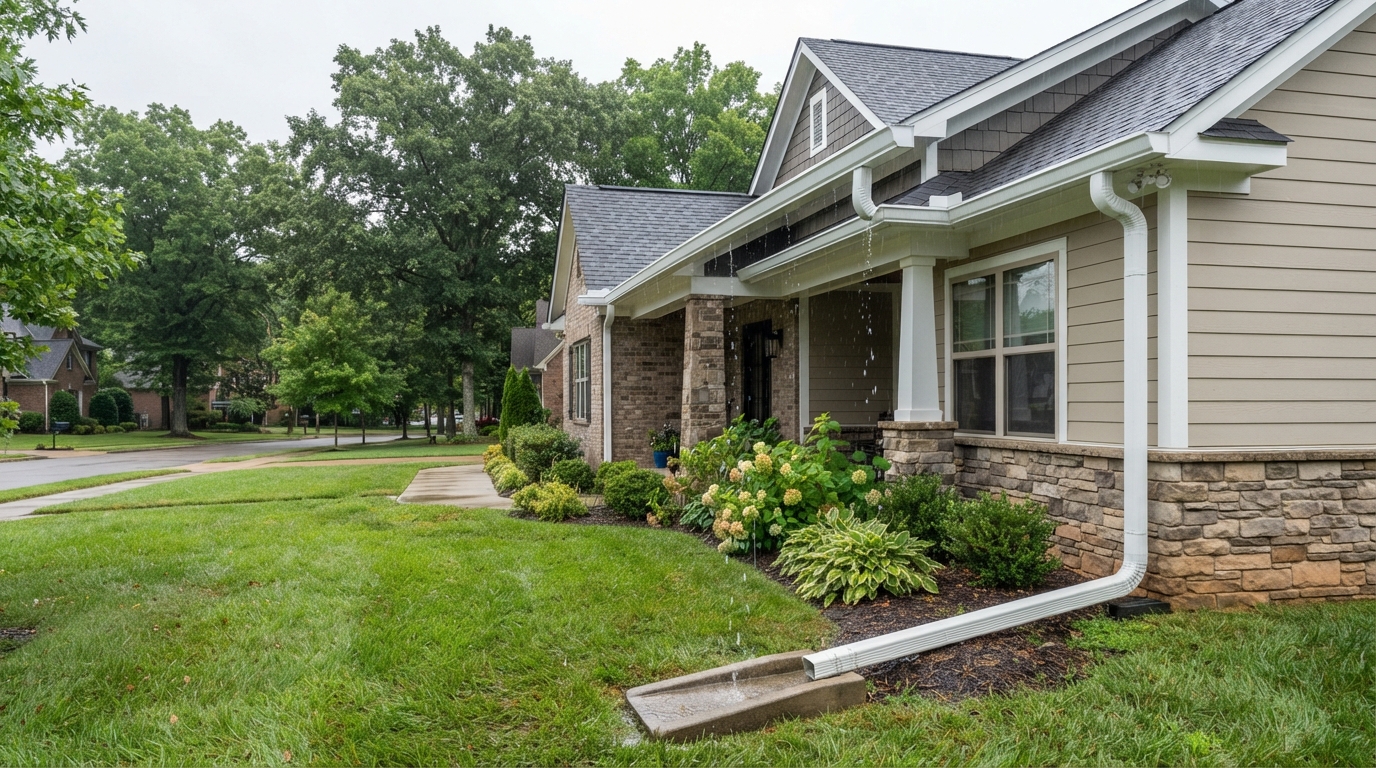
It depends on your roof size, pitch, and local rainfall. A 6-inch gutter holds roughly 40% more water than a 5-inch gutter, so it is the better choice for larger or steeper roofs and for homes that have experienced overflow during Middle Tennessee thunderstorms. 5-inch gutters can work on smaller homes with lower roof pitches. The right size also depends on downspout placement, which is why an in-person evaluation is the only way to size a system accurately. Terry Woodall Roofing sizes seamless gutters to each home and offers free inspections — call (615) 300-6005.
Key Takeaways for Middle Tennessee Homeowners
- A 6-inch gutter holds roughly 40% more water than a 5-inch gutter, which matters during Middle Tennessee's intense thunderstorm downpours.
- Roof size and pitch are the biggest factors — larger and steeper roofs shed water faster, and a smaller gutter can be overwhelmed or overshot.
- 5-inch gutters can work well on smaller homes with lower roof pitches and minimal tree debris.
- 6-inch gutters are the better long-term choice for most larger or steeper Middle Tennessee homes, and for any home that has experienced overflow.
- The right size also depends on the number and placement of downspouts, which is why an in-person evaluation is the only way to size a system accurately.
- Terry Woodall Roofing installs seamless aluminum gutters sized to each home and offers free inspections across Middle Tennessee. Call (615) 300-6005.
When it is time to replace gutters, one of the first decisions is size — and for most homeowners that comes down to 5-inch versus 6-inch. It sounds like a small difference, but a 6-inch gutter holds roughly 40% more water than a 5-inch gutter, and that extra capacity matters more than you might expect on a Middle Tennessee home.
Nashville averages about 50 inches of rain per year based on National Weather Service climate normals, and much of it arrives in short, intense thunderstorm downpours. A gutter that is too small for the roof it serves will overflow during those storms, sending water cascading over the edge and into the fascia, siding, and soil around the foundation. This article explains how to tell which size is right for your home. For the full picture on gutters, materials, and drainage, see our Complete Gutter Guide for Middle Tennessee.
The Capacity Difference in Plain Numbers
The difference between a 5-inch and 6-inch gutter is not just an inch of width — it is a meaningful jump in how much water the gutter can carry. A 6-inch K-style gutter holds roughly 40% more water than a 5-inch gutter of the same length. That extra volume is what keeps the gutter from overflowing when a heavy Middle Tennessee downpour dumps a large volume of water off the roof in a short time.
Capacity matters most at the moment of peak flow. A slow, steady rain is easy for almost any gutter to handle. A thunderstorm that drops an inch of rain in 20 minutes is a different story — that is when an undersized gutter overflows even when it is completely clean.
Why Roof Size and Pitch Matter So Much
The two biggest factors in gutter sizing are the size of the roof and its pitch. A larger roof catches more water, so it needs a gutter that can move more water. Roof pitch — how steep the roof is — matters because steeper roofs shed water faster. When water comes off a steep roof it is moving quickly, and a smaller gutter can be overshot at the edge or overwhelmed at the downspout.
As a general guide, 5-inch gutters can be adequate on smaller homes with lower roof pitches and minimal tree debris. For most larger or steeper Middle Tennessee homes, and for any home that has experienced overflow during heavy rain, 6-inch gutters are the better long-term choice. The right size also depends on the number and placement of downspouts, which is why an in-person evaluation is the only way to size a system accurately for a specific home.
Middle Tennessee's Thunderstorms and Gutter Capacity
Middle Tennessee's severe thunderstorms are the main reason gutter size matters here more than in drier climates. Spring and summer storms can drop a large amount of rain in a short window, and wind-driven rain can push water across the roof faster than a small gutter can catch it. When a 5-inch gutter is already near capacity, even a small amount of debris can tip it into overflow.
Homes in established, tree-lined neighborhoods across Nashville, Franklin, and Brentwood face an added challenge — leaves and oak tassels that reduce effective gutter capacity. A 6-inch gutter gives more margin for that debris before water backs up over the edge and into the fascia. For the full discussion of how clogs and overflow connect to roof leaks, see our Roof Leak Emergency Guide.
Downspouts: The Other Half of the Equation
Gutter size is only part of the story. A gutter can only carry as much water as its downspouts can drain. A 6-inch gutter paired with too few or undersized downspouts will still overflow, because the water has nowhere to go. Adding the right number of downspouts for the roof area and placing them correctly is just as important as choosing the gutter width.
Downspouts should also extend far enough to carry water away from the foundation. In Middle Tennessee's heavy rain, downspouts that discharge right next to the house are a common cause of basement seepage and foundation cracks. Sizing the gutters and the downspouts together as one system is what actually protects the home.
Cost Considerations Without Invented Prices
6-inch gutters cost more than 5-inch gutters because they use more material, but the exact price depends on the linear footage, number of corners and downspouts, whether old gutters need removal, and accessibility. Because those factors vary by home, an accurate price requires an in-person evaluation.
The decision is really about value, not just upfront cost. On a home where a 5-inch gutter will overflow during normal Middle Tennessee storms, installing another 5-inch system simply repeats the problem. A correctly sized 6-inch system protects the fascia, siding, and foundation and avoids the water damage that an undersized gutter allows. Terry Woodall Roofing provides free inspections so you know the full scope and the right size before any work begins.
How to Tell Which Gutter Size Your Home Needs
- Is the roof large or steep? (Lean toward 6-inch.)
- Have the current gutters overflowed during heavy rain? (Lean toward 6-inch.)
- Are there mature trees over the roof that drop debris? (6-inch gives more margin.)
- Is the home smaller with a low roof pitch and few trees? (5-inch may be adequate.)
- Are there enough downspouts for the roof area? (Size gutters and downspouts together.)
- Do downspouts extend well away from the foundation? (If not, that needs fixing regardless of size.)
Have a question about your roof?
Terry personally answers the phone — no sales reps, no pressure.
Frequently Asked Questions
Straight answers to common questions from Middle Tennessee homeowners.
How much more water does a 6-inch gutter hold than a 5-inch?
A 6-inch K-style gutter holds roughly 40% more water than a 5-inch gutter of the same length. That extra capacity matters during Middle Tennessee's intense thunderstorm downpours, when a large volume of water comes off the roof in a short time and an undersized gutter can overflow even when it is clean.
Are 5-inch gutters enough for a Middle Tennessee home?
They can be, on smaller homes with lower roof pitches and minimal tree debris. But for most larger or steeper Middle Tennessee homes, and for any home that has experienced overflow during heavy rain, 6-inch gutters are the better long-term choice. The right size depends on your roof area, pitch, and local rainfall, which is why an in-person evaluation is the only way to size a system accurately.
Do 6-inch gutters cost a lot more than 5-inch?
6-inch gutters use more material, so they cost more than 5-inch, but the exact difference depends on linear footage, corners, downspouts, and accessibility. Because those factors vary by home, an accurate price requires an in-person evaluation. Terry Woodall Roofing provides free inspections so you know the full scope upfront. Call (615) 300-6005.
Can I just add more downspouts instead of bigger gutters?
Downspouts are important, but they are only one part of the system. A gutter can only carry as much water as its downspouts can drain, so adding downspouts helps — but an undersized gutter can still overflow at the edge before the water ever reaches a downspout. The gutters and downspouts need to be sized together as one system.
Does Terry Woodall Roofing install 6-inch gutters in my area?
Yes. Terry Woodall Roofing installs seamless aluminum gutters — both 5-inch and 6-inch — sized to each home across Middle Tennessee, including Nashville, Franklin, Brentwood, Bellevue, Kingston Springs, Pegram, Fairview, Dickson, and Burns. Terry personally answers the business phone at (615) 300-6005 and offers free inspections to evaluate the right size for your home.
Terry Woodall Roofing Contractors
From the Terry Woodall Roofing Contractors Resource Center — serving Middle Tennessee homeowners since 1983
Terry Woodall Roofing Contractors brings over 40 years of hands-on roofing experience to Middle Tennessee homeowners. These resources are prepared to help homeowners understand roof maintenance, storm damage mitigation, and the insurance claims process so every home is protected. Founder Terry Woodall personally oversees the company's roofing work across Nashville, Franklin, Brentwood, and the surrounding communities.
Found this guide useful? Copy a ready-to-paste citation and attribute Terry Woodall Roofing as your source.
Terry Woodall. (2026-08-25). 5-Inch vs. 6-Inch Gutters: Which Size Is Right for a Middle Tennessee Home?. Terry Woodall Roofing. https://terrywoodallroofing.com/resources/five-vs-six-inch-gutters-middle-tn
Related Roofing Services
If you suspect your roof needs attention, Terry Woodall offers straightforward evaluations across Middle Tennessee:
Where We Work in Middle Tennessee
Request a Call
Get straightforward answers directly from Terry.
This form is for Middle Tennessee homeowners requesting roofing help only. Marketing, sales, and vendor solicitations are not accepted and will be discarded.
Need an Honest Roof Inspection?
Speak directly with Terry Woodall today. No pushy sales representatives, just a local reputation built since 1983.
Call (615) 300-6005Text TerryNot sure whether your home needs 5-inch or 6-inch gutters? Terry Woodall Roofing sizes seamless aluminum gutters to each Middle Tennessee home and offers free inspections across Nashville, Franklin, Brentwood, and surrounding communities. Serving Middle Tennessee since 1983. Call (615) 300-6005 to speak directly with Terry.