
Do Gutter Guards Actually Work for Middle Tennessee Homes? An Honest Look
Part of: The Complete Gutter Guide for Middle Tennessee Homeowners (2026)
Gutter guards cut down on cleaning but do not make gutters maintenance-free. Learn which guard types hold up to Middle Tennessee's oak tassels, pine needles, and heavy thunderstorms — and when they are worth it.
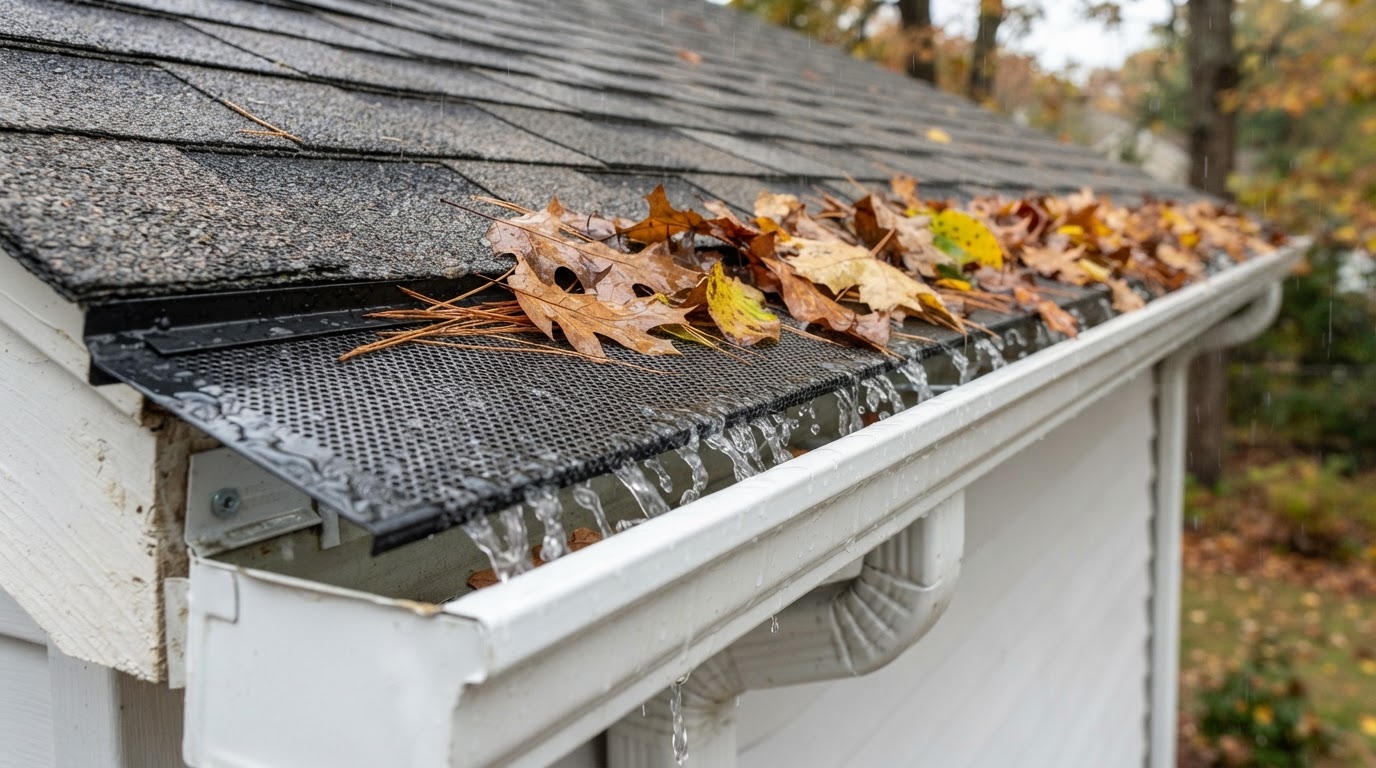
Gutter guards reduce how often gutters need cleaning, but no guard makes a gutter completely maintenance-free. In Middle Tennessee, oak tassels, pine needles, and helicopter seeds are some of the hardest debris for guards to handle, and cheap screens clog fast on them. Micro-mesh guards perform best against fine debris but can still need a rinse, while reverse-curve guards handle leaves well but struggle with needles. Guards also do not fix undersized or sagging gutters — if water already overflows, the problem is sizing or pitch, not just debris. Terry Woodall Roofing offers gutter guard options and free inspections across Middle Tennessee — call (615) 300-6005.
Key Takeaways for Middle Tennessee Homeowners
- Gutter guards reduce the frequency of cleaning, but no guard makes a gutter completely maintenance-free — small debris and pollen still get through.
- Middle Tennessee's oak tassels, pine needles, and helicopter seeds are some of the hardest debris for guards to handle, and cheap screens clog fast on them.
- Micro-mesh guards perform best against fine debris but can still need a rinse; reverse-curve guards handle leaves well but struggle with needles and tassels.
- Guards do not fix undersized or sagging gutters — if water already overflows, the problem is sizing or pitch, not just debris.
- A guard installed on a damaged gutter traps water against the fascia and can accelerate rot instead of preventing it.
- Terry Woodall Roofing offers gutter guard options and free inspections across Middle Tennessee to help you decide if they are worth it for your home. Call (615) 300-6005.
Gutter guards are sold with a tempting promise: install them once and never clean your gutters again. The honest answer is that no guard fully delivers on that promise. A good guard reduces how often gutters need cleaning and can prevent the worst clogs, but every type still lets some debris through and still needs occasional attention.
In Middle Tennessee the question is even more specific. Nashville's established neighborhoods are full of oaks, maples, and pines that drop tassels, needles, and helicopter seeds — some of the hardest debris for any guard to stop. This article gives an honest look at whether gutter guards are worth it here, which types hold up, and which problems guards will not solve. For the full picture on gutters, sizing, and drainage, see our Complete Gutter Guide for Middle Tennessee.
What Gutter Guards Can and Cannot Do
A gutter guard is a physical barrier over the gutter opening designed to keep leaves and debris out while letting water in. The realistic expectation is that a quality guard cuts cleaning frequency significantly — often from twice a year to every one to two years — and prevents the large clogs that cause water to back up under shingles and over the fascia.
What a guard cannot do is make a gutter maintenance-free. Fine debris, pollen, and shingle granules still get through most guards and settle in the bottom of the gutter. Over time that fine layer can build up and restrict flow, so even a guarded gutter needs to be checked and rinsed occasionally. Any product marketed as 'never clean your gutters again' is overselling.
The Main Guard Types and How They Compare
There are three main categories homeowners encounter. Mesh and micro-mesh screens are fine metal filters that sit over the gutter; they block almost everything but can still let pollen and granules through and may need a rinse. Reverse-curve (surface-tension) guards attach under the shingles and use water's surface tension to curve water into the gutter while leaves slide off the front edge; they handle large leaves well but struggle with pine needles and oak tassels that can follow the water curve in.
Bottle-brush and foam inserts sit inside the gutter itself. They are inexpensive and easy to install, but they tend to trap small debris and can become a growing medium for seeds in a wet climate. For Middle Tennessee's mix of leaves and fine debris, micro-mesh generally performs best, while reverse-curve is a reasonable choice on homes dominated by large-leaf trees.
Why Middle Tennessee Debris Is Hard on Guards
Oak tassels — the long, stringy flowers oaks drop each spring — are one of the worst materials for gutter guards. They are small enough to pass through many screens and stringy enough to mat across a mesh surface and block water from entering. Pine needles behave similarly, standing on end and working through larger openings. Maple helicopters, with their seed pods, can pile up and create a damp layer on top of a guard that grows moss or mold.
This is why the cheapest large-hole screens, which work fine for big oak leaves in fall, often fail in Middle Tennessee by late spring. The fine debris that passes through or mats on top is exactly what causes the clogs homeowners bought the guard to prevent. For homes with heavy tree coverage, a finer micro-mesh and a realistic maintenance plan are the better combination.
Guards Do Not Fix Sizing or Pitch Problems
One of the most common mistakes is installing guards on gutters that already overflow. If water overshoots or overflows the gutter during a thunderstorm, the cause is usually the gutter being too small for the roof, the pitch being off, or too few downspouts — not debris. A guard will not increase capacity, and in some cases it can slightly reduce the rate water enters the gutter, making overflow worse.
The right sequence is to fix sizing and drainage first, then add a guard. For help deciding whether your gutters are the right size, see our guide on 5-Inch vs 6-Inch Gutters. A guard installed on a correctly sized, well-pitched gutter is what actually delivers the reduced-maintenance result homeowners want.
When a Guard Can Make Things Worse
A guard can accelerate damage if it is installed on a gutter that is pulling away from the fascia, sagging, or has loose fasteners. The guard traps water against the fascia board instead of letting it run off the edge, and that constant moisture rots the wood behind the gutter. It also hides the early signs of a problem — homeowners stop looking at the gutter because the guard is there, so a slow failure goes unnoticed until it is expensive.
This is why an inspection before adding guards matters. If the gutters are sound, a guard is a reasonable upgrade. If they are sagging, leaking at seams, or undersized, those issues need to be fixed first. Terry Woodall Roofing provides free inspections across Middle Tennessee to help you tell the difference. Call (615) 300-6005.
Are Gutter Guards Worth It for Your Home?
Guards tend to be worth it for Middle Tennessee homes with significant tree coverage, for homeowners who cannot safely clean gutters themselves, and for anyone whose gutters clog multiple times per year. They are less necessary on homes with little tree coverage where gutters stay mostly clean on their own.
The value calculation is straightforward: compare the cost of the guard against the cost and hassle of the cleanings it replaces over its lifespan, plus the avoided risk of a clog that backs water under the shingles and into the home. A quality micro-mesh guard that lasts many years and cuts cleanings from twice a year to every other year usually pays for itself on a heavily treed Middle Tennessee property. Terry offers guard options and can recommend the right system for your trees and roof. Call (615) 300-6005.
Questions to Ask Before Adding Gutter Guards
- Do the gutters currently overflow during storms? (Fix sizing/pitch first.)
- Are the gutters sound — no sagging, loose fasteners, or seam leaks? (Repair first.)
- What kind of debris lands on the roof — large leaves, or tassels and needles? (Match guard type to debris.)
- How often do the gutters actually need cleaning now? (More cleanings = more value from a guard.)
- Is there heavy tree coverage over the roof? (Guards pay off fastest here.)
- Can the gutter be safely inspected after guards are installed? (Plan for occasional checks.)
Have a question about your roof?
Terry personally answers the phone — no sales reps, no pressure.
Frequently Asked Questions
Straight answers to common questions from Middle Tennessee homeowners.
Do gutter guards really eliminate gutter cleaning?
No. A quality guard reduces how often gutters need cleaning — often from twice a year to every one to two years — and prevents the large clogs that cause water backup. But fine debris, pollen, and shingle granules still get through most guards and settle in the bottom of the gutter, so even a guarded gutter needs an occasional check and rinse. Any product marketed as 'never clean your gutters again' is overselling.
Which gutter guard works best in Middle Tennessee?
For Middle Tennessee's mix of oak tassels, pine needles, and large leaves, micro-mesh guards generally perform best because the fine filter blocks the small, stringy debris that other guards let through. Reverse-curve guards handle large leaves well but can struggle with pine needles and tassels. Cheap large-hole screens often fail by late spring because the fine debris passes through or mats on top. The right choice depends on your specific trees and roof.
Can gutter guards cause damage to a roof?
Yes, if they are installed on gutters that are already sagging, pulling away, or leaking at the seams. A guard can trap water against the fascia board instead of letting it run off, and that constant moisture rots the wood behind the gutter. Guards also hide early signs of a problem. That is why gutters should be inspected and repaired before a guard is added. Terry Woodall Roofing offers free inspections across Middle Tennessee — call (615) 300-6005.
Will gutter guards stop my gutters from overflowing?
Not if the overflow is caused by the gutter being too small, the pitch being off, or too few downspouts. A guard does not increase gutter capacity, and it can slightly reduce the rate water enters the gutter, making overflow worse. If water already overflows during storms, the sizing and drainage need to be fixed first. See our guide on 5-inch vs 6-inch gutters for help with sizing.
Does Terry Woodall Roofing install gutter guards in my area?
Yes. Terry Woodall Roofing offers gutter guard options and installs them across Middle Tennessee, including Nashville, Franklin, Brentwood, Bellevue, Kingston Springs, Pegram, Fairview, Dickson, and Burns. Terry provides free inspections to evaluate whether guards are a good fit for your home and which type matches your trees and roof. Call (615) 300-6005 to speak directly with Terry.
Terry Woodall Roofing Contractors
From the Terry Woodall Roofing Contractors Resource Center — serving Middle Tennessee homeowners since 1983
Terry Woodall Roofing Contractors brings over 40 years of hands-on roofing experience to Middle Tennessee homeowners. These resources are prepared to help homeowners understand roof maintenance, storm damage mitigation, and the insurance claims process so every home is protected. Founder Terry Woodall personally oversees the company's roofing work across Nashville, Franklin, Brentwood, and the surrounding communities.
Found this guide useful? Copy a ready-to-paste citation and attribute Terry Woodall Roofing as your source.
Terry Woodall. (2026-08-25). Do Gutter Guards Actually Work for Middle Tennessee Homes? An Honest Look. Terry Woodall Roofing. https://terrywoodallroofing.com/resources/do-gutter-guards-work-middle-tennessee
Related Roofing Services
If you suspect your roof needs attention, Terry Woodall offers straightforward evaluations across Middle Tennessee:
Where We Work in Middle Tennessee
Request a Call
Get straightforward answers directly from Terry.
This form is for Middle Tennessee homeowners requesting roofing help only. Marketing, sales, and vendor solicitations are not accepted and will be discarded.
Need an Honest Roof Inspection?
Speak directly with Terry Woodall today. No pushy sales representatives, just a local reputation built since 1983.
Call (615) 300-6005Text TerryWondering whether gutter guards are worth it for your Middle Tennessee home? Terry Woodall Roofing offers guard options and free inspections across Nashville, Franklin, Brentwood, and surrounding communities — we will tell you honestly whether guards will help or whether your gutters need sizing or repair first. Serving Middle Tennessee since 1983. Call (615) 300-6005 to speak directly with Terry.