
Can I Patch My Roof Myself? When DIY Roof Repair Goes Wrong in Tennessee
Part of: How Much Does Roof Repair Cost in Nashville & Middle Tennessee? (2026 Guide)
Thinking about patching your own roof? Learn which small repairs are genuinely safe to DIY, why most DIY patches fail, the safety risks, and when calling a pro costs less than fixing a botched repair.
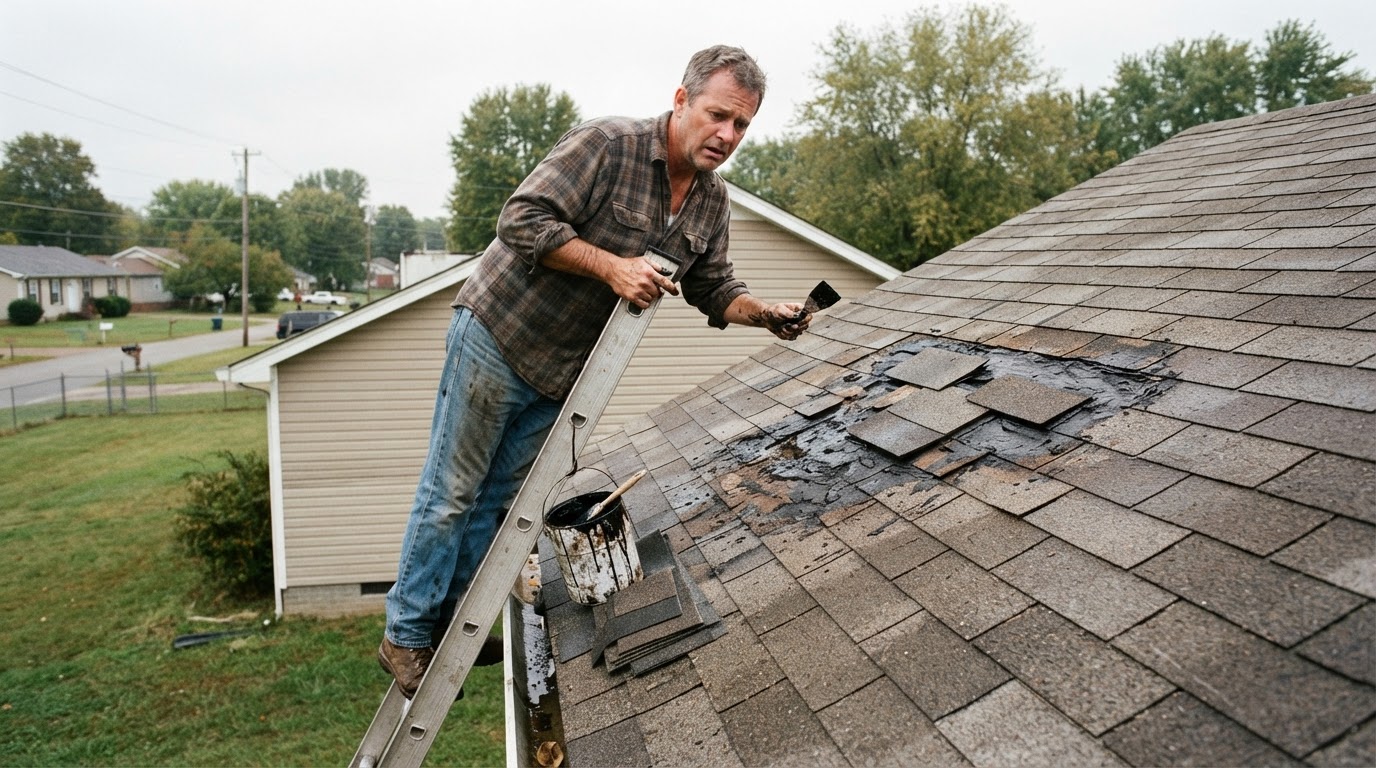
You can safely do small, ground-level fixes like clearing a gutter or reattaching a loose downspout, but anything that requires climbing on the roof should be left to a professional. Most DIY roof patches fail because water travels under the shingles before it shows on the ceiling, so the visible stain is rarely directly below the actual entry point — the patch goes in the wrong place. Walking on a roof to apply a patch can also crack brittle shingles and create new leak points. The biggest risk is a fall: roof and ladder falls are the leading cause of serious DIY home-improvement injuries. A botched DIY patch often costs more to fix than the original repair would have. Terry Woodall Roofing provides free inspections and honest repair recommendations across Middle Tennessee — call (615) 300-6005.
Key Takeaways for Middle Tennessee Homeowners
- Most DIY roof patches fail because the patch does not address the actual leak entry point — water travels under shingles before it shows on the ceiling, so the visible stain is rarely directly below the hole.
- The single biggest risk of DIY roof repair is not a bad patch — it is a fall. Roof and ladder falls are the leading cause of serious DIY home-improvement injuries, and Middle Tennessee's steep-pitch roofs are especially hazardous.
- A genuinely safe DIY repair is limited to a small, ground-level fix like reattaching a loose downspout or clearing a gutter — anything that requires climbing on the roof should be left to a professional.
- Walking on a roof to apply a patch can cause more damage than it fixes — stepping on brittle or hot shingles cracks the mat and creates new leak points.
- A botched DIY patch often costs more to fix than the original repair would have, because the contractor must remove the failed patch, repair the additional damage, and then do the repair correctly.
- Terry Woodall Roofing provides free inspections and honest repair recommendations across Middle Tennessee. Call (615) 300-6005.
The appeal of patching your own roof is obvious — a small leak feels like a small problem, and a tube of roofing tar or a pack of replacement shingles seems like a cheap fix. But most DIY roof patches fail, and the reason is rarely the materials. It is that the patch goes in the wrong place, on the wrong surface, applied by someone standing on a roof they should not be walking on.
This guide explains which repairs are genuinely safe to do yourself, why most DIY patches fail, the safety risks that make roof work different from other home projects, and when calling a professional costs less than fixing a botched repair. For what a professional repair actually costs, see our roof repair cost guide.
Why Most DIY Roof Patches Fail
The number-one reason DIY roof patches fail is that the patch goes in the wrong place. Water travels under the shingles and along the decking before it shows up on the ceiling, so the stain you see inside is rarely directly below the point where water is actually entering. A homeowner sees a ceiling stain, goes up to the roof directly above it, applies tar or a replacement shingle, and the leak continues — because the real entry point is six feet away along a flashing detail or a pipe boot.
The second reason is material incompatibility. Roofing tar from a hardware store is not the same as the sealants a roofing contractor uses, and it does not bond correctly to aged asphalt shingles. A tar patch often cracks within a season as the roof expands and contracts in Middle Tennessee's temperature swings, reopening the leak. Replacement shingles that do not match the existing profile or that are installed without proper underlayment and sealing will not integrate with the surrounding roof.
The third reason is that the patch treats the symptom, not the cause. A leak around a chimney is usually a flashing problem, not a shingle problem. Patching the shingles near the chimney does nothing if the flashing is the actual entry point. For where leaks most commonly start, see our common roof leak locations guide.
The Real Risk: Falls, Not Bad Patches
The most serious risk of DIY roof repair is not a failed patch — it is a fall. Roof and ladder falls are the leading cause of serious DIY home-improvement injuries, and Middle Tennessee's steep-pitch residential roofs are especially hazardous. Morning dew, moss in shaded areas, and the steep angle itself all make a residential roof far more slippery than it looks from the ground.
A professional roofer works with fall protection, ladder anchors, and the experience to read a roof surface safely. A homeowner in sneakers with a bucket of tar has none of that. The emergency room bill from a single roof fall dwarfs the cost of any professional repair. No leak is worth that risk.
How Walking on a Roof Causes New Damage
Even if you do not fall, walking on the roof to apply a patch can cause more damage than it fixes. Asphalt shingles are designed to shed water, not to support foot traffic. Stepping on a brittle shingle in cold weather can crack the mat. Stepping on a hot shingle in Tennessee summer can scuff the granule surface and create a soft spot. Each step is a potential new leak point.
Architectural shingles are more durable than 3-tab, but neither is meant to be walked casually. A professional roofer knows where to step and how to distribute weight to avoid damage; a homeowner does not. The result is that a DIY patch often creates two or three new leak points for every one it attempts to fix.
What Is Genuinely Safe to DIY
There is a narrow category of roof-adjacent maintenance that is genuinely safe for a homeowner to do, and it all happens from the ground or a sturdy ladder at the eave — never on the roof surface. Clearing leaves and debris from the gutters, reattaching a loose downspout, and trimming tree branches that overhang the roof are all reasonable DIY tasks that protect the roof without requiring you to walk on it.
If you have a leak, the safe DIY step is to contain the water inside — move belongings, place a bucket, and protect the area — and then call a professional. For what to do while you wait, see our how to stop a roof leak before the roofer arrives guide. The repair itself should be left to someone who does this every day.
When a Botched DIY Patch Costs More Than the Original Repair
A common scenario: a homeowner applies a tar patch that fails, the leak continues and worsens, and by the time a professional is called, the decking under the failed patch is rotted. The contractor now has to remove the tar, replace the rotted decking, repair any shingles cracked by foot traffic, and then do the repair correctly. The total cost is substantially more than the original repair would have been.
This is the hidden cost of DIY roof repair. It is not just the materials and the time — it is the risk of compounding the problem. A professional repair addresses the actual entry point, uses compatible materials, and does not damage the surrounding shingles. For what a proper repair should cost, see our roof repair cost guide.
Why a Free Inspection Beats a Guess
The alternative to a DIY patch is not necessarily a paid repair — it is a free inspection that tells you what is actually wrong. A professional inspection finds the true entry point, assesses the condition of the surrounding roof, and recommends the work the roof actually needs — which may be a small repair, a larger repair, or nothing at all if the roof is sound.
Terry Woodall Roofing's approach is inspection-first: identify the real problem, recommend the work the roof genuinely needs, and never push a replacement when a repair will solve it. If you have a leak and are tempted to patch it yourself, a free inspection is the safer, cheaper first step. For help deciding whether the problem is a repair or a replacement, see our roof repair vs. replacement guide.
DIY Roof Repair: What Is Safe and What Is Not
- Safe to DIY: clearing leaves and debris from gutters from a sturdy ladder
- Safe to DIY: reattaching a loose downspout or gutter bracket
- Safe to DIY: trimming tree branches that overhang the roof
- Safe to DIY: containing water inside with buckets and moving belongings
- Not safe: walking on the roof surface to apply a patch
- Not safe: applying roofing tar to a shingle without finding the real entry point
- Not safe: replacing shingles without proper underlayment, sealing, and matching
- Not safe: any repair that requires climbing on a steep or wet roof
Have a question about your roof?
Terry personally answers the phone — no sales reps, no pressure.
Frequently Asked Questions
Straight answers to common questions from Middle Tennessee homeowners.
Can I patch my own roof with roofing tar?
You can, but it usually fails. Roofing tar from a hardware store does not bond correctly to aged asphalt shingles and cracks within a season as the roof expands and contracts. More importantly, the tar goes where the ceiling stain is, not where the water is actually entering — water travels under shingles before it shows inside, so the visible stain is rarely directly below the leak. A tar patch in the wrong place does nothing, and walking on the roof to apply it can crack shingles and create new leak points. A free professional inspection finds the real entry point.
Is it dangerous to walk on my own roof?
Yes. Roof and ladder falls are the leading cause of serious DIY home-improvement injuries. Middle Tennessee's steep-pitch residential roofs are especially hazardous — morning dew, moss, and the steep angle itself make the surface far more slippery than it looks from the ground. A professional roofer uses fall protection, ladder anchors, and the experience to read a roof safely. No leak is worth the risk of a fall.
Why does my DIY roof patch keep leaking?
Almost always because the patch is in the wrong place. Water travels under the shingles and along the decking before it appears on the ceiling, so the stain you see inside is rarely directly below the actual entry point. The patch goes above the stain, but the leak is entering six feet away at a flashing detail, a pipe boot, or a valley. Until the real entry point is found and repaired, the patch will not hold. A professional inspection finds the actual source.
What roof maintenance can I safely do myself?
You can safely clear leaves and debris from the gutters from a sturdy ladder, reattach a loose downspout, and trim tree branches that overhang the roof. All of this happens from the ground or a ladder at the eave — never on the roof surface. If you have a leak, the safe DIY step is to contain the water inside and call a professional. The repair itself should be left to someone who does this every day.
Does a botched DIY repair cost more to fix?
Often, yes. A failed tar patch lets the leak continue, the decking under it can rot, and the contractor must remove the failed patch, replace the rotted decking, repair any shingles cracked by foot traffic, and then do the repair correctly. The total cost is substantially more than the original repair would have been. A free inspection first is the cheaper, safer path. Call Terry Woodall Roofing at (615) 300-6005.
Terry Woodall Roofing Contractors
From the Terry Woodall Roofing Contractors Resource Center — serving Middle Tennessee homeowners since 1983
Terry Woodall Roofing Contractors brings over 40 years of hands-on roofing experience to Middle Tennessee homeowners. These resources are prepared to help homeowners understand roof maintenance, storm damage mitigation, and the insurance claims process so every home is protected. Founder Terry Woodall personally oversees the company's roofing work across Nashville, Franklin, Brentwood, and the surrounding communities.
This guide relies on authoritative industry standards, building code regulations, and verifiable research from recognized organizations:
Found this guide useful? Copy a ready-to-paste citation and attribute Terry Woodall Roofing as your source.
Terry Woodall. (2026-10-05). Can I Patch My Roof Myself? When DIY Roof Repair Goes Wrong in Tennessee. Terry Woodall Roofing. https://terrywoodallroofing.com/resources/can-i-patch-roof-myself-when-diy-goes-wrong-middle-tn
Related Roofing Services
If you suspect your roof needs attention, Terry Woodall offers straightforward evaluations across Middle Tennessee:
Where We Work in Middle Tennessee
Keep Reading
Request a Call
Get straightforward answers directly from Terry.
This form is for Middle Tennessee homeowners requesting roofing help only. Marketing, sales, and vendor solicitations are not accepted and will be discarded.
Need an Honest Roof Inspection?
Speak directly with Terry Woodall today. No pushy sales representatives, just a local reputation built since 1983.
Call (615) 300-6005Text TerryIf you have a leak and are tempted to patch it yourself, the safer and cheaper first step is a free inspection. A professional finds the real entry point, recommends the work the roof actually needs, and does not damage the surrounding shingles in the process. Terry Woodall Roofing provides free, photo-documented inspections across Middle Tennessee and recommends only the work the roof genuinely needs — including a repair when a repair solves the problem. Call Terry directly at (615) 300-6005 or request a free roof inspection.