
How to Temporarily Stop a Roof Leak Before the Roofer Arrives in Middle Tennessee
Part of: Emergency Roof Tarping Guide for Middle Tennessee Homeowners
A bucket and a towel will not fix a roof, but the right temporary steps can limit water damage while you wait for a roofer. Learn what to do — and what not to do — when a leak starts in a Middle Tennessee storm.
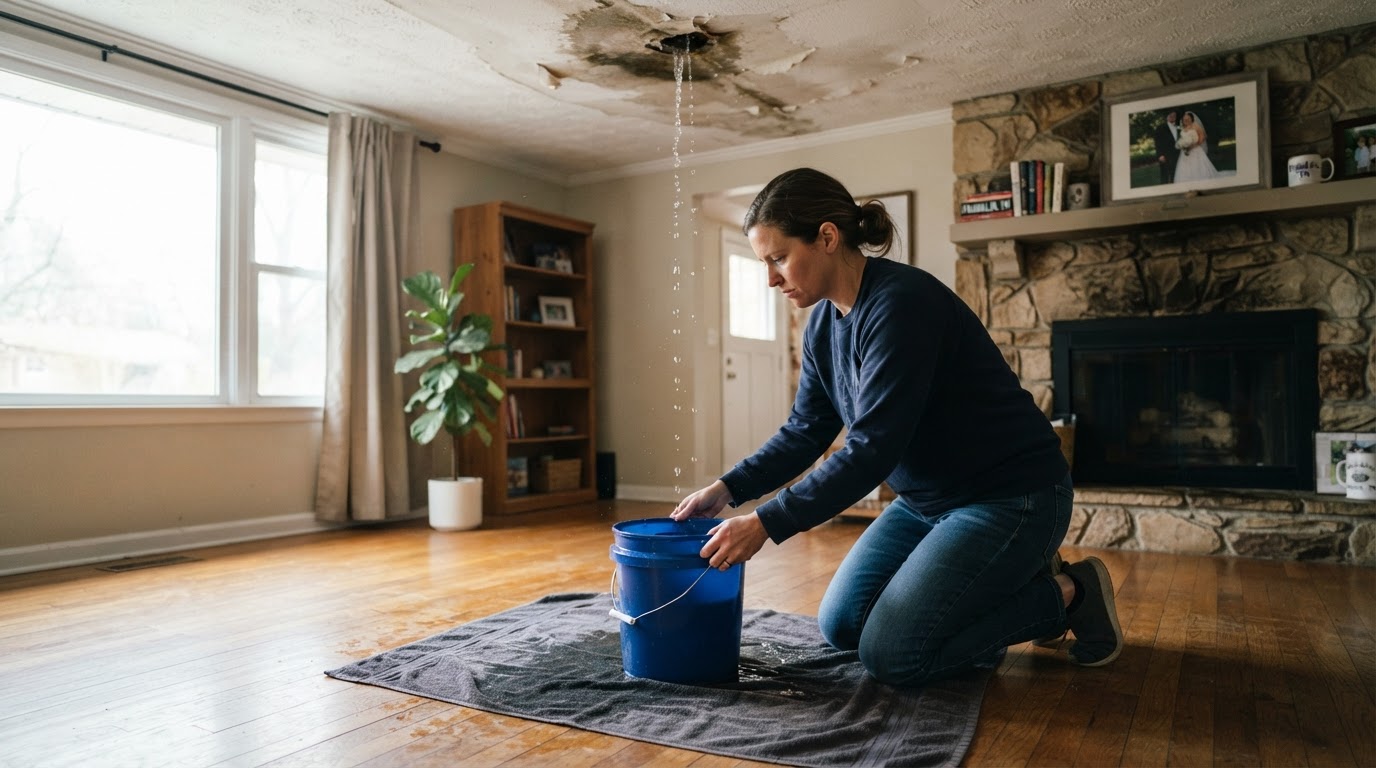
To temporarily stop a roof leak, first move belongings away from the leak and place a bucket to catch dripping water. Turn off electricity to any fixtures or outlets near the leak. If you can safely reach the attic, place a tarp or plastic sheeting under the leak from inside to slow water spread. If the ceiling is bulging, carefully poke a small hole with a screwdriver and catch the water in a bucket — a controlled drain prevents a larger ceiling collapse. Do not climb on the roof during a storm or when it is wet. Call a roofer for a proper repair. Terry Woodall Roofing offers emergency response across Middle Tennessee — call (615) 300-6005.
Key Takeaways for Middle Tennessee Homeowners
- The first priority is protecting people and belongings — move furniture, electronics, and valuables away from the leak and place a bucket to catch dripping water.
- Do not climb on the roof during a storm or when it is wet — falls are the most common serious injury in emergency roof situations.
- If you can safely reach the attic, placing a tarp or plastic sheeting under the leak from inside can slow water from spreading across the ceiling.
- Relieve a ceiling bulge by carefully poking a small hole with a screwdriver and catching the water in a bucket — a controlled drain prevents a larger ceiling collapse.
- Turn off electricity to any fixtures or outlets near the leak to avoid fire and shock hazards from water intrusion.
- Terry Woodall Roofing offers emergency storm and leak response across Middle Tennessee — call (615) 300-6005 and Terry will respond directly.
When water starts dripping through your ceiling, the instinct is to panic and head for the roof. That is the wrong move. The right first steps happen inside the house, and they are about limiting damage and keeping people safe — not fixing the roof yourself in the middle of a storm.
This article covers the temporary measures that actually help while you wait for a roofer, the steps that are dangerous to attempt, and when to call for emergency service. For the full emergency tarping process, see our Emergency Roof Tarping Guide.
Step 1: Protect People and Belongings First
Before anything else, move furniture, electronics, rugs, and valuables away from the area below the leak. Water travels along joists and can drip from a spot far from where it entered the roof, so clear a wider area than the visible drip suggests. Lay down towels or a plastic drop cloth to protect flooring.
Place a bucket, trash can, or large bowl directly under the drip. If the water is splashing, put a towel in the bottom of the bucket to soften the impact and reduce splatter. If the leak is moving — dripping from different spots as water spreads — move the bucket as needed and cover the broader area with plastic.
Step 2: Turn Off Electricity Near the Leak
Water and wiring are a serious hazard. If the leak is near any light fixture, ceiling fan, outlet, or switch, turn off the breaker for that circuit at the electrical panel. Do not flip switches or touch fixtures that are wet or near an active leak.
This step is easy to forget in the rush, but it is one of the most important. A ceiling leak that reaches a light fixture or outlet can create a fire or shock risk even before the water is visible at the fixture itself, because it can pool inside the junction box above.
Step 3: Contain the Water From Inside the Attic
If you have safe access to the attic and it is not during an active storm, you can slow the spread of water from inside. Lay a tarp, plastic sheeting, or even large trash bags across the rafters under the leak, directing the water toward a bucket or toward the eave where it can drain outside. The goal is not to seal the roof but to keep water from spreading across the ceiling drywall, which is what causes the large stains and eventual collapse.
Use a flashlight, not an open flame, and watch your footing — attic joists are a fall hazard, and stepping between them onto drywall is a common injury. If the attic access is difficult, the roof is wet, or you are unsure, skip this step entirely and focus on containing the water from inside the living space.
Step 4: Relieve a Bulging Ceiling
If water has pooled above the ceiling and the drywall is bulging or sagging, it is at risk of collapsing and dumping a large amount of water at once. The safer move is to relieve the pressure with a controlled drain. Place a large bucket directly under the bulge, then carefully poke a small hole in the center of the bulge with a screwdriver or the tip of a knife.
The water will drain out in a controlled stream into the bucket. This sounds counterintuitive — you are intentionally making a hole — but a small controlled drain prevents a much larger collapse that could damage furniture, flooring, and anyone below. Keep emptying the bucket until the flow stops.
What Not to Do: Do Not Climb on the Roof
The most important thing not to do is climb on the roof, especially during or right after a storm. Wet shingles are extremely slippery, and even a dry roof is a fall hazard for someone without proper safety equipment. Most serious injuries in emergency roof situations come from homeowners falling, not from the roof itself.
Do not attempt a permanent repair from the roof surface, do not use caulk or tar as a long-term fix, and do not walk on a roof you cannot clearly see. A professional roofer has the harnesses, ladders, and experience to work safely. Your job is to contain the damage inside until help arrives.
When to Call for Emergency Service
Call a roofer immediately if the leak is large and actively flowing, if the ceiling is bulging or sagging, if water has reached electrical fixtures, or if the leak follows a storm that likely caused widespread damage. A small, slow drip that appears to have stopped can often wait until the next business day, but anything active or growing needs same-day attention.
Terry Woodall Roofing offers emergency storm and leak response across Middle Tennessee, including Nashville, Franklin, Brentwood, Bellevue, Kingston Springs, Pegram, Fairview, Dickson, and Burns. Terry personally answers the phone at (615) 300-6005 and can often be on-site the same day to tarp the damage and stop further water intrusion. For the full tarping process and what to expect, see our Emergency Roof Tarping Guide.
Quick Checklist: What to Do Right Now
- Move furniture, electronics, and valuables away from the leak.
- Place a bucket under the drip (add a towel to reduce splash).
- Turn off the breaker for any circuit near the leak.
- If safe attic access: lay plastic under the leak to direct water.
- If the ceiling is bulging: poke a small controlled drain hole.
- Do not climb on the roof — call a professional.
- Call Terry Woodall Roofing for emergency response: (615) 300-6005.
Have a question about your roof?
Terry personally answers the phone — no sales reps, no pressure.
Frequently Asked Questions
Straight answers to common questions from Middle Tennessee homeowners.
Should I go on the roof to find the leak myself?
No. Wet shingles are extremely slippery, and even a dry roof is a fall hazard without proper safety equipment. Most serious injuries in emergency roof situations come from homeowners falling, not from the roof itself. A professional roofer has the harnesses, ladders, and experience to inspect safely. Your job is to contain the water inside until help arrives.
Why would I poke a hole in my own ceiling?
If water has pooled above the ceiling and the drywall is bulging or sagging, it is at risk of collapsing and dumping a large amount of water at once. Poking a small, controlled hole in the center of the bulge lets the water drain into a bucket in a controlled stream. This prevents a much larger collapse that could damage furniture, flooring, and anyone below. It sounds counterintuitive, but it is the safer option.
Can I use tar or caulk to fix the leak temporarily?
Roofing tar or caulk can sometimes slow a small, specific leak as a very short-term stopgap, but it is not a real repair and it can make the permanent fix harder — a roofer later has to remove the tar to find the actual source. Tar also does not adhere well to a wet surface, which is usually the condition when a leak is active. It is better to contain the water from inside and let a professional handle the repair.
How fast can Terry Woodall Roofing respond to an emergency leak?
Terry personally answers the phone at (615) 300-6005 and offers emergency storm and leak response across Middle Tennessee, including Nashville, Franklin, Brentwood, Bellevue, Kingston Springs, Pegram, Fairview, Dickson, and Burns. He can often be on-site the same day to tarp the damage and stop further water intrusion. The faster you call, the more damage can be prevented.
Will my homeowners insurance cover the leak damage?
It depends on the cause. Most policies cover sudden, accidental damage from storms — wind, hail, or a tree strike — but not damage from gradual wear, aging, or lack of maintenance. Document everything with photos and keep receipts for any emergency repairs or tarps, as these are often reimbursable. Terry Woodall Roofing helps homeowners document damage for insurance claims. For the full picture, see our guide on what homeowners insurance covers for roof damage in Tennessee.
Terry Woodall Roofing Contractors
From the Terry Woodall Roofing Contractors Resource Center — serving Middle Tennessee homeowners since 1983
Terry Woodall Roofing Contractors brings over 40 years of hands-on roofing experience to Middle Tennessee homeowners. These resources are prepared to help homeowners understand roof maintenance, storm damage mitigation, and the insurance claims process so every home is protected. Founder Terry Woodall personally oversees the company's roofing work across Nashville, Franklin, Brentwood, and the surrounding communities.
Found this guide useful? Copy a ready-to-paste citation and attribute Terry Woodall Roofing as your source.
Terry Woodall. (2026-09-01). How to Temporarily Stop a Roof Leak Before the Roofer Arrives in Middle Tennessee. Terry Woodall Roofing. https://terrywoodallroofing.com/resources/how-to-stop-roof-leak-before-roofer-arrives
Related Roofing Services
If you suspect your roof needs attention, Terry Woodall offers straightforward evaluations across Middle Tennessee:
Where We Work in Middle Tennessee
Request a Call
Get straightforward answers directly from Terry.
This form is for Middle Tennessee homeowners requesting roofing help only. Marketing, sales, and vendor solicitations are not accepted and will be discarded.
Need an Honest Roof Inspection?
Speak directly with Terry Woodall today. No pushy sales representatives, just a local reputation built since 1983.
Call (615) 300-6005Text TerryWater coming through your ceiling? Terry Woodall Roofing offers emergency storm and leak response across Middle Tennessee — Terry personally answers the phone at (615) 300-6005 and can often be on-site the same day to tarp the damage and stop further water intrusion. Serving Nashville, Franklin, Brentwood, Bellevue, Kingston Springs, Pegram, Fairview, Dickson, and Burns since 1983. Call (615) 300-6005 now.