
How to Tell If Your Roof Was Damaged by the Last Tennessee Windstorm
Part of: Storm & Hail Roof Damage Guide for Middle Tennessee (2026): Signs, Insurance & Repair
After a Middle Tennessee windstorm, learn how to spot wind damage from the ground — creased shingles, lifted tabs, missing pieces — and when to call for a professional inspection before the next storm hits.
- 1.How Wind Damages Asphalt Shingles
- 2.Step 1: Check the Ground for Shingle Debris
- 3.Step 2: Scan the Roof for Creased and Lifted Shingles
- 4.Step 3: Check the Attic for New Leaks
- 5.Wind Damage vs. Hail Damage: What Is the Difference?
- 6.When Wind Damage Is a Repair vs. a Replacement
- 7.Why You Should Not Wait to Check After a Windstorm
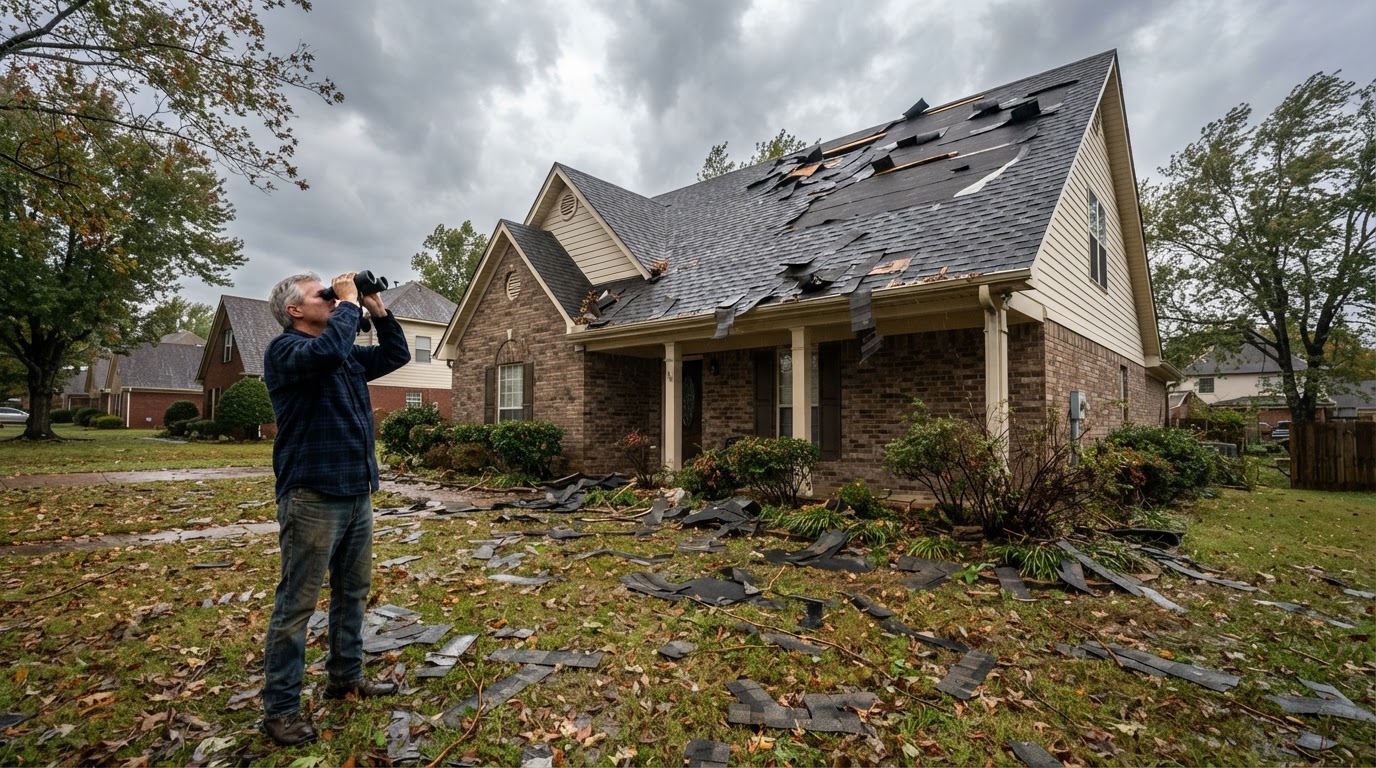
After a windstorm, walk all four sides of your home and look with binoculars for shingles that are missing, lifted at the edges, or creased horizontally where wind folded them back. Check the ground for shingle tabs and pieces of flashing, and look in the gutters for fresh granule piles. Wind damage is often invisible from the ground because the shingle may have lifted and resettled without tearing off, so the seal strip is broken even though the shingle looks intact. The National Weather Service classifies a storm as severe at 58 mph winds, which is enough to crease or tear architectural shingles. Do not climb on the roof yourself — a licensed roofer should confirm wind damage with a roof-level inspection. Terry Woodall Roofing provides free post-storm inspections across Middle Tennessee — call (615) 300-6005.
Key Takeaways for Middle Tennessee Homeowners
- Wind damage to asphalt shingles is often invisible from the ground — the most telling sign is a horizontal crease across the shingle tab where wind lifted and folded it back.
- The National Weather Service classifies a thunderstorm as severe when it produces winds of at least 58 mph, and Middle Tennessee sees these storms regularly each spring and summer.
- Walk all four sides of your home after a windstorm and look for missing, lifted, or creased shingles, debris in the yard, and granule piles at the downspouts.
- Wind damage is different from hail damage — wind tears and lifts shingles, while hail bruises the mat and knocks granules loose without always tearing the shingle.
- Do not climb on the roof yourself to check for wind damage — falls are the leading DIY roofing injury, and walking on wind-loosened shingles can cause further damage.
- Terry Woodall Roofing provides free, photo-documented post-storm inspections across Middle Tennessee. Call (615) 300-6005.
Middle Tennessee windstorms are a regular part of spring and summer, and the wind does not have to tear shingles off your roof to cause real damage. A shingle can lift, crease, and reseal in a way that looks fine from the ground but has a broken seal strip underneath — and the next storm is the one that tears it off entirely.
This checklist walks through exactly what to look for after a windstorm, how wind damage differs from hail damage, and when to call for a professional inspection. For the broader storm and hail damage guide, see our storm and hail roof damage guide.
How Wind Damages Asphalt Shingles
Wind damages asphalt shingles in two main ways. The first is direct tearing — a strong gust catches the edge of a shingle tab and rips it off the roof entirely, leaving a visible gap. The second is more subtle and more common: the wind lifts the tab enough to break the self-seal strip, then the shingle settles back down looking almost normal. The seal is broken, but the shingle is still in place.
That second type is the one homeowners miss. A shingle with a broken seal strip will flap in future winds, let water underneath during the next rain, and eventually tear off — but on the day after the storm, it can look perfectly fine from the ground. This is why a roof-level inspection after a significant wind event matters even when nothing looks wrong from the yard.
The National Weather Service classifies a thunderstorm as severe when it produces winds of at least 58 mph or hail at least 1 inch in diameter. Middle Tennessee sees these storms regularly each spring and summer, and 58 mph is more than enough to crease or tear architectural shingles, especially on roofs where the seal strip has aged.
Step 1: Check the Ground for Shingle Debris
The fastest post-storm check is the ground. Walk around the entire house and look for shingle tabs, full shingles, pieces of flashing, or ridge cap pieces on the lawn, in the landscaping, or caught in bushes. Any shingle material on the ground means something on the roof is no longer attached.
Also check the base of the downspouts. A fresh pile of shingle granules — the gritty, sand-like material — after a windstorm is a sign that shingles are being abraded or that the seal strip is failing and granules are shedding as the tabs flap.
Step 2: Scan the Roof for Creased and Lifted Shingles
With binoculars, scan every roof slope from the ground. The signature mark of wind damage is a horizontal crease across a shingle tab — a faint line where the wind lifted the tab and folded it back before it resettled. The crease is often visible as a slight color or texture change running across the middle of the tab.
Also look for tabs that are lifted at the edges, sitting at a slightly different angle than their neighbors, or appearing darker where the underside of the shingle is exposed. On the ridge, look for missing or displaced ridge caps. Pay special attention to the edges and corners of the roof — wind damage concentrates where the wind first hits and where it creates lift, which is typically the eaves, rakes, ridges, and corners.
Step 3: Check the Attic for New Leaks
If you have safe attic access, take a flashlight up within a day or two of the storm. Look for new water stains on the underside of the decking or on the rafters, and look for pinpoints of daylight that were not there before. Wind can lift flashing and break seals around penetrations without tearing anything off, and the first sign is often a slow drip that shows up in the attic before it reaches the ceiling.
A dry attic with no new stains and no daylight is a good sign, but it does not rule out wind damage — a broken seal strip can let water in only during wind-driven rain at a specific angle, which may not have happened yet.
Wind Damage vs. Hail Damage: What Is the Difference?
Wind and hail damage look different and lead to different repair decisions. Wind damage is mechanical — it tears, lifts, and creases shingles. You see missing pieces, lifted tabs, and crease lines. Hail damage is impact damage — it bruises the asphalt mat and knocks granules loose without necessarily tearing the shingle. You see round dark spots where granules are gone and, on close inspection, soft spots in the shingle mat.
Both can be invisible from the ground, which is why a roof-level inspection is the only reliable way to confirm either. But the distinction matters for insurance: your policy may respond differently to wind damage versus hail damage, and the documentation a contractor provides helps the insurer understand what happened. For the full insurance process, see our Tennessee roofing insurance claims guide.
When Wind Damage Is a Repair vs. a Replacement
Wind damage that is limited to a few shingles on one slope — a handful of creased tabs or a few missing pieces — is usually a targeted repair, especially on a roof that still has useful life. The damaged shingles are removed, the surrounding area is checked for seal-strip damage, and matching replacement shingles are installed and sealed.
Wind damage that is widespread — creased shingles across multiple slopes, large sections of missing shingles, or damage to a roof that is already near the end of its life — may point toward replacement. The decision depends on the extent of the damage and the remaining life of the roof, not on the wind speed alone. For help weighing that decision, see our roof repair vs. replacement guide.
Why You Should Not Wait to Check After a Windstorm
The most common mistake after a windstorm is assuming that because nothing is leaking, nothing is wrong. A broken seal strip or a lifted flashing detail can sit quietly until the next wind-driven rain, at which point water enters the roof system and starts traveling toward the ceiling. By the time the stain appears inside, the decking may be wet and the repair is larger.
A free post-storm inspection is the cheapest way to find out whether the wind actually did anything. If the roof is fine, you have peace of mind. If there is damage, you can document it for insurance while it is still fresh and before the next storm compounds it. For the decision about whether to call a roofer or your insurance company first, see our roofer or insurance first guide.
Post-Windstorm Roof Inspection Checklist
- Walk all four sides of the home and check the ground for shingle debris
- Check downspouts for fresh piles of shingle granules
- Scan every roof slope with binoculars for creased, lifted, or missing tabs
- Pay special attention to eaves, rakes, ridges, and corners where wind lift is greatest
- Check the ridge caps for missing or displaced pieces
- Inspect the attic for new water stains or daylight through the deck
- Note the date and approximate wind speed of the storm for insurance records
- Call a licensed roofer for a free roof-level inspection if anything looks off
Have a question about your roof?
Terry personally answers the phone — no sales reps, no pressure.
Frequently Asked Questions
Straight answers to common questions from Middle Tennessee homeowners.
Can wind damage a roof without tearing shingles off?
Yes, and this is the most commonly missed type of wind damage. Wind can lift a shingle tab enough to break the self-seal strip, then the shingle settles back down looking almost normal. The seal is broken, so the shingle will flap in future winds and let water underneath during wind-driven rain, but from the ground it can look fine. A horizontal crease across the tab is the telltale sign that the wind lifted and folded it back. A roof-level inspection is the only reliable way to confirm this type of damage.
How strong does wind need to be to damage an asphalt shingle roof?
The National Weather Service classifies a thunderstorm as severe when it produces winds of at least 58 mph, and that is more than enough to crease or tear architectural shingles, especially on older roofs where the seal strip has weakened. Even straight-line winds below severe-storm threshold can damage shingles on roof edges and corners where lift is greatest. The age and condition of the seal strip matters as much as the wind speed.
What does a wind-creased shingle look like?
A wind crease is a horizontal line across a shingle tab where the wind lifted the tab and folded it back before it resettled. It often appears as a slight color or texture change running across the middle of the tab. The tab may also sit at a slightly different angle than its neighbors or show a lifted edge. From the ground with binoculars, a crease is the single most reliable sign of wind damage short of a missing shingle.
Should I get my roof inspected after every windstorm?
Not every storm, but after any storm that produced winds near or above the severe threshold of 58 mph, or after any storm where you find shingle debris on the ground. A quick ground-level check after every significant wind event is the cheapest insurance against hidden damage. If anything looks off, a free professional inspection confirms it. Terry Woodall Roofing provides free post-storm inspections across Middle Tennessee — call (615) 300-6005.
Is wind damage covered by homeowners insurance in Tennessee?
Whether wind damage is covered depends on your individual policy, your deductible, and the insurer's coverage determination. Most standard homeowners policies cover wind damage from thunderstorms, but coverage details, deductibles, and exclusions vary. A roofing contractor can document the physical damage, but only your insurer can determine how your policy applies. For the full claims process, see our Tennessee roofing insurance claims guide, and for the decision about who to call first, see our roofer or insurance first guide.
Terry Woodall Roofing Contractors
From the Terry Woodall Roofing Contractors Resource Center — serving Middle Tennessee homeowners since 1983
Terry Woodall Roofing Contractors brings over 40 years of hands-on roofing experience to Middle Tennessee homeowners. These resources are prepared to help homeowners understand roof maintenance, storm damage mitigation, and the insurance claims process so every home is protected. Founder Terry Woodall personally oversees the company's roofing work across Nashville, Franklin, Brentwood, and the surrounding communities.
This guide relies on authoritative industry standards, building code regulations, and verifiable research from recognized organizations:
- NOAA — National Weather Service: Severe Thunderstorm Criteriaweather.gov
- NRCA — National Roofing Contractors Association: Consumer Resourcesnrca.net
- IBHS — Insurance Institute for Business & Home Safety: Wind Damage Researchibhs.org
Found this guide useful? Copy a ready-to-paste citation and attribute Terry Woodall Roofing as your source.
Terry Woodall. (2026-09-22). How to Tell If Your Roof Was Damaged by the Last Tennessee Windstorm. Terry Woodall Roofing. https://terrywoodallroofing.com/resources/how-to-tell-if-roof-damaged-by-windstorm-middle-tn
Related Roofing Services
If you suspect your roof needs attention, Terry Woodall offers straightforward evaluations across Middle Tennessee:
Where We Work in Middle Tennessee
Keep Reading
Request a Call
Get straightforward answers directly from Terry.
This form is for Middle Tennessee homeowners requesting roofing help only. Marketing, sales, and vendor solicitations are not accepted and will be discarded.
Need an Honest Roof Inspection?
Speak directly with Terry Woodall today. No pushy sales representatives, just a local reputation built since 1983.
Call (615) 300-6005Text TerryAfter a Middle Tennessee windstorm, do not assume the roof is fine just because nothing is leaking. Wind damage is often invisible from the ground, and a broken seal strip today can become a leak at the next storm. Terry Woodall Roofing provides free, photo-documented post-storm inspections across Middle Tennessee and will tell you honestly whether the wind did any damage. Call Terry directly at (615) 300-6005 or request a free roof inspection.