
Does Homeowners Insurance Cover Roof Damage in Tennessee? What Nashville Homeowners Need to Know
Wondering if your homeowners insurance will pay for roof repair or replacement in Tennessee? Learn what typically affects coverage — storm vs. wear, ACV vs. RCV, deductibles, and why your individual policy decides. Honest, inspection-first guidance from Terry Woodall Roofing.
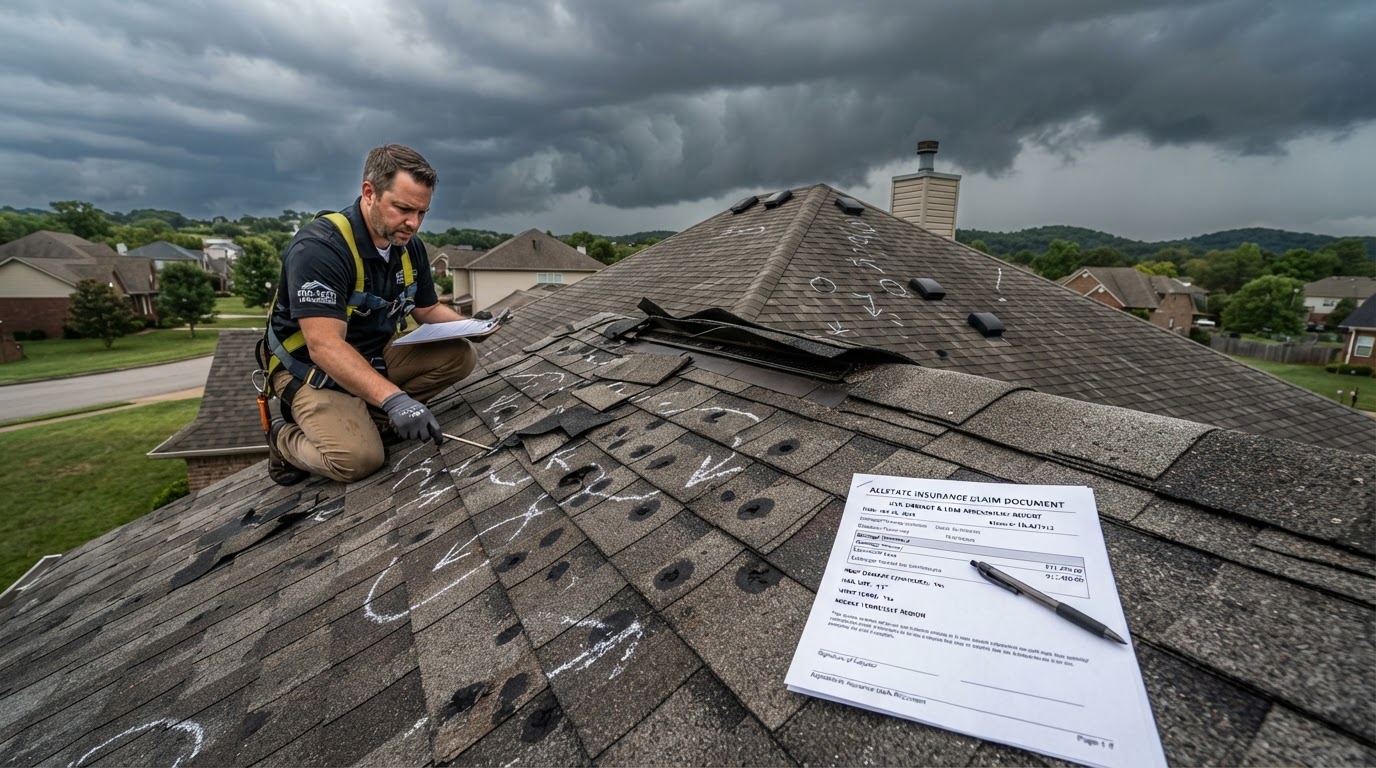
- 1.The Short Answer: It Depends on the Cause and Your Policy
- 2.Sudden Storm Damage vs. Gradual Wear and Aging
- 3.ACV vs. RCV: How Your Policy Pays for an Older Roof
- 4.Your Deductible and Wind/Hail Deductibles
- 5.What a Roofer Does vs. What Your Insurer Decides
- 6.What to Do Before You Call Your Insurance Company
- 7.What If You Disagree With the Insurance Decision?
Whether homeowners insurance covers roof damage in Tennessee depends on the cause of the damage, your individual policy, your deductible, and applicable exclusions. Sudden damage from a covered peril like wind, hail, or a fallen tree is more likely to be covered than gradual wear, aging, or neglect. Replacement Cost Value (RCV) policies pay the cost to replace the roof minus your deductible, while Actual Cash Value (ACV) policies subtract for the roof's age and depreciation. There is no universal guarantee of coverage — homeowners should review their policy and contact their insurer. Terry Woodall Roofing provides free physical roof inspections across Middle Tennessee to document damage — call (615) 300-6005.
Key Takeaways for Middle Tennessee Homeowners
- Whether insurance covers roof damage depends on the cause of the damage, your individual policy, your deductible, and applicable exclusions — there is no universal guarantee.
- Sudden damage from a covered peril like wind, hail, or a fallen tree is more likely to be covered than gradual wear, aging, or maintenance neglect.
- Replacement Cost Value (RCV) and Actual Cash Value (ACV) policies pay out very differently for an older roof — ACV subtracts for depreciation based on the roof's age.
- Your deductible applies to a covered roof claim, and in some policies a separate, higher wind or hail deductible may apply.
- A roofing contractor inspects and documents physical roof damage but cannot determine what your insurer will cover — only your policy and insurer can answer that.
- Terry Woodall Roofing offers free roof inspections across Middle Tennessee — call (615) 300-6005 to document damage before you contact your insurer.
After a Middle Tennessee storm, one of the first questions homeowners ask is whether their homeowners insurance will pay to repair or replace a damaged roof. It is a reasonable question, but the honest answer is that it depends — on what caused the damage, what your specific policy covers, your deductible, and any exclusions that apply. The Insurance Information Institute (III) explains that whether roof damage is covered generally depends on the cause of the loss and the terms of the individual policy. (Source: III — Homeowners Insurance Coverage)
This article explains the factors that typically affect whether roof damage is covered in Tennessee, the difference between sudden storm damage and gradual wear, how ACV and RCV policies treat an older roof, and what role a roofing contractor plays versus your insurance company. It is educational guidance, not a coverage determination — only your insurer and your policy can confirm what is covered. For the full step-by-step claim process, see our Tennessee Roofing Insurance Claims Guide.
The Short Answer: It Depends on the Cause and Your Policy
There is no universal rule that says insurance will or will not cover roof damage. In general, sudden, accidental damage from a covered peril — such as wind tearing off shingles, hail bruising the shingle mat, or a tree limb falling onto the roof — is more likely to be covered than damage that develops gradually over time, such as shingle aging, wear from weather exposure, or problems caused by a lack of maintenance.
The Insurance Information Institute notes that a standard homeowners policy generally covers damage caused by covered perils, but that coverage is subject to the policy's exclusions, conditions, and deductible. That means the same roof, with the same damage, can be covered under one policy and not another. (Source: III — What is Covered)
The only way to know for certain whether your damage is covered is to review your individual policy and speak with your insurance company or agent.
Sudden Storm Damage vs. Gradual Wear and Aging
The distinction that matters most is between sudden damage and gradual damage. Middle Tennessee's severe thunderstorms, hail, and high winds can cause sudden, visible damage — lifted or missing shingles, hail impact bruises, dented metal flashing and vent caps, and broken tree limbs on the roof. This kind of acute, storm-caused damage is what most homeowners think of when they picture an insurance claim.
Gradual damage is different. Asphalt shingles naturally lose granules, curl, and become brittle as they age. A roof that is simply reaching the end of its service life is generally considered normal wear and tear, which most policies exclude. If an insurer determines that the damage is the result of aging or deferred maintenance rather than a covered sudden event, the claim may be denied or paid at a reduced amount.
This is why documenting the timing and cause of damage matters. Damage that appears immediately after a specific storm event is easier to connect to a covered peril than damage that has been developing for years. For help identifying what storm damage actually looks like, see our guide on how to spot storm and hail damage.
ACV vs. RCV: How Your Policy Pays for an Older Roof
Even when roof damage is covered, how much the insurer pays depends on whether your policy is written on a Replacement Cost Value (RCV) or Actual Cash Value (ACV) basis. This distinction is especially important for an older roof.
An RCV policy pays the cost to repair or replace the damaged roof with comparable materials, minus your deductible, without subtracting for the roof's age. Once the repair or replacement is complete and documented, the insurer generally issues the final payment to cover the replacement cost.
An ACV policy pays the replacement cost minus depreciation for the roof's age and condition, and minus your deductible. On a 20-year-old roof, the depreciation deduction can be substantial, which means the homeowner receives a smaller payment and may owe a larger share of the replacement cost out of pocket. Some policies switch from RCV to ACV once a roof reaches a certain age, often around 20 years for asphalt shingles.
The III explains that ACV reimburses the cost to repair or replace damaged property minus a deduction for depreciation, while RCV pays the cost to replace the property without that depreciation deduction. (Source: III — Replacement Cost vs. Actual Cash Value) Your policy's declarations page should state which basis applies to your roof.
Your Deductible and Wind/Hail Deductibles
A deductible is the amount you are responsible for paying before insurance covers the rest of a covered loss. Your policy will specify your deductible amount, which may be a flat dollar amount or, in some cases, a percentage of your home's insured value.
In hail- and wind-prone regions, some policies include a separate, higher deductible specifically for wind or hail damage — sometimes called a percentage deductible. This means a wind or hail claim may carry a different, often larger, deductible than a claim for other types of damage. Homeowners should check whether their policy has a separate wind or hail deductible before a storm hits, so there are no surprises afterward.
If the cost to repair the roof is close to or below your deductible, filing a claim may not result in a meaningful payout, and a claim on your record could affect future premiums. Whether to file depends on your individual circumstances, your deductible, and the scope of damage — homeowners should review their policy and contact their insurer regarding claim obligations.
What a Roofer Does vs. What Your Insurer Decides
It is important to keep two roles separate. A roofing contractor, including Terry Woodall Roofing, inspects and documents the physical condition of the roof — what the shingles, flashing, decking, and penetrations look like and what repair or replacement the roof needs. A roofing contractor is not an insurance adjuster, public adjuster, or attorney, and cannot determine what your insurer will cover, what your claim is worth, or whether your claim will be approved.
Your insurance company assigns an adjuster to evaluate the claim on the insurer's behalf. The adjuster inspects the damage, reviews the policy, and determines what the insurer will pay according to the policy terms. The roofer's inspection and documentation can support that process, but the coverage decision belongs to the insurer.
For the full walkthrough of how these roles fit together — from the first call to the adjuster's inspection to the final estimate — see our Tennessee Roofing Insurance Claims Guide.
What to Do Before You Call Your Insurance Company
Before contacting your insurer, it helps to understand the condition of your roof. A free physical inspection can document what damage exists, where it is located, and whether it appears connected to a recent storm event. That documentation can be useful information when you report the loss, but it does not guarantee coverage.
Homeowners should also take reasonable steps to prevent further damage, such as arranging temporary tarping to stop an active leak. Most policies include a duty to mitigate — to take reasonable action to prevent additional damage after a loss. Keep records and receipts for any emergency mitigation, as your insurer may request them.
Terry Woodall Roofing offers free roof inspections across Middle Tennessee to document physical roof damage. Terry personally answers the business phone at (615) 300-6005. Serving Middle Tennessee since 1983, Terry provides honest damage assessments so you have the facts before you decide how to proceed with your insurer.
What If You Disagree With the Insurance Decision?
If you have questions about a claim decision or believe the insurer's assessment missed damage, you have options. You can request that the insurer re-inspect the roof, provide additional documentation or estimates, and ask your insurer to explain its coverage decision in writing.
Tennessee homeowners with questions or disputes involving their insurer can also contact the Tennessee Department of Commerce and Insurance (TDCI), which provides consumer information and accepts insurance complaints. (Source: TDCI — File an Insurance Complaint) TDCI can be reached at 615-741-2218 or 1-800-342-4029 for questions about insurance policies.
A roofing contractor cannot resolve a coverage dispute for you, but documented inspection findings can be useful supporting information as you work with your insurer.
Before Filing a Roof Damage Claim, Check These
- Does the damage appear to be from a specific recent storm, or has it been developing over time? (Sudden vs. gradual matters.)
- Is your roof covered on an RCV or ACV basis? (Check your declarations page.)
- What is your deductible, and is there a separate, higher wind or hail deductible?
- Is the estimated repair cost above your deductible, or close to it?
- Have you taken reasonable steps to stop further damage, such as temporary tarping?
- Do you have documentation of the damage — photos, an inspection report, or notes on when it occurred?
Have a question about your roof?
Terry personally answers the phone — no sales reps, no pressure.
Frequently Asked Questions
Straight answers to common questions from Middle Tennessee homeowners.
Does homeowners insurance cover roof damage in Tennessee?
It depends on the cause of the damage and your individual policy. Sudden damage from a covered peril like wind, hail, or a fallen tree is more likely to be covered than gradual wear, aging, or maintenance neglect. Coverage is also subject to your deductible and any policy exclusions. There is no universal guarantee — homeowners should review their policy and contact their insurer to confirm what is covered.
Does homeowners insurance cover hail damage to a roof?
Hail damage is often covered when it is caused by a covered peril and the policy does not exclude it, but coverage depends on your specific policy, your deductible, and any separate wind or hail deductible that may apply. An ACV policy will subtract for the roof's age and depreciation. Whether your hail damage is covered can only be confirmed by your insurer and your policy.
Does homeowners insurance cover wind damage to a roof?
Wind damage, such as lifted or torn shingles after a storm, is frequently covered under a standard policy, but the same cautions apply — coverage depends on your policy terms, exclusions, and deductible. Some policies carry a separate, higher wind or hail deductible. Review your policy and contact your insurer to confirm how wind damage is treated.
Will insurance pay for a roof that is just old and worn out?
Generally no. Damage from normal aging, wear and tear, or deferred maintenance is typically excluded from coverage. Insurance is designed to cover sudden, accidental damage from covered perils, not the natural end of a roof's service life. If your roof is simply old, replacement is usually a homeowner expense rather than an insurance claim.
What is the difference between ACV and RCV for a roof claim?
Replacement Cost Value (RCV) pays the cost to repair or replace the roof minus your deductible, without subtracting for age. Actual Cash Value (ACV) pays the replacement cost minus depreciation for the roof's age and condition, and minus your deductible. On an older roof, an ACV policy pays significantly less. Some policies switch from RCV to ACV once a roof reaches a certain age.
Should I call a roofer or my insurance company first?
There is no single correct order, but understanding the condition of your roof first can help you decide whether a claim is worthwhile. A free roof inspection documents the physical damage so you have facts in hand. Homeowners should also follow their policy's notice requirements and contact their insurer regarding claim obligations and deadlines, since those vary by policy. For the complete answer on whether you should call a roofer or insurance first, see our dedicated guide on who to call first after storm roof damage.
Does Terry Woodall Roofing help document roof damage for insurance?
Yes. Terry Woodall Roofing provides free physical roof inspections across Middle Tennessee to document the condition of the roof and what repair or replacement it needs. Terry personally answers the business phone at (615) 300-6005. A roofing contractor documents physical damage but cannot determine what your insurer will cover — only your policy and insurer can answer that.
Terry Woodall Roofing Contractors
From the Terry Woodall Roofing Contractors Resource Center — serving Middle Tennessee homeowners since 1983
Terry Woodall Roofing Contractors brings over 40 years of hands-on roofing experience to Middle Tennessee homeowners. These resources are prepared to help homeowners understand roof maintenance, storm damage mitigation, and the insurance claims process so every home is protected. Founder Terry Woodall personally oversees the company's roofing work across Nashville, Franklin, Brentwood, and the surrounding communities.
Found this guide useful? Copy a ready-to-paste citation and attribute Terry Woodall Roofing as your source.
Terry Woodall. (2026-08-23). Does Homeowners Insurance Cover Roof Damage in Tennessee? What Nashville Homeowners Need to Know. Terry Woodall Roofing. https://terrywoodallroofing.com/resources/does-insurance-cover-roof-damage-tennessee
Related Roofing Services
If you suspect your roof needs attention, Terry Woodall offers straightforward evaluations across Middle Tennessee:
Where We Work in Middle Tennessee
Keep Reading
Request a Call
Get straightforward answers directly from Terry.
Free roof inspection — and free estimates on any recommended work.
This form is for Middle Tennessee homeowners requesting roofing help only. Marketing, sales, and vendor solicitations are not accepted and will be discarded.
Need an Honest Roof Inspection?
Speak directly with Terry Woodall today. No pushy sales representatives, just a local reputation built since 1983.
Call (615) 300-6005Text TerryNot sure whether your roof damage is something insurance will cover? Terry Woodall Roofing provides free roof inspections across Middle Tennessee to document the physical condition of your roof — serving homeowners since 1983. Call (615) 300-6005 to speak directly with Terry and get the facts before you contact your insurance company.