
What Does Homeowners Insurance Actually Cover for Roof Damage in Tennessee?
Part of: Kingston Springs Storm Damage & Insurance Guide
Most Tennessee policies cover storm and wind damage but not aging or wear. Learn what is covered, what is excluded, how actual cash value vs. replacement cost affects your payout, and how to file a roof claim that gets approved.
Most Tennessee homeowners policies cover sudden, accidental roof damage from storms — wind, hail, falling trees, and the resulting water intrusion — but exclude damage from aging, wear, or lack of maintenance. The key distinction is 'sudden and accidental' versus 'gradual': a shingle blown off in a storm is covered, while a shingle that cracked from 20 years of sun is not. Actual Cash Value (ACV) coverage deducts for the roof's age and depreciation, paying out less on an older roof, while Replacement Cost (RC) coverage pays to replace it without depreciation. Most policies require you to mitigate further damage by tarping promptly. Terry Woodall Roofing helps Middle Tennessee homeowners document damage for insurance — call (615) 300-6005.
Key Takeaways for Middle Tennessee Homeowners
- Most Tennessee homeowners policies cover sudden, accidental roof damage from storms — wind, hail, falling trees, and the water intrusion that results — but exclude damage from aging, wear, and lack of maintenance.
- The key distinction is 'sudden and accidental' versus 'gradual' — a shingle blown off in a storm is covered; a shingle that cracked from 20 years of sun is not.
- Actual Cash Value (ACV) coverage deducts for the roof's age and depreciation, meaning an older roof pays out far less than Replacement Cost (RC) coverage, which pays to replace it without depreciation.
- Most policies require you to mitigate further damage — tarping a hole promptly — and failing to do so can give the insurer grounds to deny part of the claim.
- Document everything with photos, keep receipts for emergency repairs, and get a roofer's inspection report to support the claim with professional evidence.
- Terry Woodall Roofing helps Middle Tennessee homeowners document roof damage for insurance and works directly with adjusters. Call (615) 300-6005.
The most common question after a roof problem is 'will my insurance cover this?' The honest answer is: it depends on what caused the damage and what your specific policy says. Most Tennessee homeowners policies cover storm damage but not aging, and the difference between those two is where most claim disputes happen.
This article explains what is typically covered, what is excluded, how your coverage type (ACV vs. Replacement Cost) changes your payout, and how to file a claim that actually gets approved. For the full step-by-step claims process, see our Tennessee Roofing Insurance Claims Guide.
What Is Typically Covered
Most standard Tennessee homeowners policies cover sudden, accidental damage to a roof from what insurance calls 'perils' — wind, hail, falling trees or limbs, fire, and the weight of ice and snow. If a thunderstorm blows shingles off your roof, a hailstorm bruises them, or a tree limb crashes through the decking, that is generally covered, including the resulting interior water damage.
The key word is 'sudden.' Coverage applies to damage from a specific, identifiable event — a storm on a specific date, a tree that fell on a specific day. The policy is designed to protect you from unexpected, large losses, not from the gradual effects of time and weather that every roof eventually experiences.
What Is Typically Excluded
The most common exclusion is damage from aging, wear, and lack of maintenance. If shingles are cracking, curling, or losing granules because the roof is 25 years old, that is not a covered loss — it is the expected end of the roof's useful life. Insurers can and do deny claims when an inspection shows the damage is from age rather than a specific storm.
Other common exclusions include damage from pests (squirrels, raccoons chewing through), pre-existing damage that was not repaired, flooding (which requires separate flood insurance), and earth movement. Some policies also exclude or limit coverage for cosmetic hail damage — dents that do not compromise the shingle's function — so read your policy's hail endorsement carefully.
Actual Cash Value vs. Replacement Cost: This Matters a Lot
This is the single most important detail in your policy for a roof claim. Actual Cash Value (ACV) coverage pays the cost to replace the roof minus depreciation for its age. If a $12,000 roof is 15 years old with a 20-year expected life, the insurer may value it at only $3,000 — meaning you get very little toward a new roof. Replacement Cost (RC) coverage pays the full cost to replace the damaged roof without deducting for depreciation, subject to your deductible and policy limits.
Many Tennessee policies have shifted to ACV for roofs over a certain age — often 10 or 15 years — or for roofs of a certain material. This means an older roof may be covered for storm damage but only at a fraction of replacement cost. Check your policy's dwelling and roof endorsement, and if you have an older roof with ACV coverage, understand that a storm claim may not pay for a full replacement.
Your Duty to Mitigate Further Damage
Nearly every policy includes a clause requiring the homeowner to take reasonable steps to prevent further damage after a loss. In practical terms, this means tarping a hole, removing wet belongings, and stopping the spread of water. If you leave a hole open for weeks while waiting for the adjuster and the interior damage grows, the insurer can deny the portion of the claim that resulted from your failure to mitigate.
This is why emergency tarping matters not just for protecting your home but for protecting your claim. Keep receipts for tarps, labor, and any emergency repairs — these are often reimbursable as part of the claim. For the tarping process itself, see our Emergency Roof Tarping Guide.
How to File a Roof Claim That Gets Approved
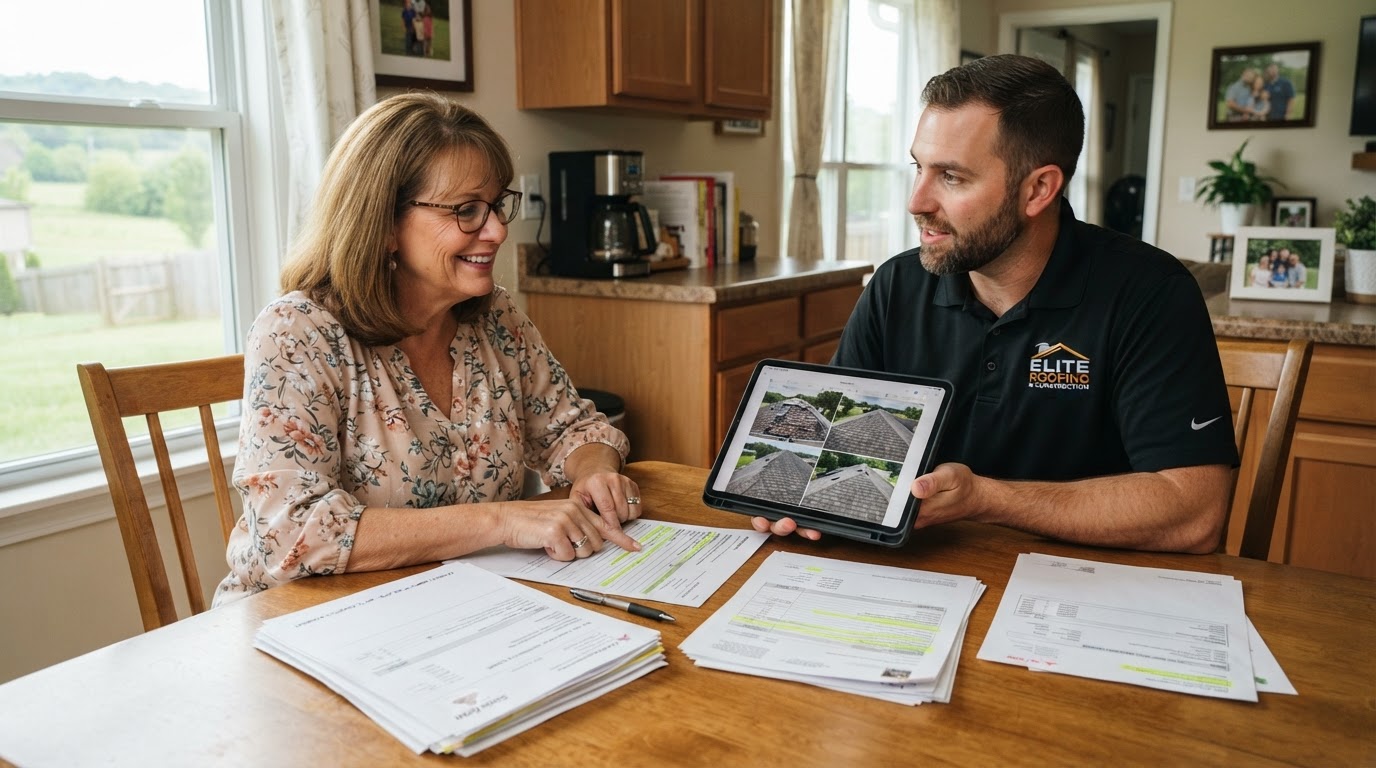
The steps that make a claim succeed are documentation and professional evidence. First, photograph everything — the roof damage, the interior damage, any debris, and the conditions — before any temporary repairs are made (after you have tarped to stop further damage, photograph the tarp too). Second, get a roofer's inspection report that identifies the cause as storm damage, not aging, with specific evidence like hail impact marks, wind-lifted tabs, or tree impact.
Third, contact your insurer promptly — most policies require notice within a reasonable time. Fourth, be present when the adjuster inspects, and ideally have your roofer there to point out damage the adjuster might miss. Terry Woodall Roofing works directly with adjusters across Middle Tennessee and knows what evidence they need to approve a claim. For the full process, see our step-by-step insurance claims guide.
When Filing a Claim May Not Be Worth It
Not every roof problem warrants an insurance claim. If the repair cost is close to your deductible, or if the damage is clearly from aging rather than a storm, filing a claim can raise your premiums without paying out. A denied claim can still appear on your record and affect future rates. This is why it is smart to have a roofer assess the damage and the likely cause before you call your insurer.
Terry Woodall Roofing provides free inspections across Middle Tennessee and will give you an honest read on whether the damage looks like a covered storm loss or aging and wear — before you commit to filing. Call (615) 300-6005 to schedule a no-cost inspection.
Roof Insurance Claim Checklist
- Photograph all roof and interior damage before and after tarping.
- Tarp the damage promptly to prevent further water intrusion (duty to mitigate).
- Keep receipts for tarps, emergency repairs, and any temporary lodging.
- Get a professional roofer's inspection report identifying storm as the cause.
- Contact your insurer promptly and note the claim number and adjuster name.
- Be present for the adjuster inspection — ideally with your roofer on-site.
- Review your policy for ACV vs. Replacement Cost before accepting a settlement.
Have a question about your roof?
Terry personally answers the phone — no sales reps, no pressure.
Frequently Asked Questions
Straight answers to common questions from Middle Tennessee homeowners.
Does homeowners insurance cover roof damage from a storm in Tennessee?
Yes, most standard Tennessee homeowners policies cover sudden, accidental roof damage from storms — wind, hail, falling trees, and the resulting water intrusion. The key is that the damage must be from a specific, identifiable event (a storm on a specific date), not from gradual aging or wear. If a thunderstorm blows shingles off or hail bruises them, that is generally covered. Document the damage and file promptly.
Will insurance pay to replace an old roof?
It depends on your coverage type. If your policy has Replacement Cost (RC) coverage, the insurer pays the full cost to replace the storm-damaged roof, subject to your deductible. If your policy has shifted to Actual Cash Value (ACV) for older roofs — common for roofs over 10–15 years — the payout deducts for depreciation, so a 15-year-old roof may pay out only a fraction of replacement cost. Check your policy's roof endorsement to know which applies to you.
Does insurance cover a leaking roof in Tennessee?
It depends on the cause. If the leak is from sudden storm damage — a wind-lifted shingle, a hail bruise, or a tree strike — the resulting leak and interior damage are generally covered. If the leak is from aging, worn flashing, or lack of maintenance, it is typically excluded. This is why a roofer's inspection identifying the cause as storm damage is so important to a successful claim. Terry Woodall Roofing provides free inspections to help determine the cause.
What is the difference between Actual Cash Value and Replacement Cost for a roof?
Actual Cash Value (ACV) pays the cost to replace the roof minus depreciation for its age — so an older roof pays out far less. Replacement Cost (RC) pays the full cost to replace the damaged roof without deducting for depreciation, subject to your deductible and policy limits. RC is more favorable to the homeowner, but many Tennessee policies have shifted to ACV for roofs over a certain age. Check your policy to know which you have.
Does Terry Woodall Roofing help with insurance claims in Middle Tennessee?
Yes. Terry Woodall Roofing helps homeowners across Middle Tennessee — including Nashville, Franklin, Brentwood, Bellevue, Kingston Springs, Pegram, Fairview, Dickson, and Burns — document roof damage for insurance and works directly with adjusters to support the claim with professional evidence. Terry provides free inspections to assess whether damage looks like a covered storm loss before you commit to filing. Call (615) 300-6005 to schedule a no-cost inspection.
Terry Woodall Roofing Contractors
From the Terry Woodall Roofing Contractors Resource Center — serving Middle Tennessee homeowners since 1983
Terry Woodall Roofing Contractors brings over 40 years of hands-on roofing experience to Middle Tennessee homeowners. These resources are prepared to help homeowners understand roof maintenance, storm damage mitigation, and the insurance claims process so every home is protected. Founder Terry Woodall personally oversees the company's roofing work across Nashville, Franklin, Brentwood, and the surrounding communities.
This guide relies on authoritative industry standards, building code regulations, and verifiable research from recognized organizations:
Found this guide useful? Copy a ready-to-paste citation and attribute Terry Woodall Roofing as your source.
Terry Woodall. (2026-09-01). What Does Homeowners Insurance Actually Cover for Roof Damage in Tennessee?. Terry Woodall Roofing. https://terrywoodallroofing.com/resources/what-does-homeowners-insurance-cover-roof-tennessee
Related Roofing Services
If you suspect your roof needs attention, Terry Woodall offers straightforward evaluations across Middle Tennessee:
Where We Work in Middle Tennessee
Request a Call
Get straightforward answers directly from Terry.
This form is for Middle Tennessee homeowners requesting roofing help only. Marketing, sales, and vendor solicitations are not accepted and will be discarded.
Need an Honest Roof Inspection?
Speak directly with Terry Woodall today. No pushy sales representatives, just a local reputation built since 1983.
Call (615) 300-6005Text TerryUnsure whether your roof damage is covered by insurance? Terry Woodall Roofing provides free inspections across Middle Tennessee and will give you an honest read on whether the damage looks like a covered storm loss or aging and wear — before you commit to filing. Terry also works directly with adjusters to support your claim. Serving Nashville, Franklin, Brentwood, Bellevue, Kingston Springs, Pegram, Fairview, Dickson, and Burns since 1983. Call (615) 300-6005 to speak directly with Terry.